Despite the cost of living rising, along with the the cost of fuel, U.K. vehicle manufacturing is rising in line with demand with September 2026 showing a vehicle production rise by 36.3% to 74,031 units, according to the Society of Motor Manufacturers and Traders (SMMT).
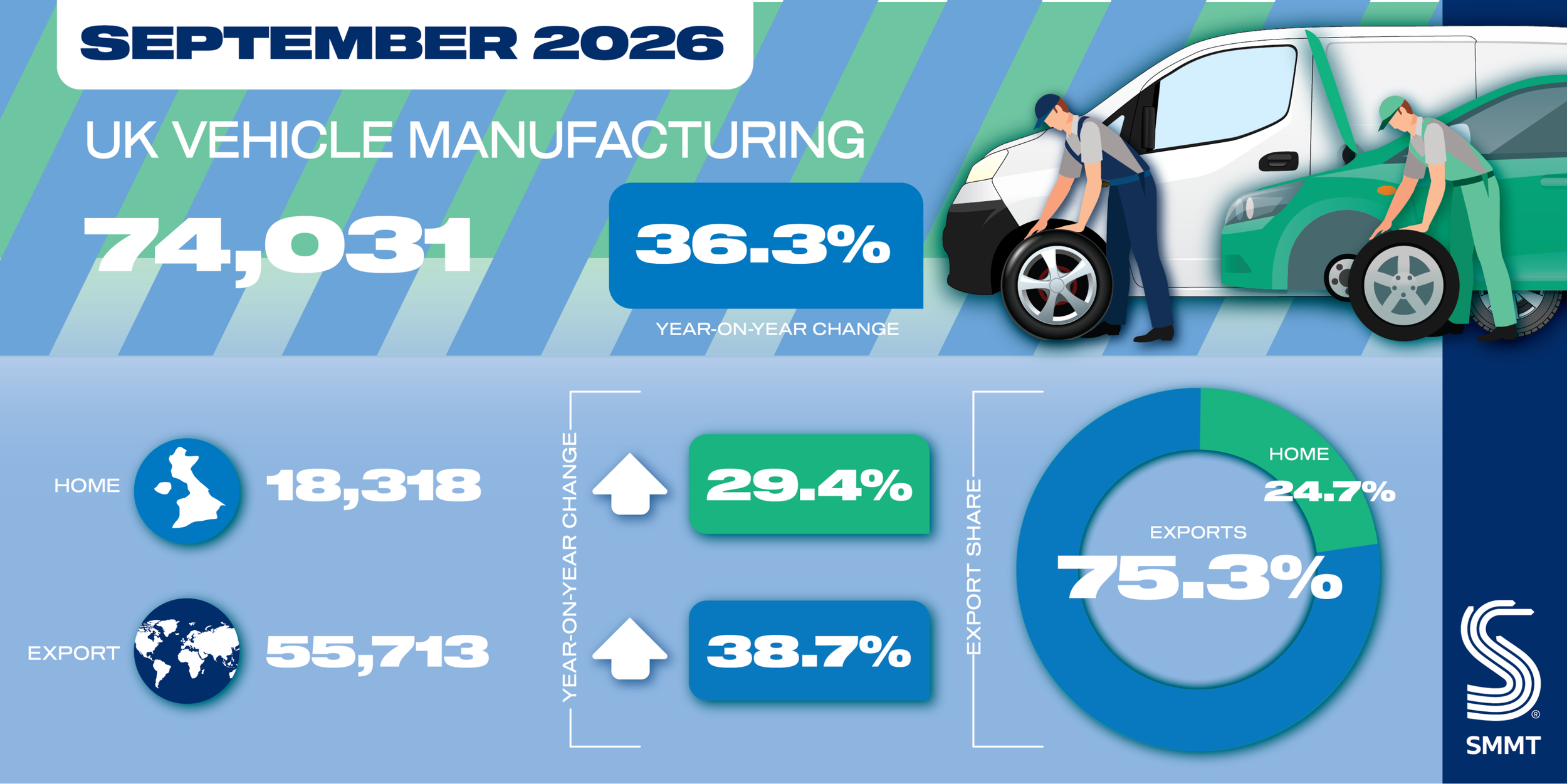
This represents the strongest growth since post-COVID data from August 2022. The SMMT also notes that the surge in manufacturing may also reflect the impact of a severe cyber incident last year that saw production halt at Britain’s biggest automotive employer, JLR.
With 70,831 units rolling off factory lines, it has been the strongest September for UK car manufacturing since 2023. Electrified models grew in output and were up 22.5% making for 42.3% of all cars produced in the month, whilst they accounted for 70.1% of exports.
Exports shows strength with 76.7% of all cars manufactured in the U.K. destined for international markets with the UK’s three biggest automotive markets being China, the US and the EU.
China leads in growth where shipments increased by 357.7%, although this was an exception as that growth came from a very low base, to take a 4.4% share.
Exports to the US also demonstrated a substantial rise of 234.8%, accounting for 16.8% of the total exports with the EU remaining Britain’s largest export destination, taking 57.5% of all exports, but with volumes increasing 12.7% year on year.
Commercial vehicle (CV) exports also grew in September and were up 1.6%, although this was offset by a 2.6% drop in output domestically with production down by 0.9%. The result is that Year-to-date is down by 46.7%.
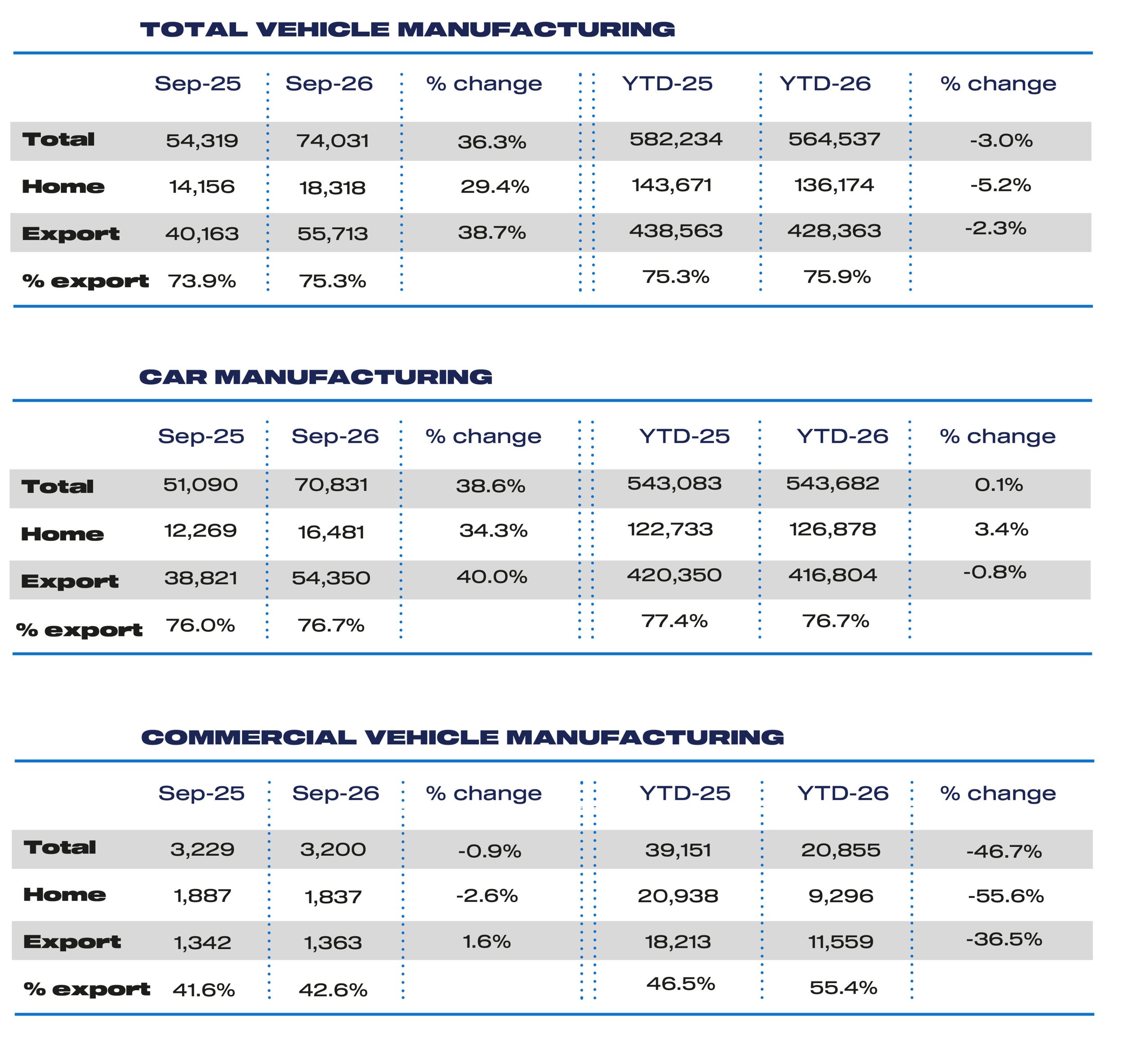
In the first three quarters of 2026, UK factories built 564,537 cars and Commercial Vehicles which represents a year on year decline of -3.0%.
According to the SMMT, the outlook anticipates full-year production of light vehicles at 731,000 units which is down 2.3% vs 2025 and it sits below the mid-year view. However, output is predicted to recover to 752,000 units in 2027 mostly thanks to new electric models entering production.
That recovery is not without risk where three major threats have been identified to the UK’s competitiveness.
To date, the European Commission’s ‘Made in EU’ proposals excludes UK-built vehicles from their largest market. Secondly, tougher EU rules of origin from the Trade Cooperation Agreement risk the imposition of an annual £1.4 billion tariff bill on EV trade in both directions.
Both of these changes will damage the industry in the UK and the EU, but the EU-UK Summit will be a vital opportunity to seek solutions that benefit both and support that €80 billion trading relationship.
The last significant issue, according to the SMMT, remains with pressure exerted by the ZEV Mandate that could harm manufacturers profitability, diverting dwindling resources that could harm the UK as a place to invest.
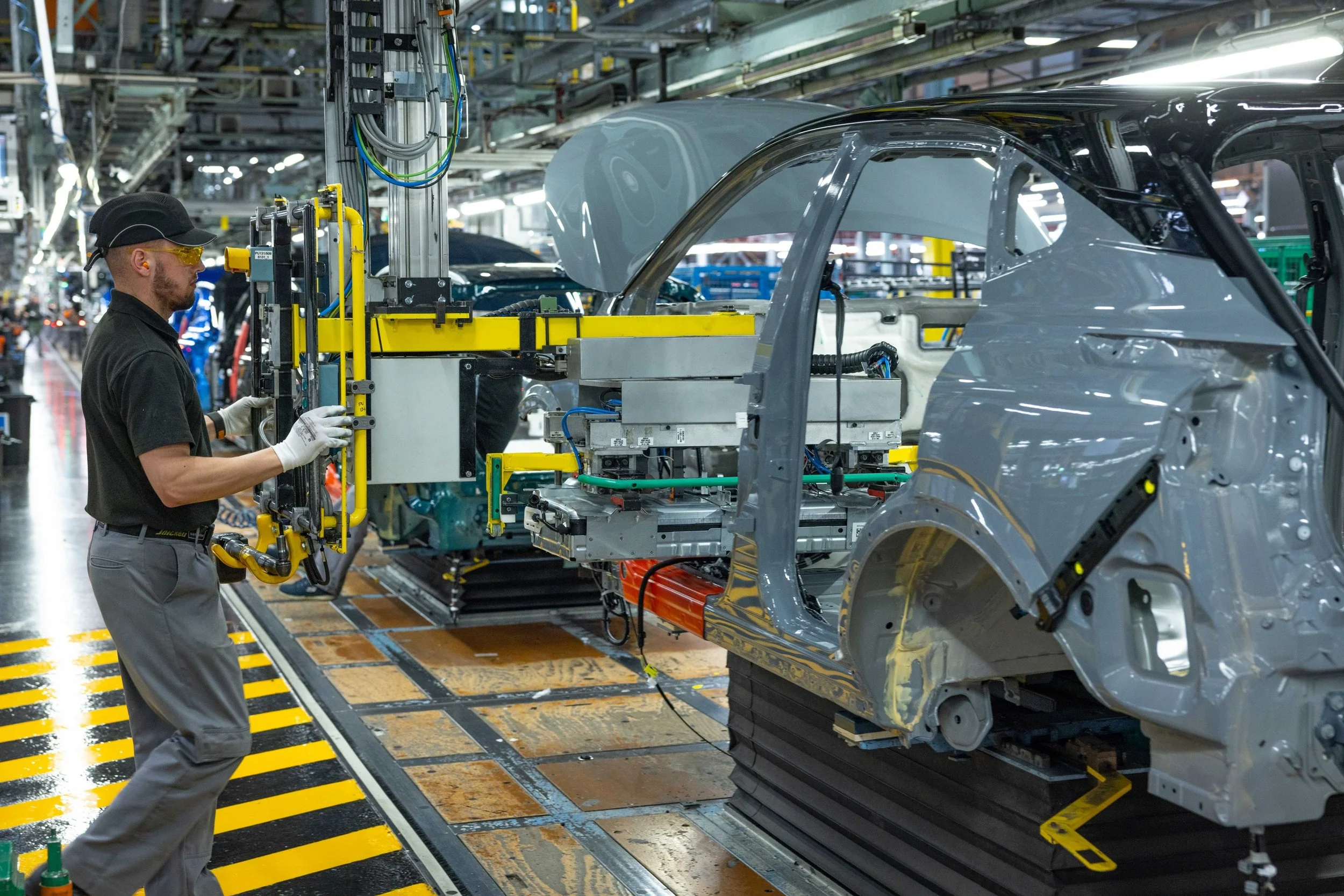
Nissan’s Sunderland Manufacturing Facility
So far, the industry has committed £14.3 billion in new EV plants and models since 2020 and it’s investing billions more in discounts as well as other incentives to sell them. But, the slower than predicted growth and aggressive price cuts risks 188,000 British jobs as well as an annual £18 billion contribution to the UK economy. The SMMT calls for the ZEV Mandate to review and realign the EV trajectory and has requested meaningful reform of the mandate.
Mike Hawes, SMMT Chief Executive, said, “September’s rebound is welcome, but comparison with last year’s disruption masks the pressures on UK manufacturing. Protectionism is becoming a feature of global trade, and that threatens not just UK automotive as an export-led sector, but the health of industries overseas as well. Pragmatic discussions with trade partners are required but Government can immediately help the industry with an urgent conclusion to the ZEV Mandate review. Mandate targets are running ahead of demand and draining resources required for British factories and jobs. Substantive changes – not marginal adjustments – are needed to ensure decarbonisation does not come at the cost of reindustrialisation.”
———
About the Author
Graeme Cobb is a lifelong car enthusiast with a passion for writing about cars, EVs, industry updates and more.
You can find Graeme on 𝕏 at @graeme_cobb