Toyota is synonymous for its hybrid powertrains, and for fans of the technology Toyota isn’t giving up on them anytime soon. Their next-generation hybrid powertrain is designed for future multi-pathway vehicle platforms, combining new four-cylinder 1.5-litre engines with a naturally aspirated version and a turbocharged version.
Toyota says this system is “lighter with more compact electric motors, power control units and inverters.”
The aim is for a more than 15% improvement in fuel economy and that could translate to 81MPG from the Yaris and as much as 78 MPG from the Prius, for example. But this isn’t the only benefit as the new hybrid system is much smaller than previous systems, allowing for better packaging in platforms designed first for battery electric vehicles, whilst also being suitable for hybrids, plug-in hybrids and EREVs.
Toyota’s multi-pathway approach can be adapted to suit the needs of various different markets as well as their respective market demands. So this is a complete reset of hybrid technology starting from a first principles approach which offers a modern take on the now 30 year old technology, with a focus on scaling future battery electric vehicles.
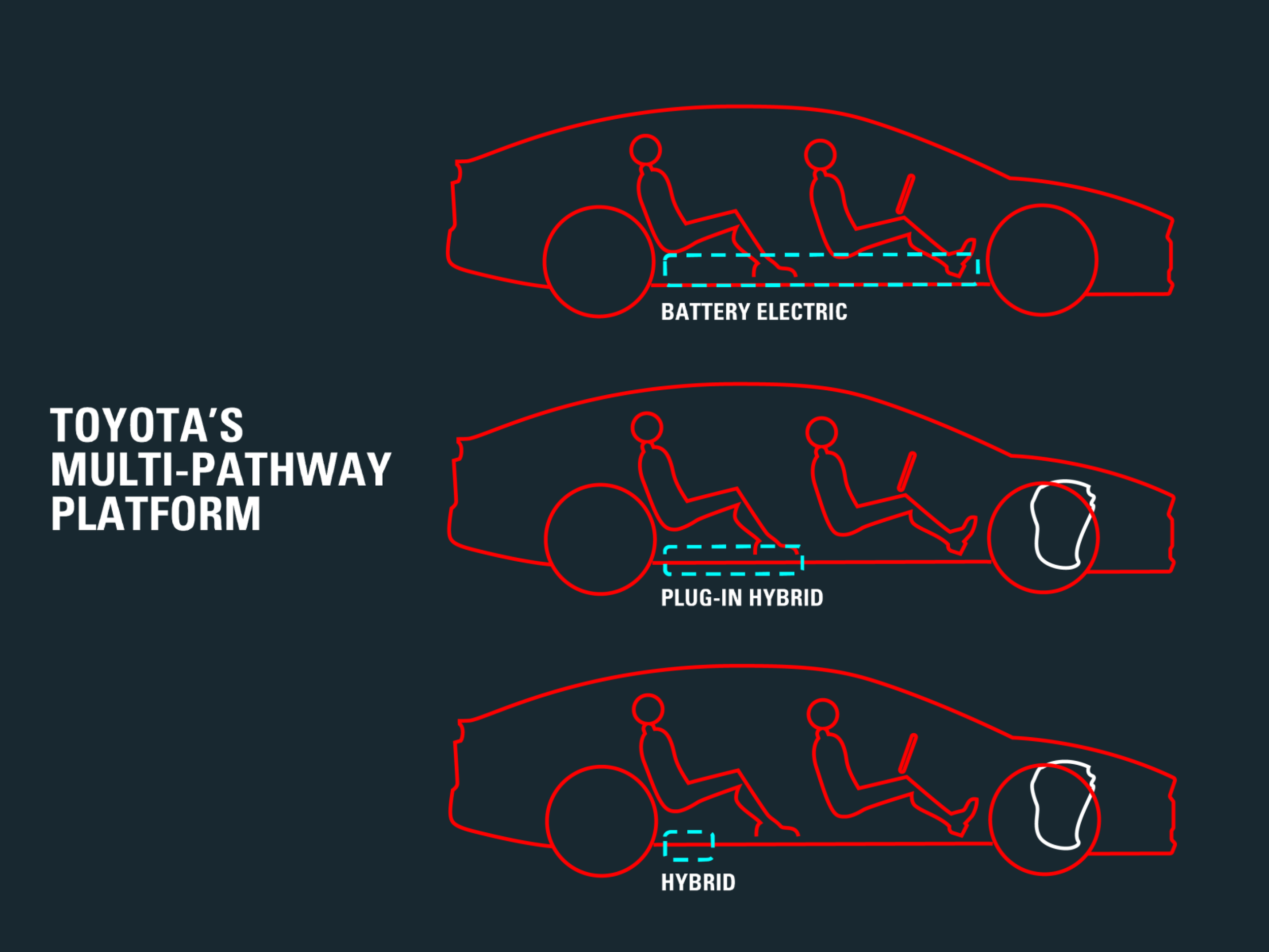
Toyota’s Multi Pathway Platform
Toyota’s new platform can be adapted to suit the needs of various different markets as well as their respective market demands. So this is a complete reset of hybrid technology starting from a first principles approach which offers a modern take on the now 30 year old technology.
Better fuel economy
With Toyota targeting a 15% plus improvement in fuel economy, it’s expected that significant gain will come from “lower mechanical friction, improved thermal management, reduced electrical losses and lower aerodynamic drag”.
Flexible multi-pathway platforms
Normally, multi-fuel platforms are designed around the internal combustion and all the parts that go with that, and then it’s adapted for the battery electric cars, as Stellantis has been doing.
However, for Toyota this is a break from tradition with the focus on future proofing its electric vehicles as the priority, whilst seamlessly offering hybrid and plug-in hybrid powertrains from the same basic architecture. There should be no compromise with interior space or vehicle capability.
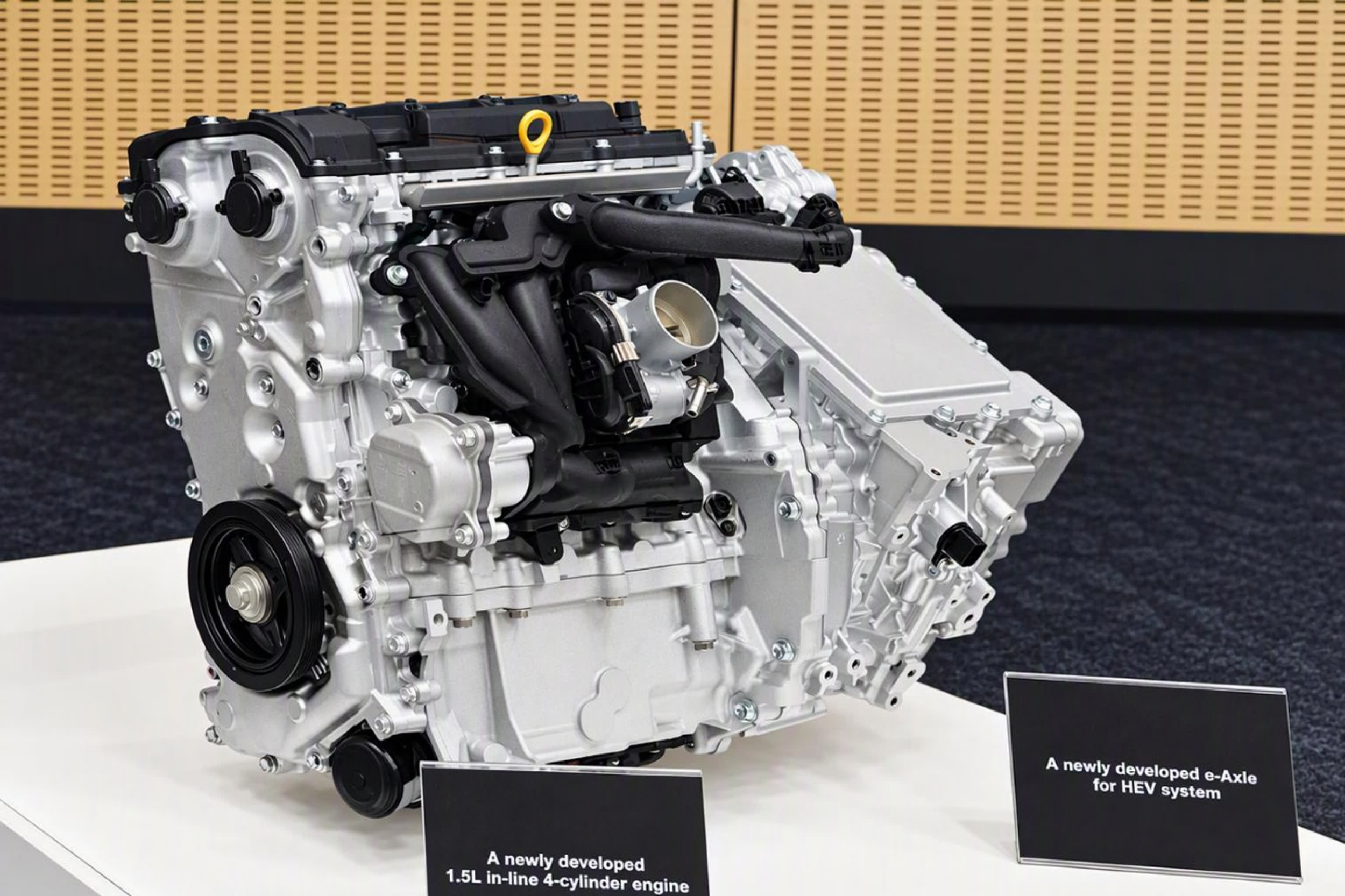
Toyota’s new 1.5 litre Hybrid Engine
The hybrid system is now much smaller than previous incarnations which means that it can be packaged into new multi-pathway platforms designed without compromise for battery-electric vehicles.
The smaller engine and hybrid packaging also lends itself to a lower bonnet height and that provides the essence of efficiency by enabling aerodynamic cars with sleek designs, much like the new Prius.
Manufacturing flexibility
With a shared common architecture Toyota can synergise R&D and production investments across a higher volumes of combined vehicles creating greater economies of scale.
The shared architecture and factories allow for manufacturing to respond quickly and seamlessly to various different demands from all the regions Toyota serves, future proofing its operations and delivering the powertrains needed where specific demand calls for them.
Carbon neutrality
Toyota sees its new efficient hybrid technology as a parts of its journey to carbon neutrality with the system able to run on renewable and carbon-neutral fuels, as well as regular petrol and diesel. However, carbon-neutral and renewable fuels are still in their infancy and not widely available.
Summary
By taking this approach, Toyota can safely transition to a future of battery-electric vehicles whilst still growing and expanding its business globally. However, one bet that Toyota is making that has failed to get traction is its hydrogen fuel cell vehicles as it plans to continue to expand that powertrain choice. But given the cold reception for HFCEV passenger cars, Toyota might need to redirect its ambitions to larger vehicles.
———
About the Author
Graeme Cobb is a lifelong car enthusiast with a passion for writing about cars, EVs, industry updates and more.
You can find Graeme on 𝕏 at @graeme_cobb