

The Complete Beginner’s Guide to EV Ownership
Everything you need to know about buying, charging and living with an electric car in the UK — including real-world range, home charging, running costs and the truth about EV ownership.
Everything you need to know about buying, charging and living with an electric car in the UK, including real-world range, home charging, running costs and the truth about EV ownership.
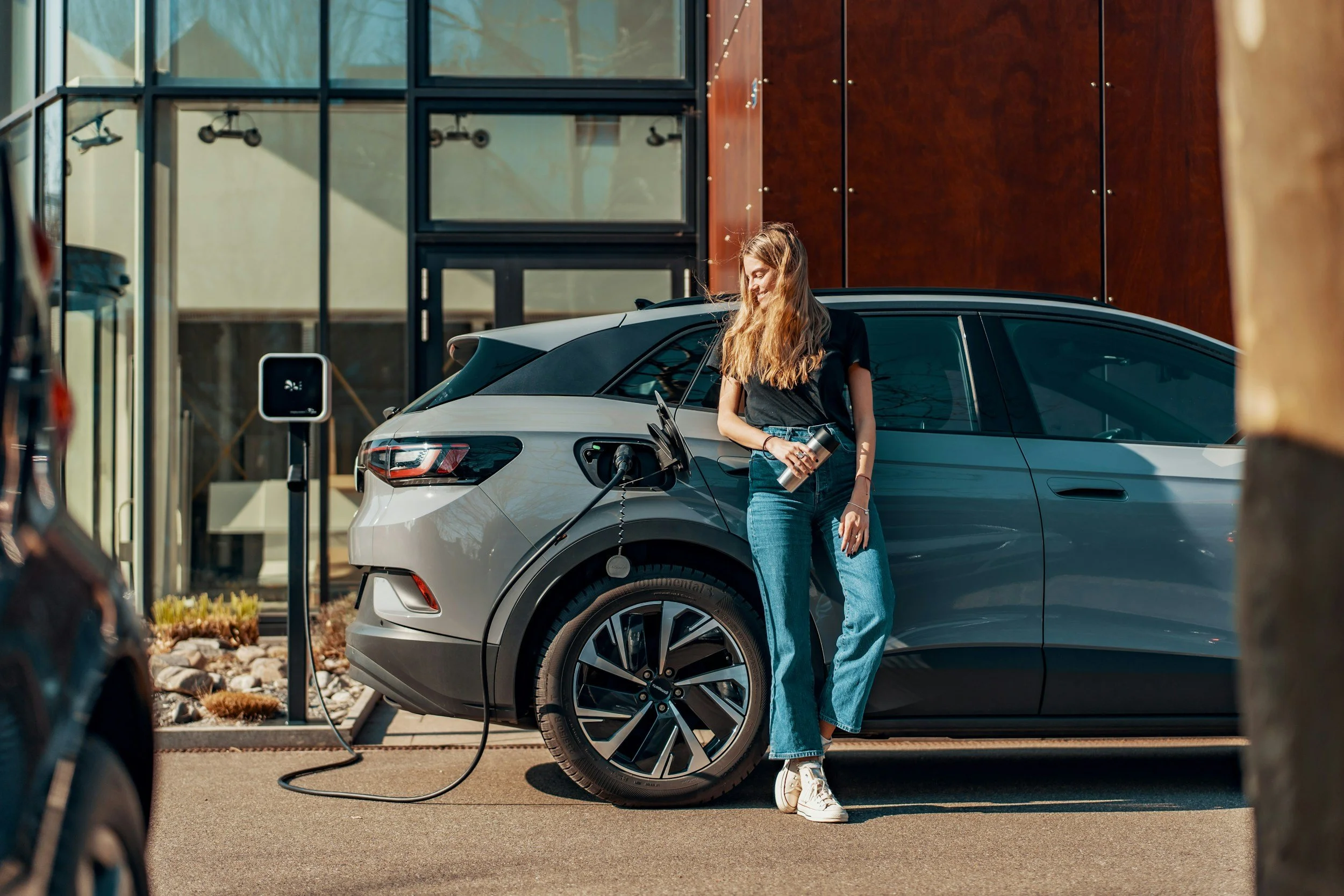
Why the change?
Electric cars are no longer a futuristic novelty. They are becoming an increasingly common sight on British roads, and for many drivers, the shift towards electric motoring is starting to make far more sense than it did even a few years ago. There’s a lot of fear, misinformation, and clickbait out there about EVs, so let’s try to cut through the fluff and tell it how it is.
Rising petrol and diesel prices, increasingly expensive servicing costs and growing interest in lower running costs have all pushed more drivers towards EVs. At the same time, battery technology has improved dramatically, public charging infrastructure continues to expand and there is now a much wider choice of electric vehicles available across almost every price point.
Despite this, many people still feel overwhelmed when researching EVs for the first time. Terms like kWh, regenerative braking, battery preconditioning and rapid charging can initially sound intimidating, particularly if you have spent years driving traditional petrol or diesel cars.
The good news is that electric car ownership is often much simpler than many people expect. Once the basics are understood, most drivers quickly adapt to the routine and many say they would struggle to return to a combustion-engined car afterwards.
Whether you are considering your first EV, wondering if home charging will work for you or simply trying to understand the terminology, this guide explains everything you need to know before making the switch.
Why More Drivers Are Moving to EVs - Does it make financial sense?
For many households, the biggest reason to consider an electric vehicle is financial. Fuel prices in the UK have become increasingly unpredictable over recent years and many petrol and diesel drivers have become used to spending substantial amounts each month just to keep their cars on the road. Regular visits to the petrol station can quickly become expensive.
This is where electric vehicles can dramatically change the ownership experience, especially for drivers who are able to charge at home. Charging overnight on a dedicated EV tariff can cost significantly less than filling a petrol or diesel car with fuel. Some off-peak electricity tariffs are specifically designed for EV owners and offer heavily reduced overnight electricity rates. In certain cases, drivers can add hundreds of miles of range overnight for a fraction of the cost of a tank of fuel.
For many owners, the savings become even more noticeable over the course of a year. Depending on mileage and charging habits, some households reduce their monthly motoring costs by hundreds of pounds after moving to an EV.
Convenience is another major advantage that many first-time EV buyers underestimate. Drivers with home charging facilities often stop thinking about ‘refuelling’ altogether. Instead of making trips to petrol stations, the car simply charges overnight while parked at home. By morning, it is ready for the next journey.
A wallbox for your home often costs in the region of £1,000, although some brands, like Pod for example, have a monthly subscription model that may be more attractive to you. Pair this up with an EV-friendly overnight charging tariff, like those available from Octopus (and others), and you’re all set for some cheaper motoring.
The good news for buyers considering the switch to electric is that the market now offers more choice than ever before. The used EV market has grown rapidly over the past few years, meaning there are now plenty of affordable second-hand electric cars available with strong real-world range and modern technology. At the same time, competition between manufacturers has also created some genuinely attractive lease offers on brand-new EVs, with websites such as Leasing.com regularly featuring competitive deals across everything from compact hatchbacks to premium electric SUVs.
Home Charging
While public charging infrastructure continues to improve rapidly across the UK, home charging remains one of the biggest advantages of EV ownership.
Drivers with off-street parking or a driveway usually enjoy the best experience because they can install a dedicated home charger and take advantage of cheaper overnight electricity rates. Most UK home chargers operate at around 7 kW and are capable of fully charging many EVs overnight. Smart chargers can also automatically schedule charging during the cheapest electricity periods, helping reduce costs even further. This is generally very simple to setup with most modern equipment.
Without home charging, EV ownership can still work, and does for many, but the experience is often less convenient and more expensive. Public charging is typically more expensive than charging at home and, instead of charging at home whilst you sleep, you may need to factor in stops (and waits) at public charging locations - unless you have one within walking distance of your home.
Understanding EV Range
Range is still one of the first questions most people ask when researching an electric vehicle.
Manufacturers advertise official WLTP range figures, but real-world range can vary depending on driving conditions, weather and driving style. Much like fuel economy figures in petrol or diesel cars, official EV range estimates are usually optimistic.
Motorway driving typically uses more energy because higher speeds create significantly more aerodynamic drag. Cold weather can also reduce range because the battery and cabin both require heating. On the other hand, urban driving tends to suit EVs extremely well thanks to regenerative braking systems that recover energy while slowing down.
Most modern family EVs now comfortably deliver between 200 and 300 miles of real-world range, while some premium models can travel considerably further.
For the vast majority of drivers, this is more than enough for daily commuting, school runs and weekend use.
Battery Size Explained
Battery capacity is measured in kilowatt-hours, commonly shortened to kWh.
The easiest way to understand this is to think of kWh as the EV equivalent of fuel tank size. A larger battery can store more energy, which usually allows for greater range. Smaller electric cars may use battery packs around 30/40 kWh, while larger and more premium EVs often use batteries between 70 and 100 kWh.
Battery size alone does not tell the full story. Efficiency also plays a major role in determining range. A lighter, more aerodynamic EV with a smaller battery may travel further than a heavier car with a larger battery pack.
Understanding kW vs kWh
One of the most confusing aspects of EV terminology is the difference between kW and kWh.
In simple terms:
kWh measures stored energy
kW measures power
kWh refers to battery capacity, while kW is normally used to describe charging speed.
For example, a home wallbox charger in the UK typically operates at around 7 kW, while public rapid chargers can deliver anything from 50 kW to more than 350 kW depending on the charger.
Once this distinction is understood, much of the EV terminology becomes far easier to follow.
Public Charging Explained
Public charging infrastructure has expanded rapidly across the UK over recent years and continues to improve.
There are generally two main types of public charging.
Destination chargers are slower chargers commonly found in places where drivers naturally spend time, such as hotels, supermarkets, gyms and shopping centres. These chargers are designed for longer stays where the car can gradually top up while parked.
Rapid chargers are designed for faster charging during longer journeys and are commonly located at motorway services, petrol stations and major travel routes.
Modern EVs can often recover substantial amounts of range in around 20 to 40 minutes, depending on the vehicle and charger capability.
Charge cards LIke Electroverse can help to manage costs and give you a stress-free way to pay at many public chargers.
For more information on how to save on public charging, give this video a watch.
Charging Speed Depends on the Car Too
One of the most common misunderstandings around EVs is assuming the charger alone determines charging speed.
In reality, every electric vehicle has its own maximum charging capability. Even if you connect to an ultra-rapid charger, the car will only charge as quickly as its battery and charging system allow.
For example, a car limited to 100 kW charging will never exceed that speed regardless of how powerful the charger itself may be.
This is why charging claims should always be compared carefully when researching EVs.
Why Charging Slows Above 80 Percent
Rapid charging speeds are not consistent throughout the entire charging process.
Charging is usually fastest when the battery is relatively empty and gradually slows as the battery fills. Once the battery reaches around 80 percent, charging speeds often reduce significantly to protect battery health and manage temperature.
As a result, many experienced EV drivers simply charge to around 80 percent during longer motorway journeys before continuing on to the next charging stop.
In many situations, this approach is actually quicker overall than waiting for the battery to reach 100 percent.
Battery Health and Degradation
Battery degradation remains one of the biggest concerns among first-time EV buyers, but modern batteries are proving to be far more durable than many people originally feared.
Over time, all batteries gradually lose some capacity, but most modern EVs retain the majority of their usable range for many years.
Manufacturers typically offer battery warranties lasting around eight years or approximately 100,000 miles, providing reassurance for long-term ownership.
Advanced battery management systems also carefully monitor temperatures and charging behaviour to help preserve battery health over time. You’ll find many examples of well used cars from the likes of Tesla with high mileage that are still operating very well.
Regenerative Braking Explained
Regenerative braking is one of the key technologies that helps improve EV efficiency.
When the driver lifts off the accelerator, the electric motor effectively acts as a generator and recovers energy that would otherwise be lost through traditional braking. That recovered energy is then fed back into the battery.
This not only improves efficiency but can also reduce brake wear.
Some EVs offer particularly strong regenerative braking systems that allow for one-pedal driving, where simply lifting off the accelerator slows the car significantly without regularly needing to use the brake pedal.
Are EVs Right for Everyone?
Electric cars are improving rapidly, but they may not suit every driver equally well.
For drivers with reliable access to home charging and relatively predictable daily mileage, EVs often make excellent sense financially and practically.
However, people who regularly travel extremely long motorway distances without home charging access may still find petrol, diesel or hybrid vehicles more convenient for the time being.
That said, charging infrastructure is expanding quickly and battery technology continues to evolve at a remarkable pace.
Final Thoughts
Electric vehicles are no longer niche products aimed solely at technology enthusiasts or early adopters. They are increasingly becoming mainstream family cars, commuter vehicles and company cars throughout the UK.
While the terminology can initially seem confusing, the reality of EV ownership is often much simpler than people expect. Once the basics are understood, many drivers quickly discover that electric motoring is not only easy to live with, but often significantly cheaper and more convenient than running a petrol or diesel car.
For drivers with home charging facilities in particular, the ability to avoid rising fuel prices and wake up every morning with a fully charged car can completely transform day-to-day motoring.
EV : Glossary of Terms
Here is a quick reference points to help you navigate the terminology around electric cars.
AC Charging
Alternating Current charging typically used at home or at slower public chargers.
Battery Degradation
The gradual reduction in battery capacity over time.
Battery Preconditioning
A system that heats or cools the battery before rapid charging to improve charging performance.
CCS
Combined Charging System. The most common rapid charging connector used across Europe.
DC Rapid Charging
High-speed charging that delivers electricity directly to the battery.
EV
Electric Vehicle.
Heat Pump
An energy-efficient heating system designed to reduce the impact of cold weather on driving range.
kW
Kilowatt. A measurement of power commonly used to describe charging speed.
kWh
Kilowatt-hour. A measurement of stored energy used to describe battery capacity.
LFP Battery
Lithium Iron Phosphate battery chemistry commonly known for durability and lower production costs.
NMC Battery
Nickel Manganese Cobalt battery chemistry frequently used in longer-range EVs.
One-Pedal Driving
A driving mode where lifting off the accelerator significantly slows the vehicle through regenerative braking.
Rapid Charger
A high-powered public charger designed to quickly add range during longer journeys.
Regenerative Braking
A system that recovers energy while slowing down and feeds it back into the battery.
State of Charge (SoC)
The current battery percentage displayed by the vehicle.
Tethered Charger
A charger with a permanently attached charging cable.
Untethered Charger
A charger requiring the driver to use their own cable.
WLTP
Worldwide Harmonised Light Vehicle Test Procedure, the official European testing standard for efficiency and range.
Zap-Map
One of the UK’s most widely used apps for locating public EV chargers.