
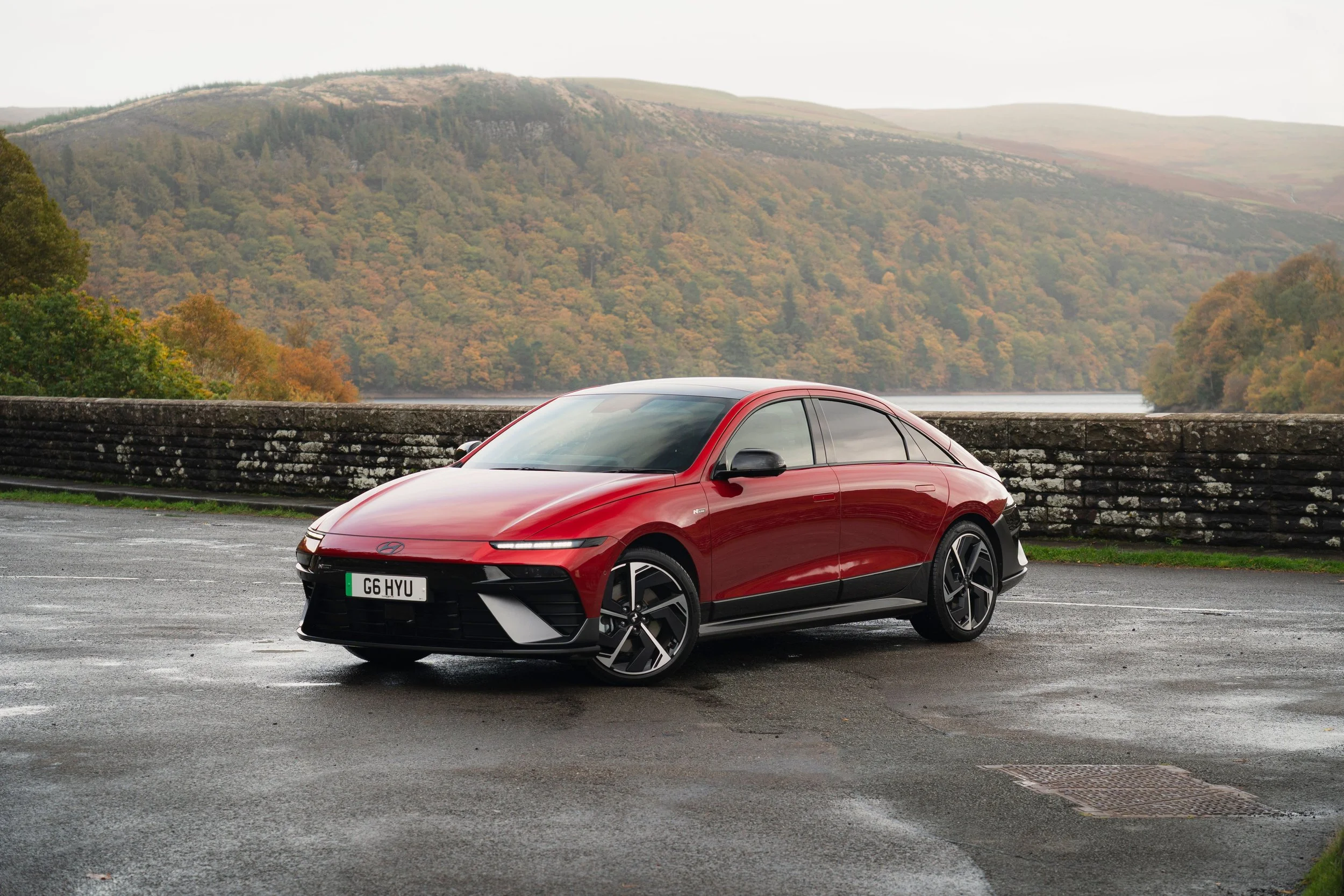
The Ioniq 6 is a rival to the Tesla Model 3 and Mercedes CLA Electric. (Hyundai)
When it comes to electric executive saloons, German car manufacturers dominate the market with the BMW i4 and Mercedes CLA Electric.
However, Hyundai also plays a part in this sector with the Ioniq 6 – the firm’s four-door family saloon, which has just undergone a midlife makeover to keep it looking fresh alongside the competition.
So, does Germany still rule the electric executive saloon category, or have the Koreans caught up with the updated Ioniq 6?
Updates
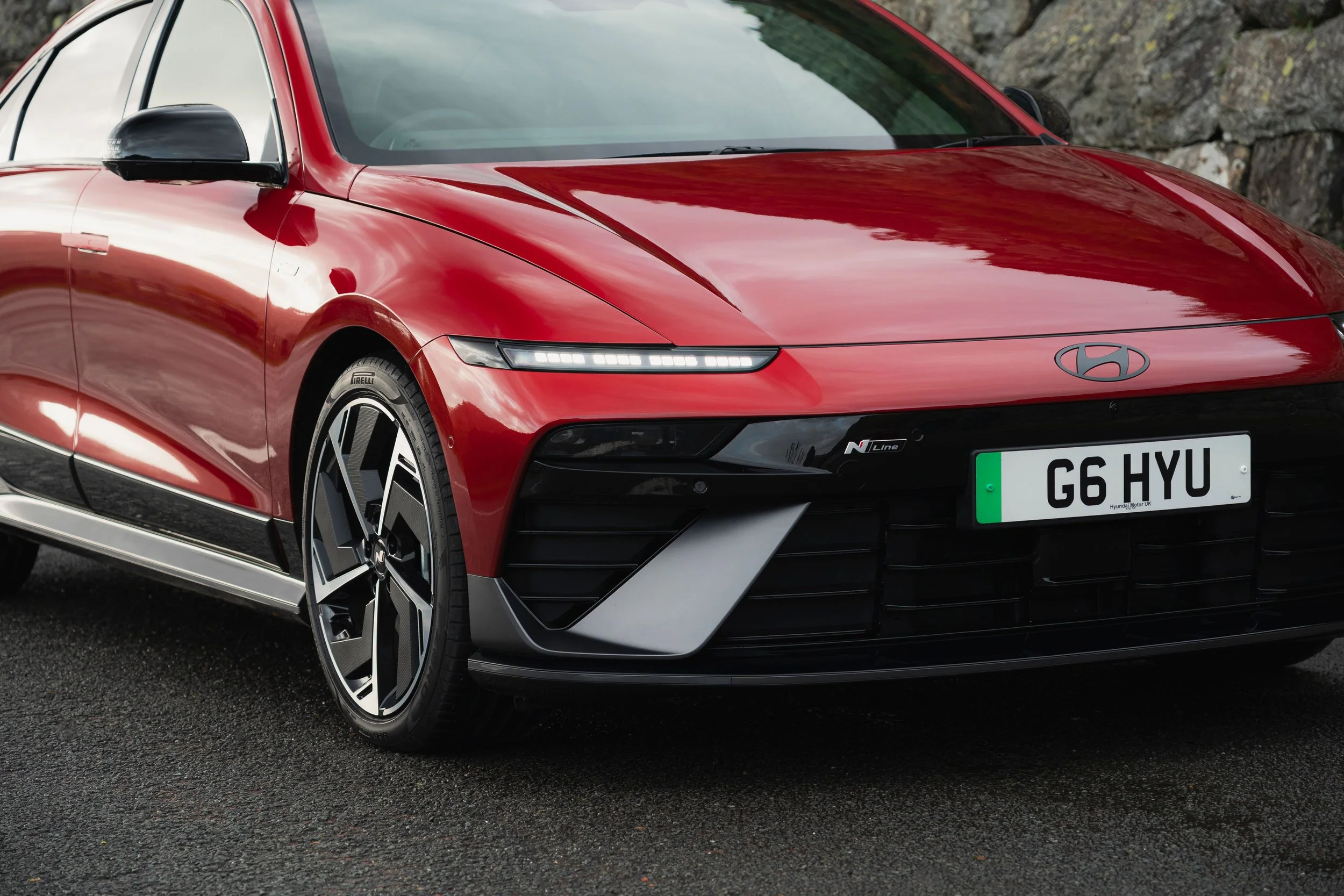
There’s a revised front end and updated interior trim. (Hyundai)
The Ioniq 6 was launched in 2022, and four years later, Hyundai has given its saloon a new ‘shark-nose’ front end, with revised bumpers, headlights and alloy wheel designs. At the back, there is an updated rear bumper and ducktail spoiler.
Inside, the cabin uses Hyundai’s ‘Mindful Cocoon’ lounge concept, featuring new materials, door trim panels, an updated centre console and dual 12.3-inch screens with the firm’s new and improved Connected Car Navigation Cockpit user interface.
Underneath, there are updated battery packs, while sporty N Line and N Line Evo trim levels join the range to give customers more choice when ordering their car.
Engines and transmissions
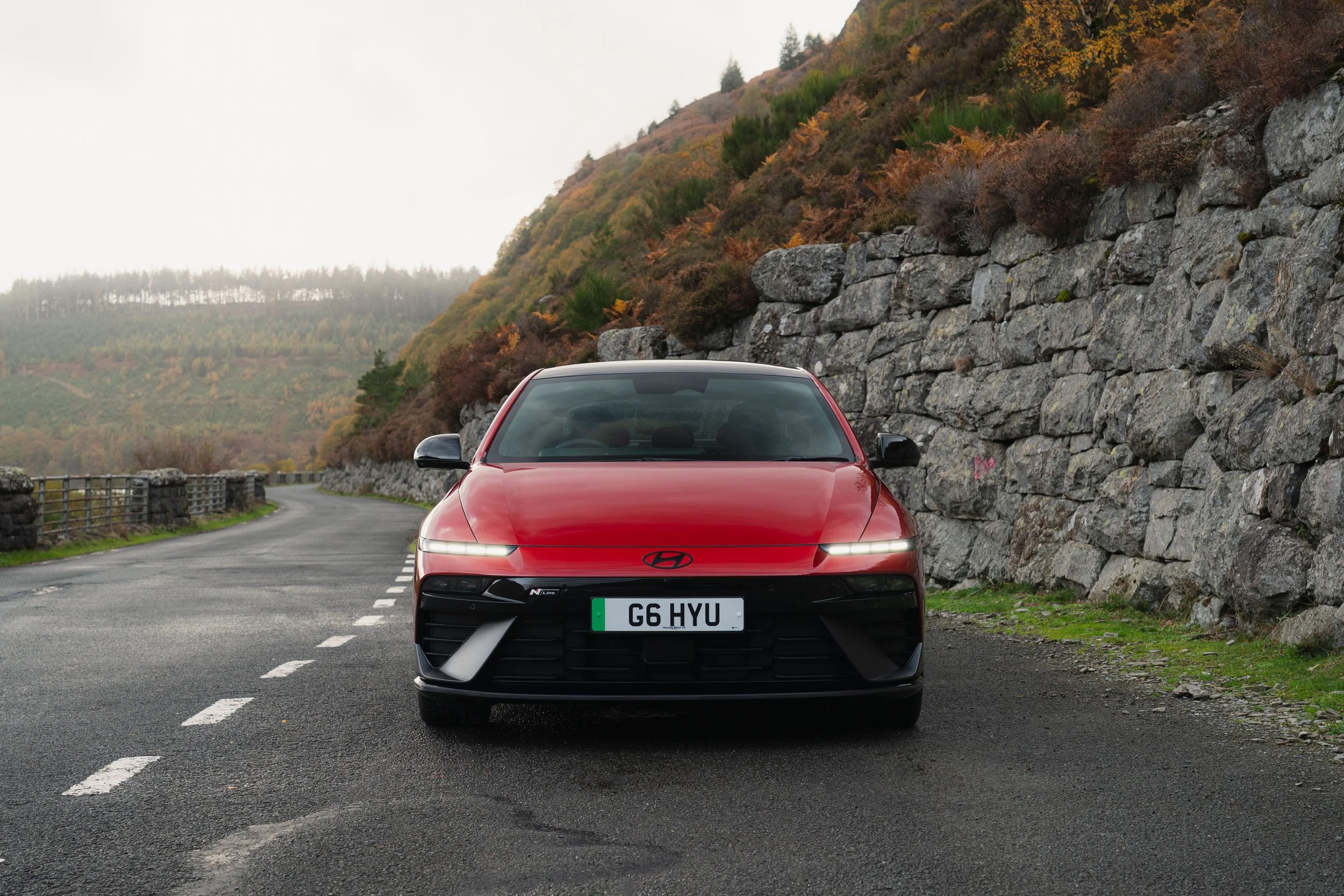
The Ioniq 6 can be specced with a choice of rear-wheel-drive and all-wheel-drive setups. (Hyundai)
The updated Ioniq 6 is available with one battery pack, which is an 84kWh unit that can be specced with rear-wheel-drive and all-wheel-drive setups.
Our test car is fitted with a single rear-mounted electric motor that develops 226bhp and 350Nm of torque, while it can take the car from 0-60mph in 7.2 seconds and will reach a top speed of 114mph.
Hyundai claims the car in this configuration can travel up to 364 miles between charges. Also, thanks to its onboard 800-volt architecture, ultra-rapid DC charging will be compatible, although maximum charging speeds have not been revealed at this stage.
The dual-motor all-wheel-drive model boosts power to 321bhp and 605Nm of torque, while the entry-level Premium model with the smaller 18-inch wheels can travel a claimed 423 miles on a charge.
Behind the wheel
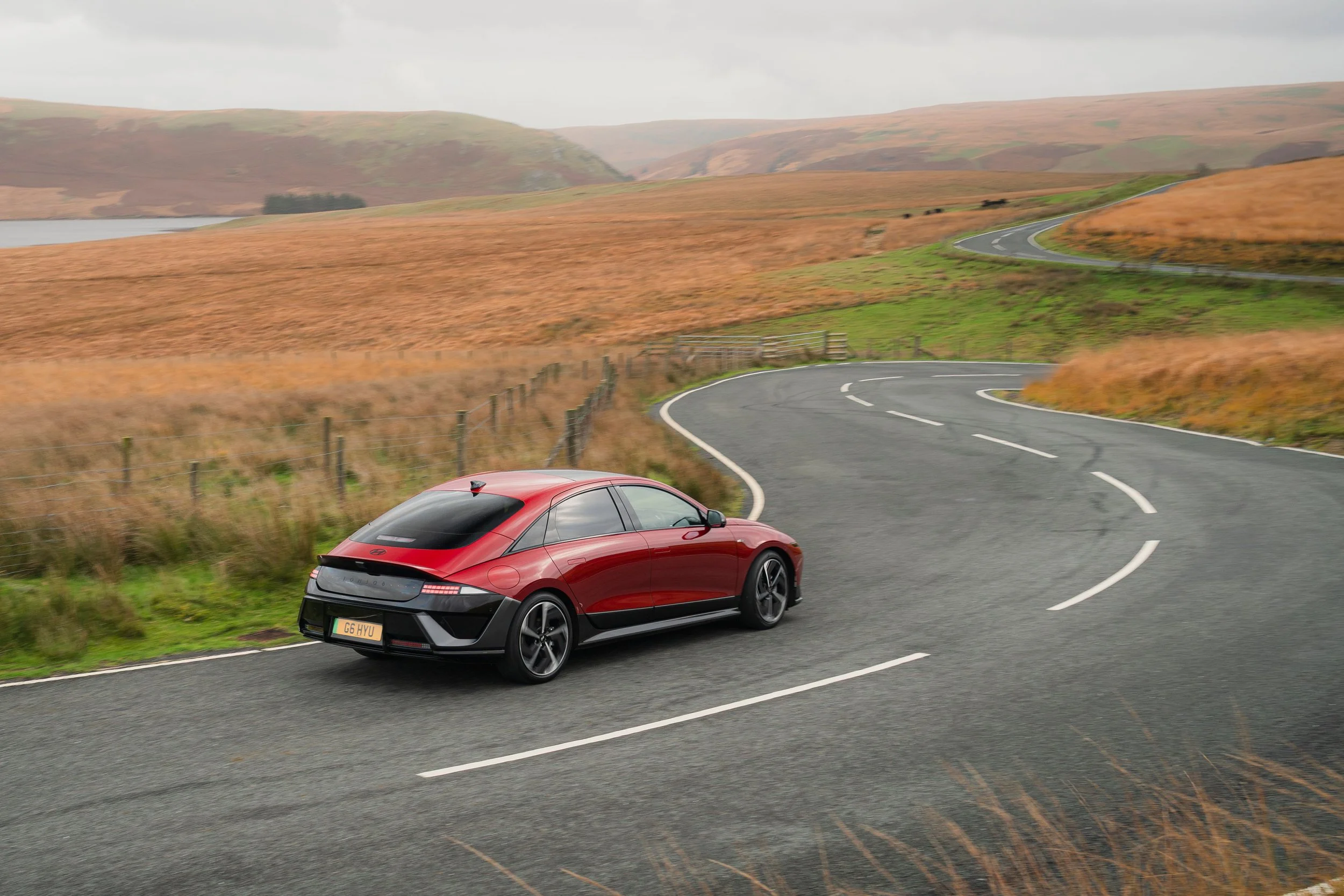
Its limited body lean and sharp handling make it good fun on a twisty road. (Hyundai)
Hyundai makes some of the most driver-focused EVs on the market, and the updated Ioniq 6 is proof of that.
On a twisty road, the car’s sharp handling, impressive body control and rear-wheel-drive layout give it a dynamic edge, while the suspension isn’t too crashy over undulations, despite our N Line test car’s 20-inch alloy wheels.
There are several drive modes, but Sport is our favourite, sharpening up the throttle response and adding weight to the steering to give a more visceral edge.
Around town, the Ioniq 6 is effortless to drive, while there is regenerative braking which can be controlled via the steering wheel-mounted paddles. If you press and hold down the left-hand paddle, this activates the ‘i-Pedal’ one-pedal drive mode, which allows the car to come to a standstill when the driver lifts off the accelerator.
The only negatives are that our test car’s N sports steering wheel is too big, and visibility out of the back isn’t the best due to the narrow rear window.
Styling
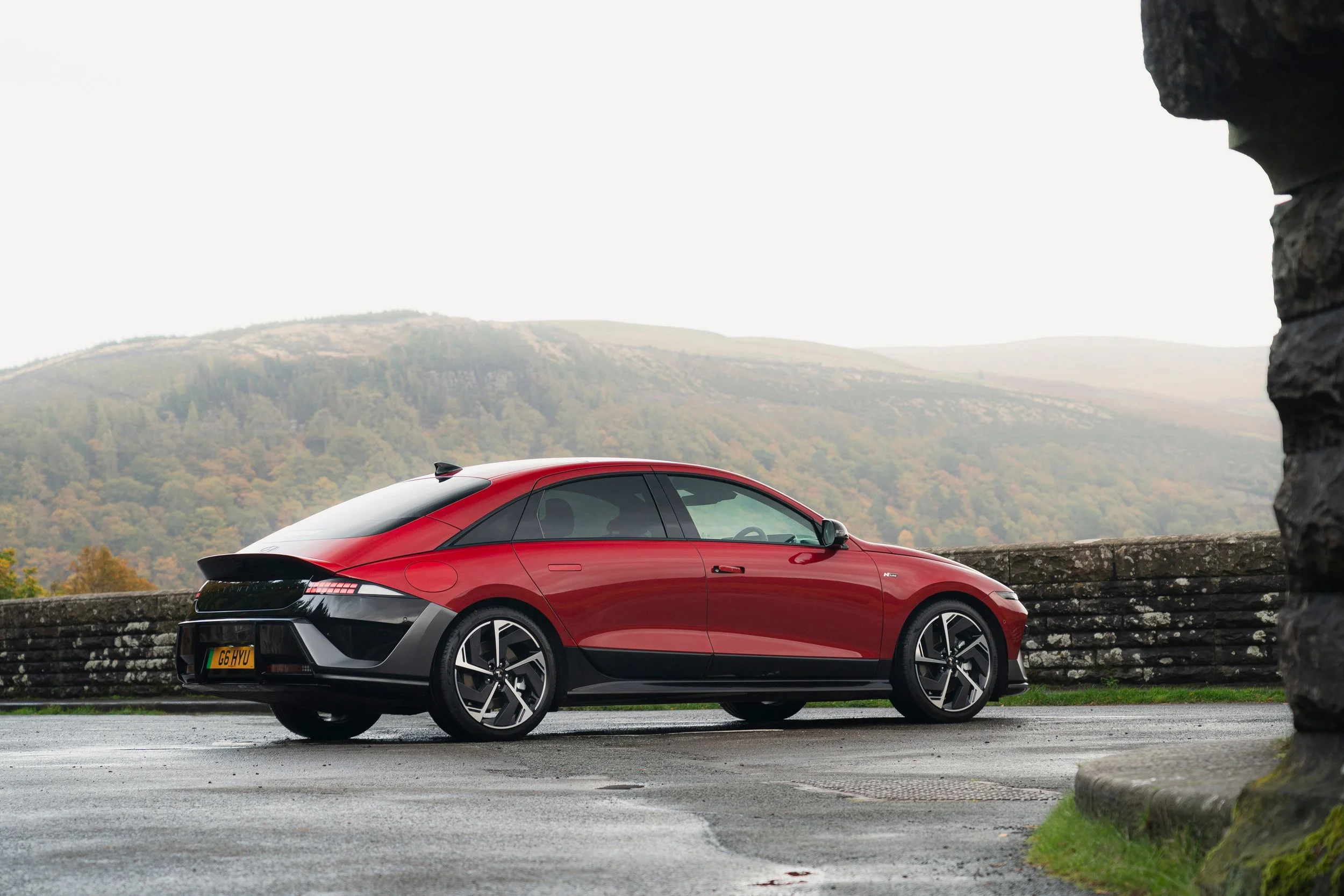
The design is very unique with its tapered roofline and swooping back end. (Hyundai)
The Ioniq 6’s styling will divide opinion, as its sleek body has been designed to be as aerodynamic as possible.
This new model boasts Hyundai’s shark-nose front end, while N Line cars come with larger 20-inch alloy wheels, gloss black lower body mouldings and a revised ducktail rear spoiler.
The tapered roofline and swooping back end give the car its unique identity. We really like the Ioniq 6’s looks, but others might prefer the simpler design of a Tesla Model 3.
Interior and practicality
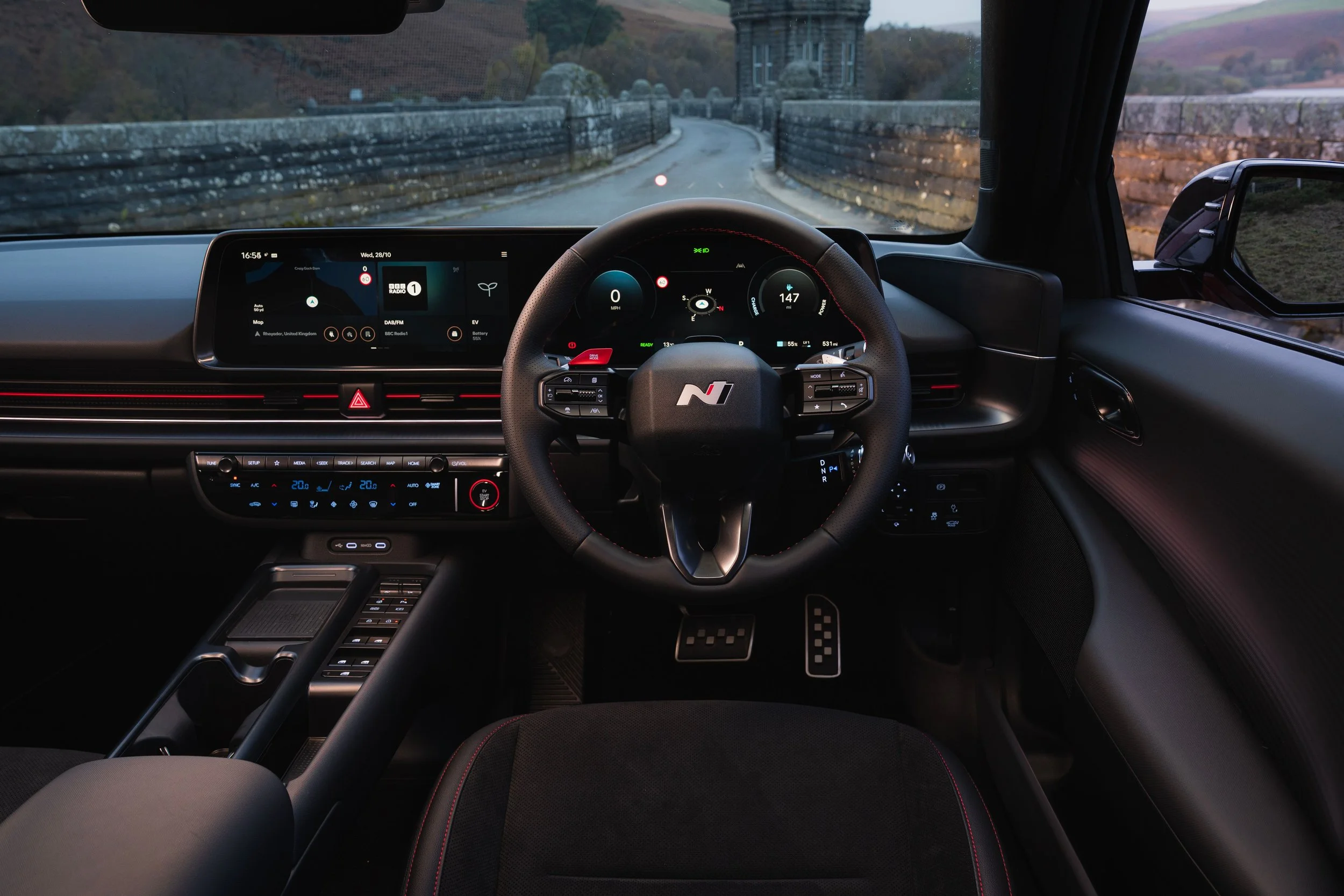
The cabin boasts a redesigned centre console, new materials and updated door cards. (Hyundai)
Inside, the Ioniq 6’s cabin has a futuristic and airy feel, thanks to the dual 12.3-inch touchscreens and curved dashboard.
Hyundai has updated the car’s Connected Car Navigation Cockpit infotainment system, which is slick and easy to use. There is also a redesigned centre console and N Line cars come with sports seats, a sports steering wheel and a red strip running across the dashboard.
In terms of storage, the Ioniq 6 uses its space wisely, with a large glovebox, a cut-out under the floating centre console, two cup holders, a wireless smartphone charger, a deep compartment under the centre armrest and wide front door bins.
In the back, the car’s completely flat floor and cavernous rear legroom make it easy for taller adults to stretch out; however, the sloping roofline does eat into headroom, with six-foot passengers finding that their heads will brush up against the roofline. At least there is additional storage, including two more cup holders in the centre armrest, seatback pockets and large rear door bins.
Open the boot and there is 401 litres of space – that’s 69 litres less than a BMW i4 and 193 litres less than a Tesla Model 3. Furthermore, the car doesn’t come with a hatchback-opening tailgate, which means that the narrow aperture makes it harder to load taller items into the back. To boost flexibility, there are standard 60:40 split-folding rear seats, but they can only be folded down from two levers in the boot.
Our rear-wheel-drive test car boasts a 45-litre frunk, though if you go for the all-wheel-drive model, that space drops to just 15 litres.
Prices and trim levels
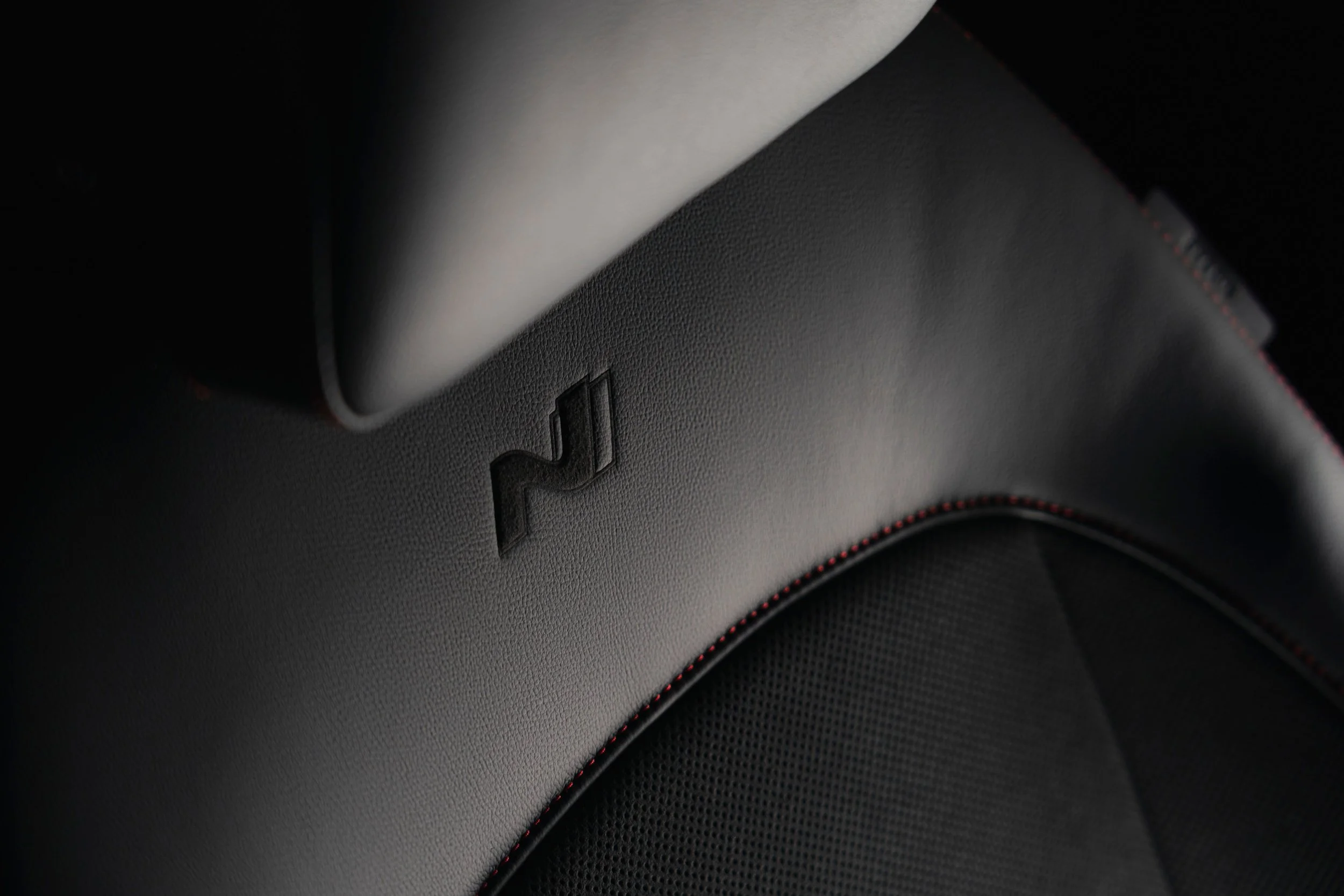
N Line and N Line Evo models add a sporty touch to the Ioniq 6 model line-up. (Hyundai)
The updated Ioniq 6 comes with lots of standard equipment, while the entry-level rear-wheel-drive Premium and N Line cars are eligible for the maximum £3,750 government Electric Car Grant incentive. That means it undercuts a Tesla Model 3 by more than £4,500 for the standard Premium car, and it’s a colossal £18,000 less than the cheapest BMW i4.
Premium (£33,230 inc ECG): The Premium is the entry-level model and comes with equipment such as 18-inch alloy wheels, rear privacy glass, heated front seats, a heated steering wheel, a powered tailgate and a heat pump.
N Line (£36,240 inc ECG): The N Line car adds lots of sporty details, such as 20-inch alloy wheels, N Line exterior and interior styling, sports seats, an N sports steering wheel, heated rear seats and aluminium pedals.
N Line Evo (£43,270): The N Line Evo sits at the top of the range and boasts ambient interior lighting, a Bose premium sound system, a head-up display and a handy vehicle-to-load (V2L) function, which enables electrical appliances, such as an electric BBQ or camping equipment to be plugged in using the car’s battery pack.
Verdict
The updated Hyundai Ioniq 6 won’t win the hearts of every executive car buyer due to its unusual looks and small boot.
However, push those negatives to one side and the Ioniq 6 is a sensible and cost-effective choice in this German-dominated sector. Plus, with the entry-level models qualifying for the maximum government Electric Car Grant, it offers great value for money.
If you’re looking for an electric executive saloon that blends into the crowd, the Hyundai Ioniq 6 won’t be for you. But if you want something that’s interesting, quirky and fun to drive, then this Korean competitor is a great alternative to the BMW i4, Mercedes CLA Electric and Tesla Model 3.
RATING: ★ ★ ★ ★ ☆
Pros:
Great to drive
Responsive handling
Comes with foldable rear seats
Entry-level models receive maximum government ECG incentive
Now represents great value for money
Cons:
Divisive looks
Limited rear headroom
Small boot compared to rivals
Lots of German competition
FACTS & FIGURES
Model we’ve tested: Hyundai Ioniq 6 N Line RWD 84kWh
Price of test car: £36,240 (Inc ECG)
Engine: 84kWh battery pack with single electric motor
Power: 226bhp
Torque: 350Nm
0-60mph: 7.2 seconds
Top speed: 114mph
CO2 emissions: 0g/km
Electric range: 364 miles
Maximum charging speed: TBC
