
First look at the All-New Hyundai Tucson
Hyundai has unveiled the fifth-generation Tucson, bringing a tougher new look, a substantially upgraded interior and a choice of petrol, hybrid and plug-in hybrid powertrains. With up to 292PS, an electric driving range of around 50 miles and a 695-litre boot, the new model looks set to build on the success of one of the brand’s most important SUVs.
The Hyundai Tucson has become one of the most recognisable cars in the family SUV market, but standing still is not an option in a segment where virtually every manufacturer has a competitive offering. For the fifth-generation model, Hyundai has taken a fairly comprehensive approach to its best-selling SUV, reworking the exterior design, introducing a much more sophisticated cabin and bringing in a new generation of infotainment technology.
I had the opportunity to get up close with the new Tucson during an initial walkaround in the Netherlands, and the changes are immediately apparent. This is a car that looks considerably more assertive than its predecessor, while the interior feels like a meaningful step forward in terms of both technology and perceived quality.
There are still some important questions to answer, particularly around UK pricing, specifications and the final homologated figures for the electrified models. However, the early signs are that Hyundai has paid attention to the things that matter to family SUV buyers, rather than simply making its latest model look different.
Hyundai Tucson: Key specifications
Engines: 1.6-litre turbocharged petrol, hybrid and plug-in hybrid
Maximum power: 292PS (plug-in hybrid)
Hybrid power: 245PS
Plug-in hybrid battery: 17.1kWh
Electric range: Up to approximately 50 miles claimed, subject to final homologation
Boot capacity: 695 litres
Maximum towing capacity: Up to 1,910kg (hybrid)
Length: 4,560mm
Width: 1,900mm
Height: 1,670mm
Infotainment: Pleos Connect, with 12.9-inch or 17-inch central display options
UK arrival: Expected in the first quarter of 2027, subject to confirmation
A much bolder new look
Hyundai describes the new Tucson's design philosophy as ‘Art of Steel’, and it is not difficult to see what the designers are aiming for. The outgoing model had plenty of visual character, but its rounded surfaces and distinctive lighting gave it a somewhat softer appearance. The new car takes a more angular approach, with pronounced wheel arches, sharper bodywork and a stance that makes it look more substantial on the road.
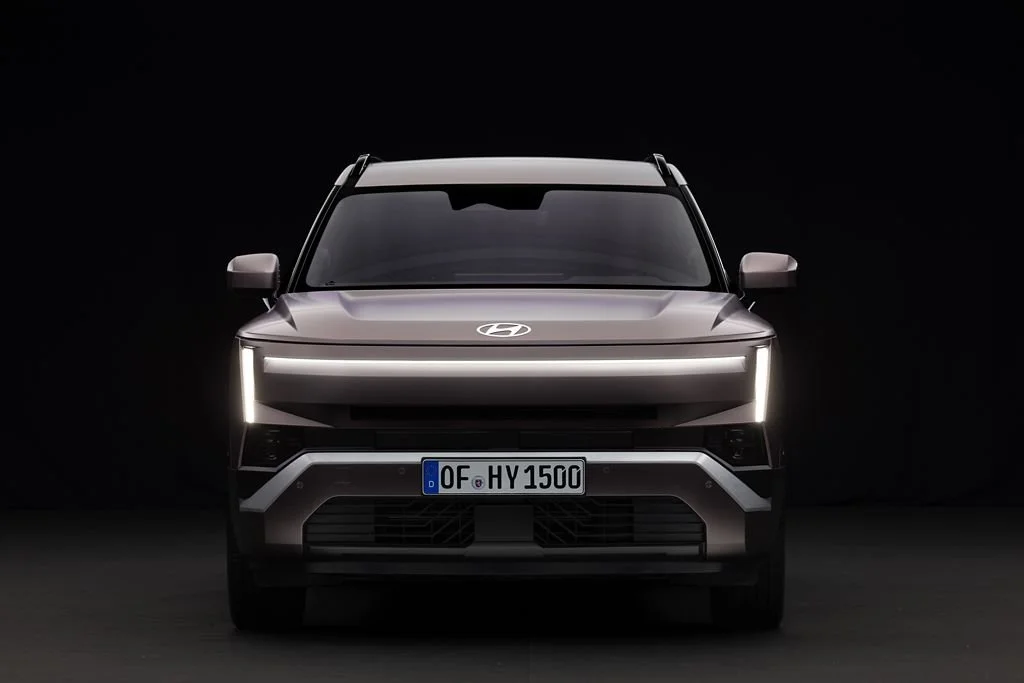
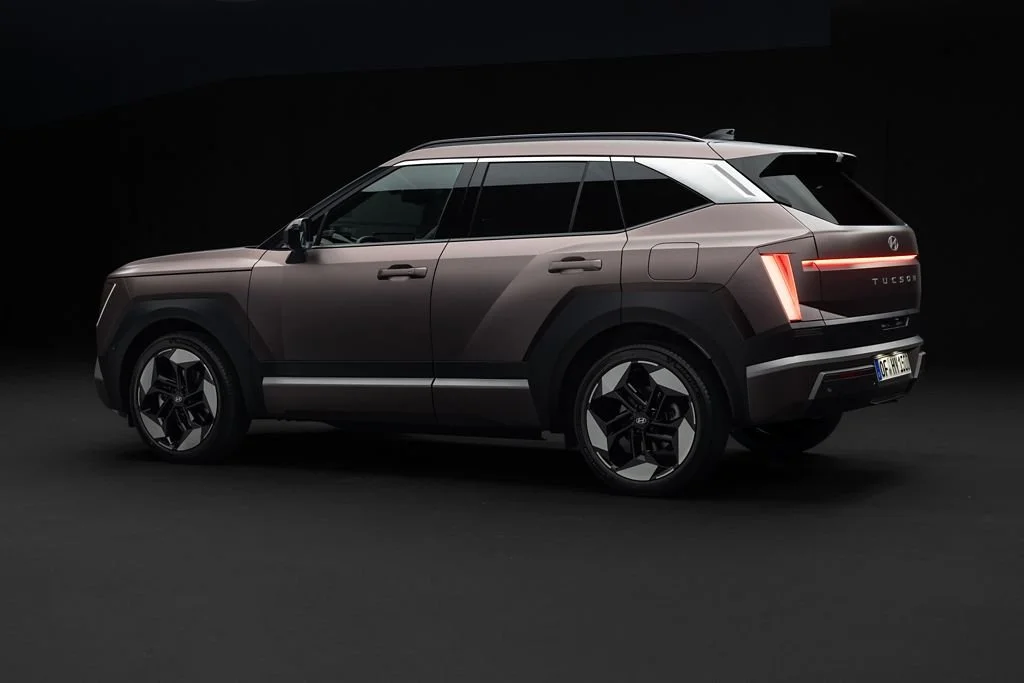
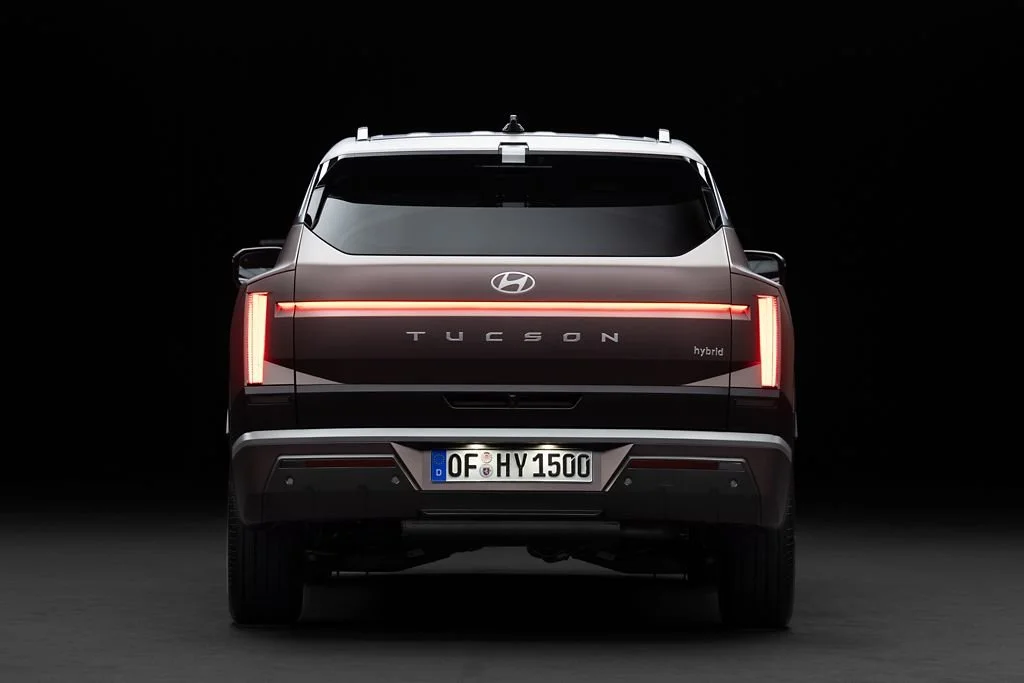
At the front, the new H-Edge lighting signature is one of the most noticeable changes. The lighting stretches towards the outer edges of the vehicle, emphasising its width and giving it a more planted appearance. Depending on specification, the car can also be equipped with Hyundai's Micro Pixel Lighting system, which uses 25,600 individual LED pixels to control light patterns and provide welcome and farewell animations.
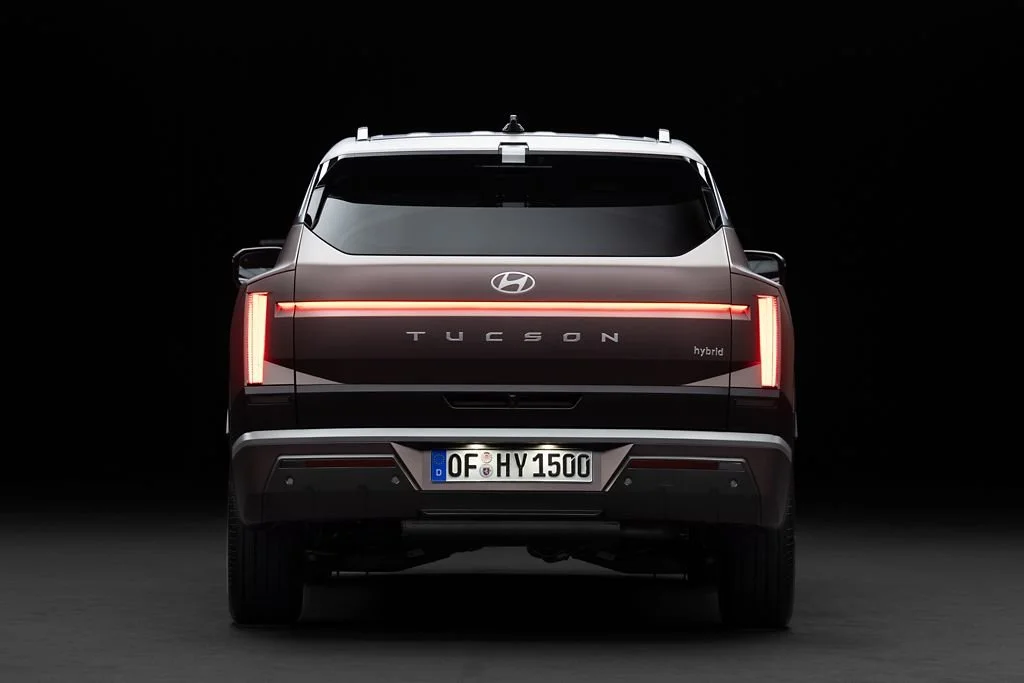
The rear is arguably the most successful angle. The new Prism Rear Lamps feature a three-dimensional internal structure that gives the back of the car a more technical appearance, while the horizontal lighting elements reinforce the impression of width. It is a more cohesive design than the front, although both ends look distinctly more modern than before.
The new Tucson measures 4,560mm long, 1,900mm wide and 1,670mm tall, making it 35mm longer, 35mm wider and 20mm taller than the outgoing model. The wheelbase has also increased by 40mm to 2,720mm, helping to create additional space inside.
Hyundai has introduced several new exterior colours for the European market, including Moonlake Blue and Rich Walnut, both of which are available in metallic and matt finishes. The Rich Walnut colour shown on the car during my walkaround works particularly well with the new bodywork, highlighting the pronounced wheel arches and sharp creases without making the design look overly fussy.
There is also more to come. Hyundai has confirmed that a further dynamically styled version of the new Tucson will make its debut at the Paris Motor Show on 12 October 2026, although the company has yet to reveal full details.
Practicality remains a priority
A more imposing design is all well and good, but the Tucson needs to deliver the practical qualities that have made it popular with families in the first place. Thankfully, Hyundai appears to have kept those requirements firmly in mind.
One particularly useful improvement is the rear door opening angle, which has increased from 73 to 83 degrees. That might not sound especially exciting on paper, but it makes a real difference when fitting a child seat, helping a young passenger into the back or loading bulky items through the side of the car. It could also be particularly helpful for people with restricted mobility.
The boot offers 695 litres of capacity, putting the Tucson in a strong position within the family SUV class. The luggage compartment has a broad, regular shape, making it easier to accommodate pushchairs, suitcases and the sort of awkwardly shaped items that are part of everyday family life. There is also underfloor storage, while the rear seats split 40:20:40, giving owners greater flexibility when carrying passengers and longer loads together.
Rear passenger space looks generous, too. The increased wheelbase has helped Hyundai create more room for those travelling in the back, with 1,002mm of rear legroom and 1,014mm of headroom according to the manufacturer's figures. During my walkaround, there was plenty of space to stretch out, with enough headroom and legroom to accommodate taller adults comfortably.
The rear cabin has been designed with family use in mind. Depending on specification, the outer rear seats can be heated, while integrated sunblinds help keep bright sunlight away from younger passengers. There are also rear air vents, USB-C charging points and a sizeable central armrest.
Even the small details have received attention. The USB-C ports are positioned where passengers can reach them without constantly kicking cables or putting strain on the connectors, while the front door panels incorporate concealed umbrella holders. They are not headline-grabbing features, but they are the sort of practical touches that can make a car easier to live with over several years.
For buyers who need to tow, the Tucson offers a maximum braked towing capacity of up to 1,910kg in hybrid form. The plug-in hybrid can tow up to 1,810kg, while the petrol version is rated at up to 1,700kg, depending on the precise configuration. Trailer Reverse Assist is also available to help with steering when reversing with a trailer, which should make manoeuvring less stressful for less experienced towers.
A more sophisticated interior
The cabin is where I think the new Tucson makes one of its biggest advances. The previous car was perfectly functional, but this new interior feels more contemporary and considerably more upmarket in its presentation.
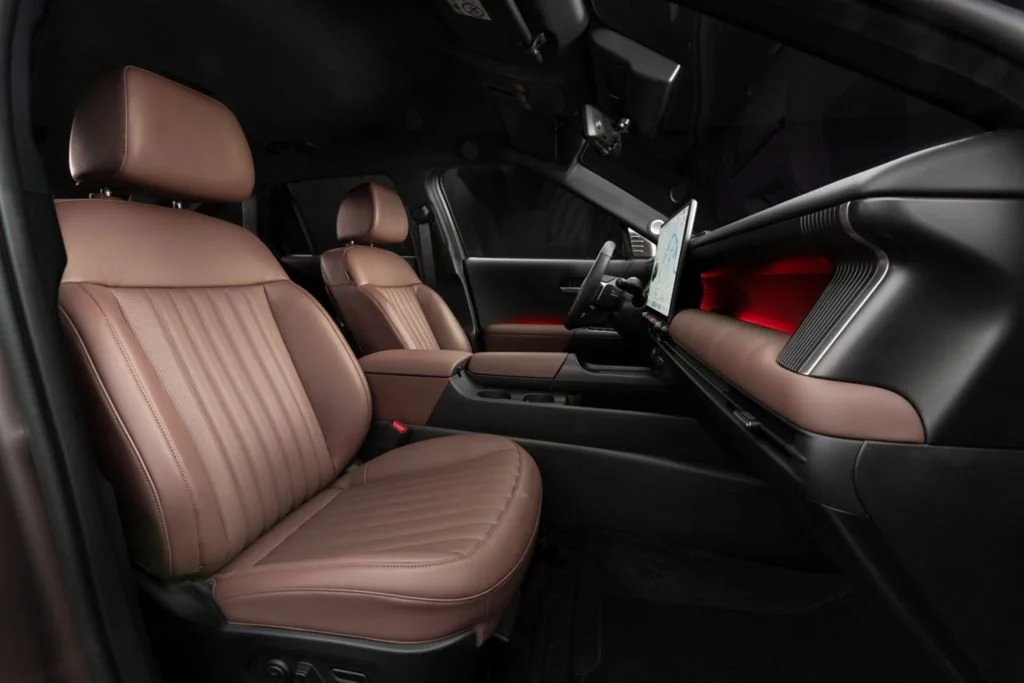
Hyundai talks about creating a ‘Furnished Space’, drawing inspiration from furniture and lounge interiors rather than the traditional car dashboard. That description makes sense when you see the layout in person. The dashboard has a layered design, with a horizontal upper section and a large open storage tray below, while soft-touch materials, padded surfaces and ambient lighting help create a more comfortable environment.
The seats are another highlight. Depending on trim level, the driver can benefit from an Ergo Motion seat with pneumatic lumbar and side-bolster adjustment, alongside a massage function. Relaxation Comfort Seats, offering an extended recline function, are also available on selected versions.
The centre console has been redesigned to make better use of the available space, with wireless charging, cupholders and additional storage. Hyundai has also moved the gear selector to the steering column, freeing up more room around the centre console.
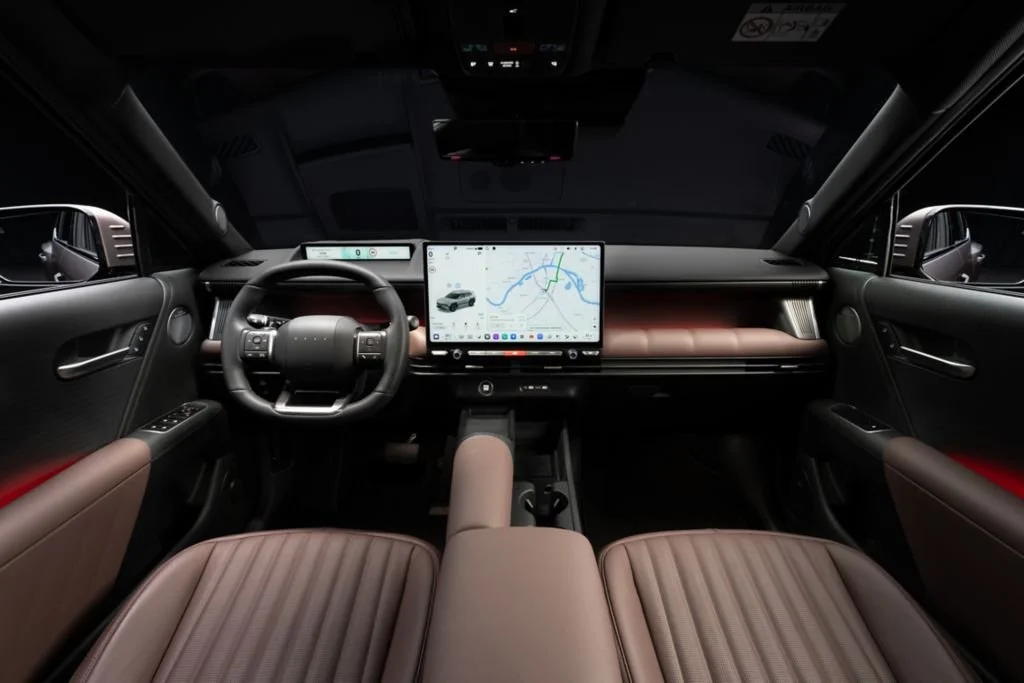
Crucially, the company has resisted the temptation to make everything dependent on a touchscreen. There are still physical buttons for frequently used functions, including climate controls, while the steering wheel retains conventional controls. That is welcome news for anyone who has ever found themselves digging through menus simply to change the temperature.
The driving position also benefits from a slim digital instrument display mounted above the steering wheel, with a head-up display available on selected models. The combination should make it easier to keep essential information within the driver's natural field of view.
As ever, equipment will vary between trim levels, so it remains to be seen how much of the more luxurious equipment makes it into the UK range and which features are reserved for higher-specification models.
New infotainment puts technology centre stage
The most obvious technological change is the introduction of Hyundai's Pleos Connect infotainment system, based on Android Automotive OS.
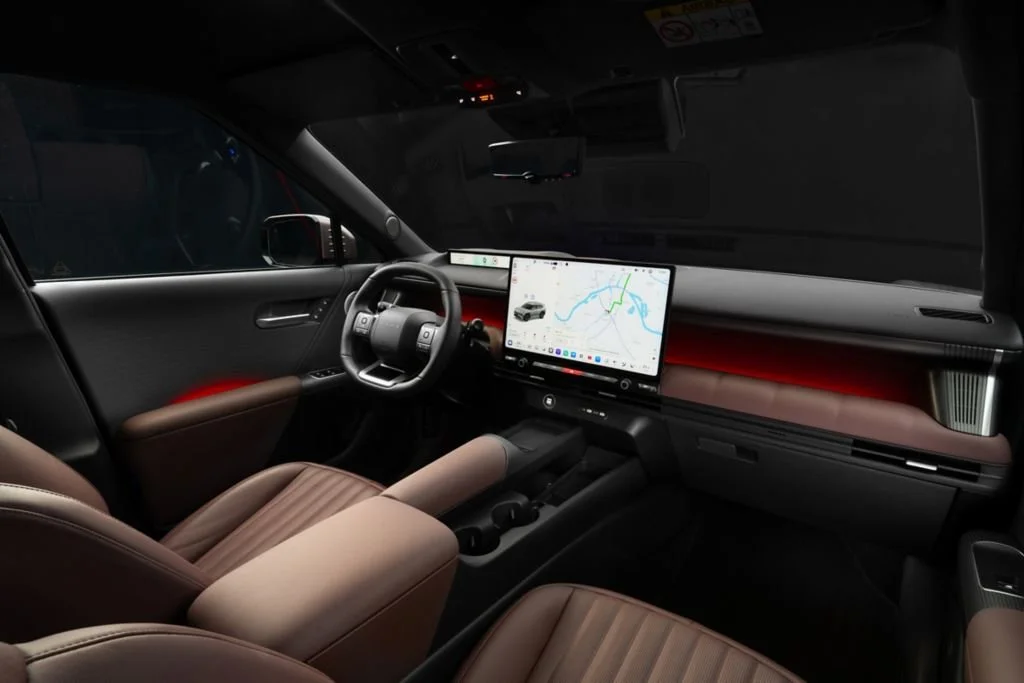
The central touchscreen will be available in 12.9-inch and 17-inch sizes, depending on specification. The larger display looks impressive in person and gives the dashboard a more modern appearance, although the retention of physical controls means the screen does not dominate the entire driving experience.
Pleos Connect introduces the Gleo AI voice assistant, which Hyundai says is designed to understand natural language and context more effectively. Rather than requiring drivers to navigate through multiple menus, the system is intended to make interacting with the car more straightforward.
The platform also supports compatible applications, connected services and over-the-air software updates. That means selected systems and infotainment functions can be updated remotely, potentially allowing the software to evolve after the car has left the showroom. Native applications such as Spotify are among the features supported by the system.
Other available technology includes Hyundai Digital Key 2, allowing compatible smartphones and smartwatches to unlock and start the vehicle, and a premium Bang & Olufsen sound system with 12 speakers.
Hyundai has also introduced some useful parking and manoeuvring assistance features. Memory Reverse Assist can record a forward manoeuvre of up to 50 metres and then assist the driver in reversing along the same route, including steering control. On four-wheel-drive models, Ground View Monitor provides a view of the area around and beneath the vehicle to help when negotiating challenging terrain or tight spaces.
Remote Smart Parking Assist and Parking Collision-Avoidance Assist are also available, alongside a digital centre mirror that can provide a clearer rearward view when passengers or luggage obstruct the conventional mirror.
These systems will not all be standard across the range, but they demonstrate the extent to which Hyundai has developed the new Tucson beyond a straightforward styling update.
Petrol, hybrid and plug-in hybrid power
Hyundai is offering a choice of three broad powertrain types, giving buyers the option of a conventional petrol engine or one of two electrified alternatives.
The entry-level option is a 1.6-litre T-GDi turbocharged petrol engine producing 150PS. Depending on the configuration, it is available with a six-speed manual gearbox or a seven-speed dual-clutch transmission with 48V mild-hybrid assistance.
Above that sits the full hybrid, which produces 245PS and 380Nm of torque. It pairs the 1.6-litre turbocharged petrol engine with an electric motor and a small battery, allowing the car to recover energy during deceleration and use electric assistance during everyday driving. Hyundai quotes a 0-62mph time of approximately 8.3 seconds for the front-wheel-drive hybrid and 7.9 seconds for the four-wheel-drive version, based on its published 0-100km/h figures.
The plug-in hybrid sits at the top of the range in terms of power, with a combined output of 292PS and 380Nm of torque. Its 17.1kWh battery provides an estimated electric-only range of up to 81km, equivalent to around 50 miles, when fitted with 17-inch wheels. The figure remains subject to final homologation, so the confirmed UK WLTP range may differ.
That electric range could be particularly useful for owners who regularly make shorter journeys and have the ability to charge at home. For some households, it may be enough to cover a substantial proportion of the daily commute without needing to start the petrol engine, while retaining the flexibility of a conventional engine for longer trips.
The plug-in hybrid is available with front-wheel drive or four-wheel drive, and a 7.2kW onboard charger supports AC charging at home or at public charging points.
One interesting addition to the full hybrid is HEV Stay Mode. This allows selected functions, including the climate control, audio system and device charging, to remain available while the combustion engine is switched off. It is intended to provide a quieter, more comfortable environment when the car is stationary, whether that is during a break or while waiting for someone.
Official fuel consumption, CO2 emissions and electric-range figures remain subject to final homologation, and UK specifications have yet to be confirmed in full.
Safety and driver assistance
The new Tucson also receives an extensive suite of safety and driver assistance systems under Hyundai's SmartSense banner.
Seven airbags are fitted, including a centre-side airbag between the front occupants, while the body structure incorporates hot-stamped high-strength steel and reinforced centre pillars designed to help manage impact forces in a collision.
Available assistance systems include Forward Collision-Avoidance Assist 2, Highway Driving Assist 2, Intelligent Speed Limit Assist and navigation-based Smart Cruise Control. Driver and occupant monitoring technology can also monitor attention and signs of drowsiness, while Child Presence Detection and Rear Occupant Alert are designed to help remind drivers to check the rear seats.
As with the convenience equipment, the precise availability of these systems will depend on the market and specification.
Can the new Hyundai Tucson maintain its position?
The family SUV market is fiercely competitive, with established rivals and newer arrivals all fighting for the same customers. Buyers expect generous equipment, decent running costs, plenty of space and technology that feels current, while increasingly looking for electrified powertrains that suit their driving habits.
The fifth-generation Tucson appears to address those requirements with a more distinctive design, a substantially improved cabin and a range of powertrains that should cater for different needs. The 695-litre boot, wide-opening rear doors and useful towing capacity also suggest that Hyundai has not lost sight of the practical details that matter once the novelty of a new car has worn off.
The interior is particularly encouraging. The combination of a large infotainment display, connected services and AI-assisted voice control gives the Tucson a more modern feel, but retaining physical buttons is a sensible decision that should make it easier to use on the move.
The biggest unknown is value. UK prices, the final trim structure and the precise equipment included at each level will play a major part in determining how appealing the new Tucson is to private buyers and company-car users alike. The plug-in hybrid's final electric range and charging performance will also be important considerations for anyone weighing it against a fully electric alternative.
Hyundai has confirmed that the new Tucson will be produced for Europe at its manufacturing plant in the Czech Republic. The model is expected to reach UK roads in the first quarter of 2027, although a firm launch timetable and full UK pricing have yet to be announced.
My initial impression is that Hyundai has taken a meaningful step forward with its most important SUV. The styling is bolder without losing the Tucson's identity, the interior feels more sophisticated and the technology has advanced considerably. Whether it proves to be a success will ultimately depend on the price and how the car drives, but there is plenty here to suggest that the new Tucson will remain a significant player in the family SUV market.