EV Essentials - A Guide to Owning, Charging, Tips and More
Moving from a petrol or diesel car into an electric vehicle - or even a plug-in hybrid - can seem daunting when fuelling it requires a new knowledge base, so we guide you through the jargon and fill in the gaps, plus provide some great tips.
When it comes to refuelling it may seem strange moving from litres to kWh (or kilowatt-hours) as a measurement of fuel, but when pouring in liquid fuels, such as petrol or diesel, you’re purchasing it by volume which is measured in litres, or gallons.
When it comes to fuelling an electric car, its measured in kWh which is the amount of energy the car has consumed into its battery over a period of time.
Energy - kWh (Battery Pack Capacity)
kWh is defined as energy, or the rate at which energy is consumed or produced over time.
It’s worth comparing apples to apples when fuelling an EV vs an internal combustion engine car because petrol and diesel are also forms of energy that can be measured in kWh, too.
A litre of petrol contains approximately - on average - 9 kWh of energy. For diesel its 10 kWh of energy. So a 60 litre tank of petrol will hold around 540 kWh of energy, five times more than a large battery pack in a long range EV.
However, an engine performs at only 25% efficiency with 75% lost to heat, meaning that 25% of that stored energy from the petrol tank goes into motion with 75% of the energy wasted.
It explains why a petrol car may have a 500 mile range and not a 2,000 mile range from the amount of energy it can store.
Storing energy in a battery requires more space because the battery cells - when combined into a battery pack - are not as energy dense as the above liquid fuels. However, EV’s will run at 90% efficiency, so a significantly larger proportion of the energy consumed by the car goes into motion vs a petrol or diesel car.
Energy density in batteries is improving at a rate of 3-5% per year, and we’re now seeing EV’s with a range of over 500 miles, such as in the new BMW i3.
Power - kW (Charge Speed)
Kilowatt-hours and kilowatt are often confused, but the difference is significant. kW represents power which translates to the speed at which energy is consumed or produced.
When it comes to charging a car, the speed of charge is measured in kW. That’s the amount of energy being consumed or produced at any given moment. That’s its power band.
1 kW is 1,000 watts of power - a huge amount for a light, but a small amount for a car. LED lights are typically 6 W or 0.006 kW as a measure of power.
AC - Alternating Current
Your electric car will have two charging standards, AC and DC. AC charging is found at home since households run on an AC electrical system, typically low consumption levels of power.
AC chargers on a single phase supply typically have a maximum power rating of 7 kW, so not to trip household electrics when the oven is turned on at the same time as charging the car, for example.
Houses with 3-phase supply (three independent live cables running into the house), can have an AC charger installed up to 22 kW.
DC - Direct Current
Homes do not typically have DC supplies, but DC can handle much more power and energy, with a significantly higher power band. For example, DC rapid chargers can be rated at 50 kW - 450 kW, with some now arriving able to deliver up to 1.5 mW (1,500 kW).
More on DC Rapid Charging below.
Home Charger
Home chargers are typically rated at 7 kW. This means a constant consumption of 7 kW at any given time. So, if we measure that in a timeframe of one hour, the charger will add 7 kW of total energy in 1 hour = 7 kWh added into the battery pack. We therefore use kilowatt as an approximate measurement of charging speed.
If you car consumed 14 kWh of energy on a commute, and you plugged it in to charge it back up on a typical 7 kW home charger, you will expect 7 kW of energy per hour, meaning it will have added back 14 kWh of energy in two hours.
Your home charger can be specified with, or without the cable attached. If you specify the charger without a tethered cable, then you’ll need to make sure you have a compatible cable.
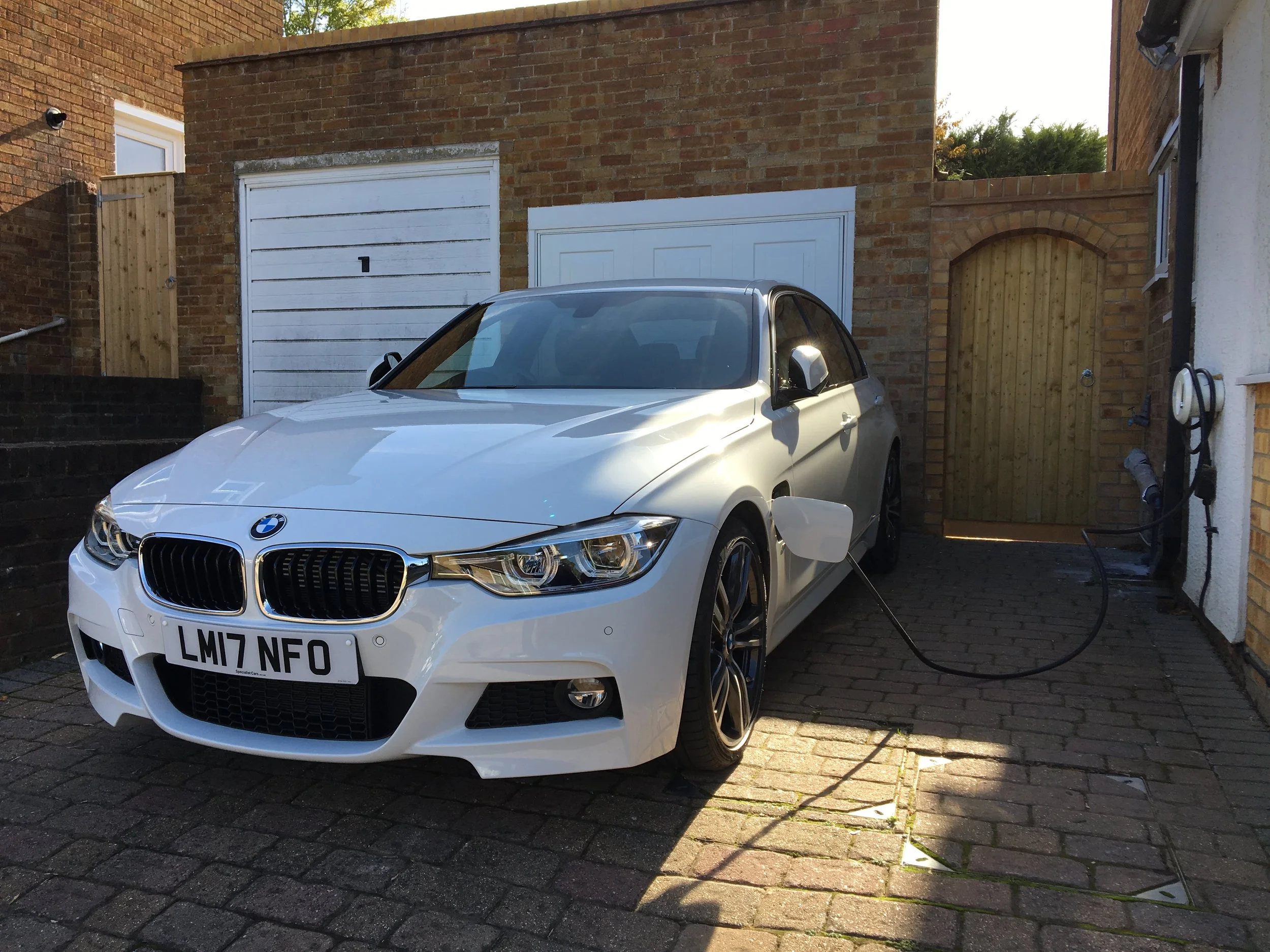
A BMW Plug-in Hybrid Charging at a Home Charger
Car Charging Capability
A typical electric car will have two onboard chargers, one for AC and one for DC, but there will be limitations to each. Some plug-in hybrids have both, too, and some may just have AC charging only.
One example is my electric car is limited to 11 kW AC and 250 kW DC. That means even if I plugged into a 22 kW AC charger, or 350 kW DC charger, my charging ‘speed’ is limited by my onboard chargers capability. This is an important point to know when purchasing an EV.
To simplify this, many manufacturers will specify how fast the car can charge on a DC rapid charger, often quoting a 10% - 80% recharge time. For example, the new the all-new Mazda 6e will take 24 minutes to charge from 10% - 80% with it peaking at 194 kW at an appropriate rapid charger.
For that performance, the Mazda will need to be plugged into a rapid charger capable of delivering 200 kW, or more, of power.
If the Mazda was plugged into a 100 kW rapid charger, it would take much longer to recharge from 10% - 80% as it can’t get enough power in to the car in the same time frame.
It is worth noting the manufacturers quoted recharging times because some may quote 20% to 80% to bring the time down, with one quoting 30% to 80% making the recharge time look better than it is.
It’s also worth remembering the charge rate the car can accept so that you find an appropriately powered rapid charger. Understanding bot will ensure no unwanted delays at the chargers.
Public Charging
There are two types of public chargers:
Destination Chargers: Rated from 3.6 kW to 22 kW AC depending on the charger. Typically found in public car parks, shopping malls, apartments, or hotels, for example.
These normally have a lower cost associated to them since the installation, maintenance and running costs are significantly lower than a rapid charger, given they only need an AC supply and less hardware.
Destination chargers are untethered, meaning you have to bring your own cable, typically referred to as a Mennekes or ‘Type 2 to Type 2’ charging cable.
Chargers may take RFID cards, apps or tap-and-go payment methods, so it’s worth checking before plugging in via a public network app such as zapmap.
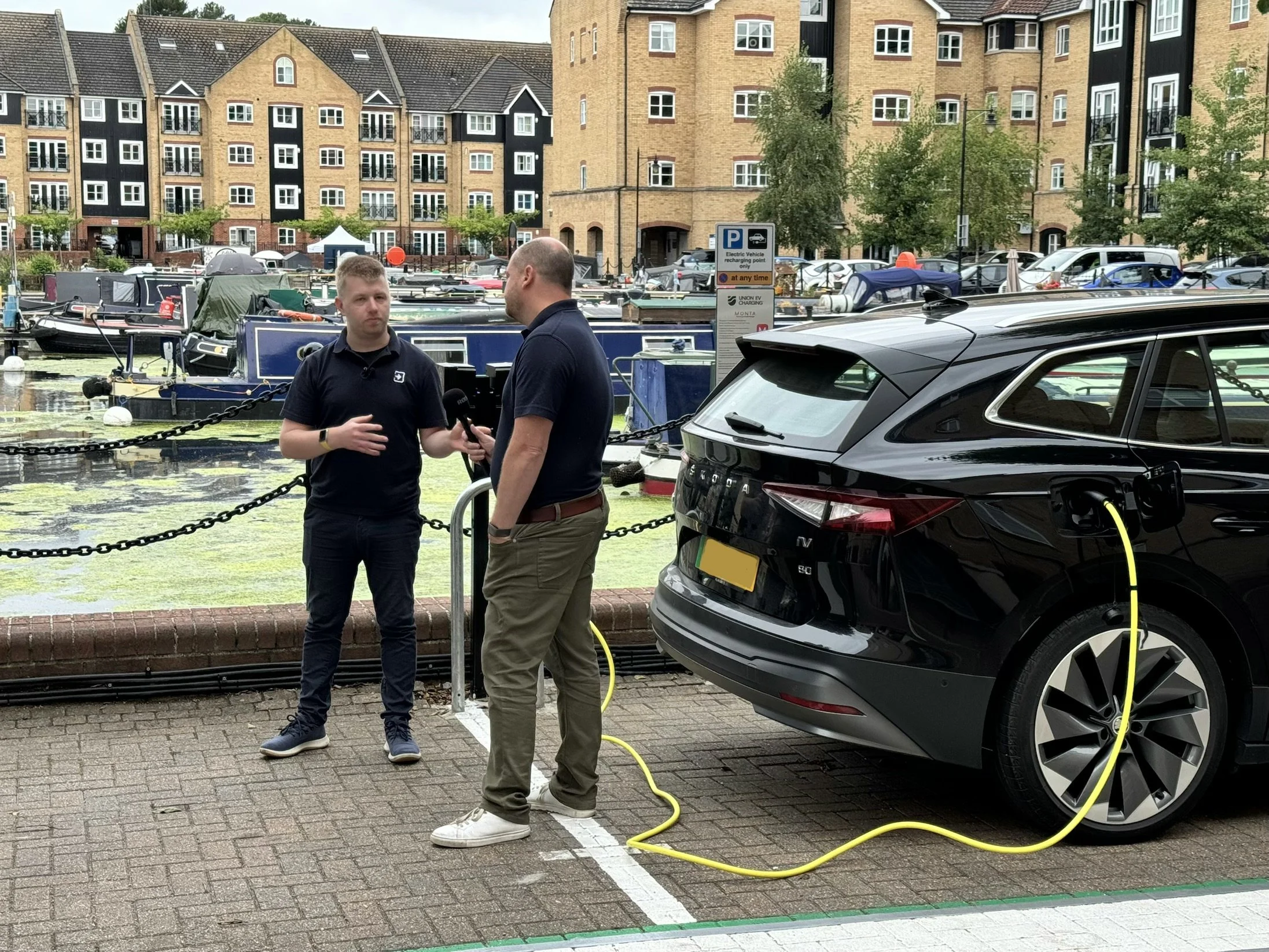
Alex Lowe talking to the Founder of Union EV Charging - Apsley Marina Destination Chargers
Rapid Chargers: DC Rapid chargers can be found at motorway services, public car parks, around airports, in town centres and many more places.
A DC supply will charge at a much higher ‘speed’ from 50 kW to 450 kW depending on the charger and the car.
Rapid Charging, unlike home charging, doesn’t deliver a constant power, it varies according to the state of charge when plugged in, the battery pack temperature as well as external extreme temperatures.
The power consumed vs the time taken to charge will fluctuate as its managed by the BMS - Battery Management System - to ensure maximum safety whilst charging and ensuring the battery isn’t damaged with too much current. The car does all the calculations.
Therefore, the rapid charging times - measured as 10% to 80% - quoted by manufacturers will be in optimum conditions, with the battery pack between 40 C and 50 C, the state of charge being exactly at 10% and the weather being somewhat agreeable.
Rapid chargers always have tethered cables and there are two standards: CCS and CHAdeMO representing the type of connector in your car.
The vast majority of cars come equipped with CCS, which the the standard, with just a few older EVs using CHAdeMO.
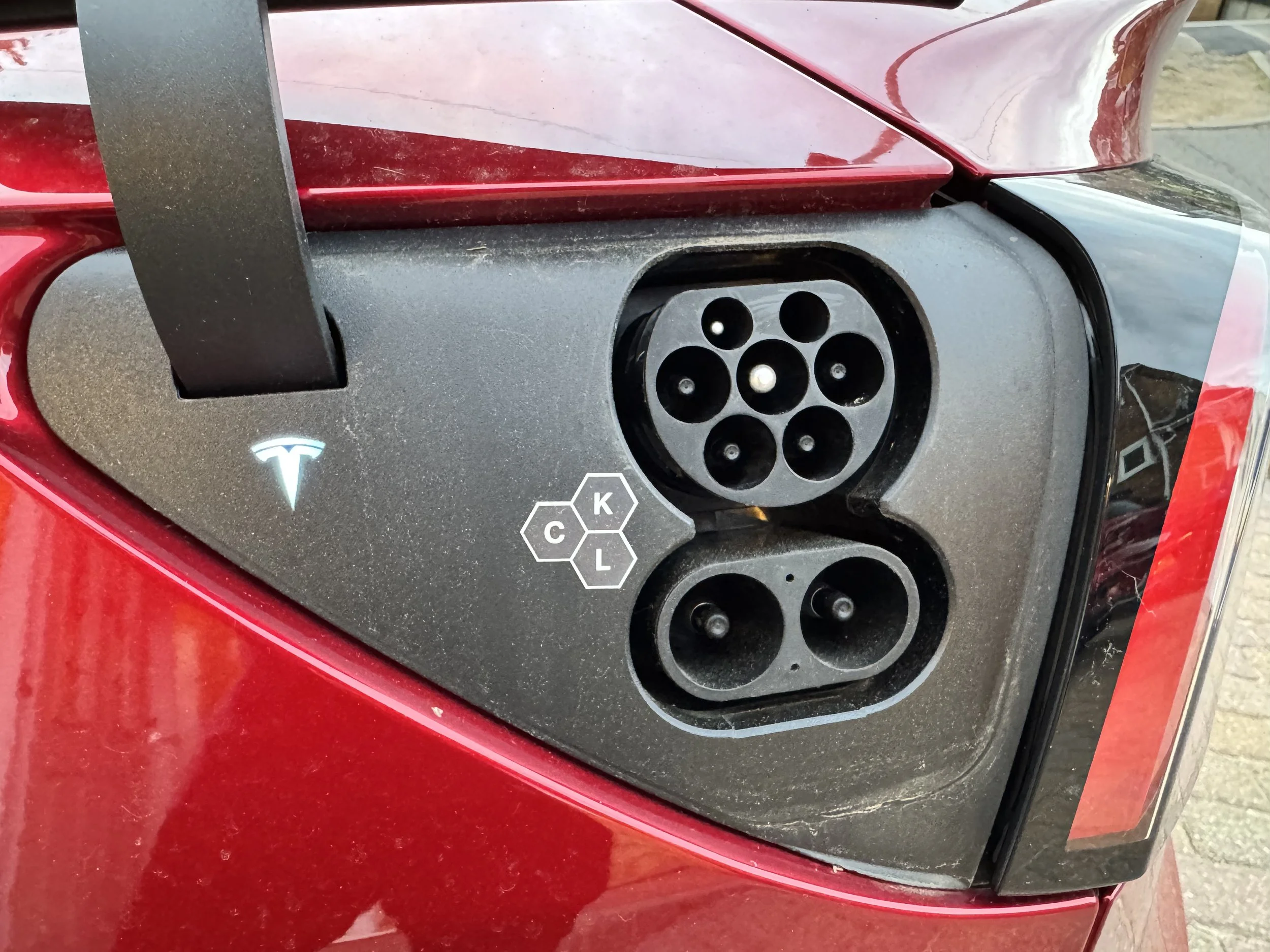
Charging Port: AC Charger slots in the top section. CCS utilises both sections.
Preconditioning for Optimal Charge
This is where EVs with preconditioning capabilities help speed up the time spent charging at a rapid charger. Preconditioning prior to arriving at a rapid charging will raise or cool the battery pack to around 40 C in order to produce the quickest charging speeds.
Some cars will automatically precondition en route to a rapid charger if it’s set as a destination in the navigation system. Some will have a manual button, or soft button in the cars user interface, and some may not have that option at all.
It’s therefore worth finding out prior to a purchase if this is a priority for your driving situations.
Charging Etiquette
When DC rapid charging, it’s good etiquette to charge up to either what’s needed to make it to the next charger, or to 80% (whichever is lower). Charging above 80% on a DC rapid charger slows significantly and is painfully slow after 95%, often taking just as long to go from 95% to 100% as it did from 10% to 80%.
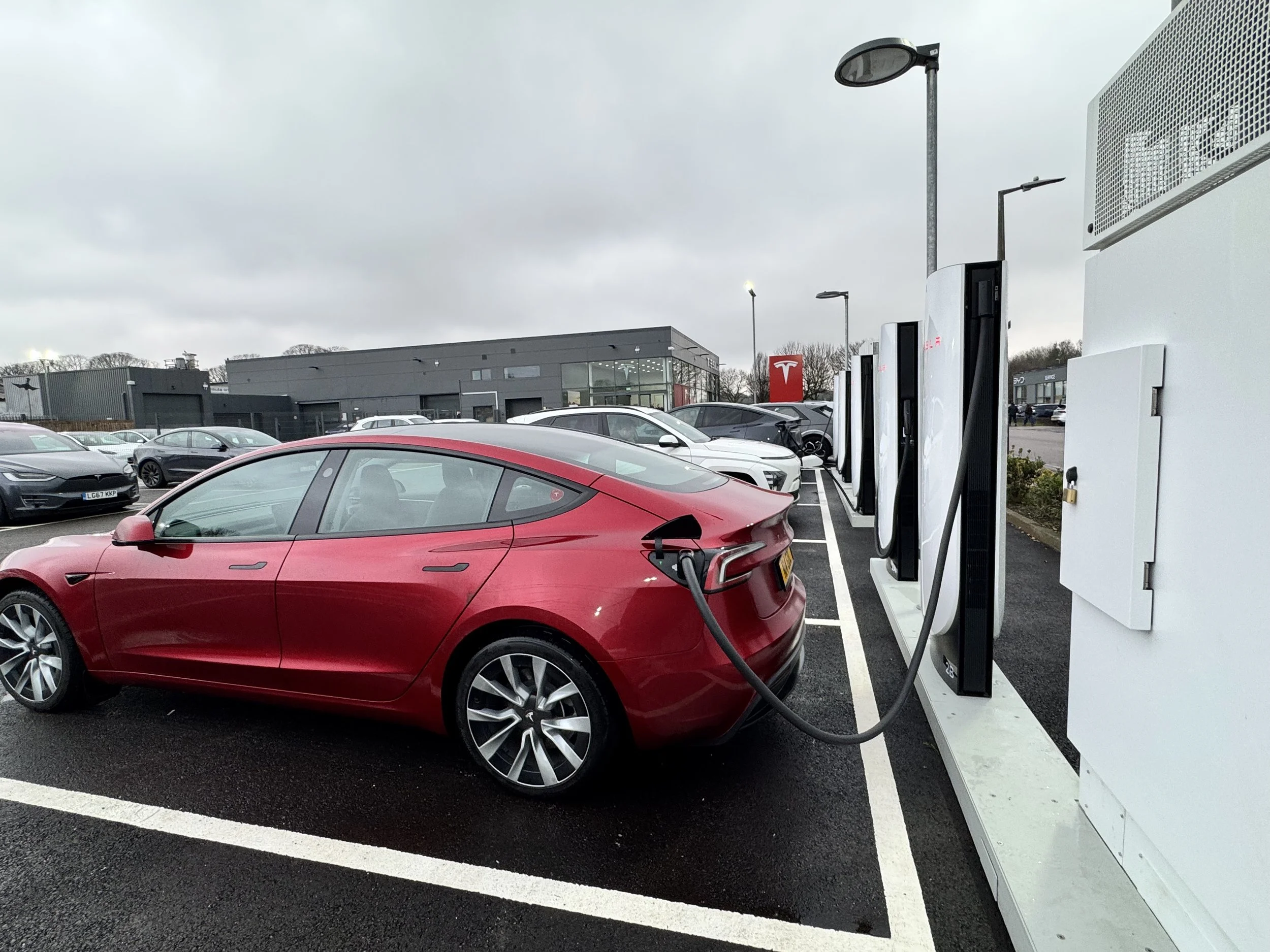
A Tesla Charging at a Rapid Charger
Charging Costs
Where customers have driveways, or off-street parking that’s accessible to their home supply - including cross pavement charging - the benefits are enormous with the right EV focused tariff.
It’s worth checking with your energy provider, or other energy providers - that offer EV charging tariffs - as they will fundamentally lower the cost of refuelling a car.
Domestic EV tariffs are often in the form of time-of-use tariffs with a day and night rate, like the old economy7. It encourages EV owners to charge their cars overnight.
These tariffs can offer charging from as low as 3p per kWh to 8p per kWh, for example. My nighttime rate is 6.9p per kWh meaning my total battery capacity of 76 kWh usable translates to £5.24 for a full ‘tank’ with approximately 350 - 400 miles of range, depending on the time of year.
However, normal practise is to keep the car topped up, rather than run it to empty and then charge it to full. More on that later.
Public Rapid Charging costs varies significantly and much work needs to be done to lower costs. Some will charge over 90p per kWh for example, whilst others will have time-of-use charges with “peak and off-peak”, or “off-peak, mid-peak and peak” rates.
Some Rapid charging networks will charge a more fair price, whilst others charge double. It’s worth becoming familiar with the networks to figure out which works best.
Many apps are available to see public charging costs, such as Zapmap or Octopus Electroverse. There are many more that offer a similar service and all will show the location of the chargers, the network provider, number of chargers, the power of the chargers (kW) and cost.
Some, like Octopus Electroverse will provide a discount on chargers that are associated with them provided you’re an Octopus Energy customer. Others may have a subscription for great rates, too. Great if you’re regularly using the public charging network as it will save a lot of money.
Full Battery or 80% Charge
There are two distinct types of Lithium Ion battery chemistries and both have different charging requirements. In fact, the core difference is with the battery’s cathode and they dictate the charging terms:
NMC - Nickel Manganese Cobalt (Charge to 80%)
NMC batteries are the most energy dense providing the longest range in electric cars. These batteries should be charged to 80% for regular day-to-day use on AC or DC charger, but charging to 100% for a long trip is absolutely fine, provided its not left at a 100% state of charge for long periods (days or more). Doing so, may degrade the battery quicker.
LFP - Lithium Iron Phosphate (Charge to 100%)
LFP batteries are less energy dense, but more robust and significantly cheaper to make. They prefer a regular charge to 100% on an AC charger. As with all batteries, charging to 100% and storing them for long periods degrades them. So if you are going away without the car, leaving it below 90% is fine.
But, remember the etiquette at the rapid chargers - an 80% charge here is just fine.
Other Tips
Preconditioning for Optimal Range/Defrosting the Car
Preconditioning when plugged into an AC charger has it advantages, too. When a departure time is set in the cars charging user interface (or app), and preconditioning is set, the car will do two things:
Heat the cabin (or cool it on a hot day)
Ensure the batteries are at an optimum temperature
Both are designed to extend the range of a car, particularly useful on a cold day. The cabin pre-heating will defrost windows and warm the cabin from the household charger rather than from the cars battery, and the battery will be warmed up to ensure the best efficiency on the drive.
This makes a significant difference in range for winter driving.
Setting a Schedule
Plenty of EVs will have scheduling. This means that if you regularly commute, and plug in each day, a schedule can be set that matches the drivers routine, so preconditioning the cabin and battery can be automated.
Remote Cooling/Heating
Most Electric cars are connected, which means they come with an app that speaks to the car. It means that you can send an instruction to heat or cool the cabin before getting into the car if out-and-about somewhere. So, on a hot day, you can climb straight into a nice cool car, or on a cold day, you can get into a nice warm car.
———
About the Author
Graeme Cobb is a lifelong car enthusiast with a passion for writing about cars, EVs, industry updates and more.
You can find Graeme on 𝕏 at @graeme_cobb or YouTube @REV-EV.