
What is Car Leasing? A Simple Guide to Costs, Pros and Cons (2026)
Car leasing has become one of the most popular ways to drive a new car in the UK, but many drivers still aren't sure exactly how it works.
If you've ever wondered whether leasing is cheaper than buying, how monthly payments are calculated, or what happens when the agreement ends, this guide explains everything you need to know.
What is Car Leasing? : Car leasing is a fixed-term agreement that lets you drive a new car for a monthly payment without owning it, returning the vehicle at the end of the contract.
Car Leasing Explained: Quick Answer
You pay a fixed monthly fee to drive a vehicle.
You don't own the car.
Contracts typically last between two and four years.
Annual mileage limits apply.
Maintenance packages are often available.
The car is returned at the end of the agreement.
Monthly payments are often lower than traditional finance agreements.

Approximately 500,000 - 700,000 cars are privately leased in the UK each year.
What Is Car Leasing?
Car leasing is a long-term rental agreement that allows you to drive a new vehicle for a fixed period and mileage allowance.
Unlike buying a car outright or financing ownership through a loan, leasing allows you to use the vehicle without worrying about depreciation or resale values.
At the end of the contract, you simply hand the car back and decide whether you'd like to lease another vehicle.
For most UK drivers, leasing is available through a Personal Contract Hire (PCH) agreement.
How Does Car Leasing Work?
The leasing process is straightforward.
Choose a vehicle.
Select a contract length.
Choose your annual mileage allowance.
Pay an initial rental.
Make fixed monthly payments.
Car is delivered to you
Return the vehicle at the end of the contract.
Provided the vehicle is returned within the agreed mileage and meets fair wear and tear standards, there are usually no additional charges.
Is Leasing Cheaper Than Buying?
In many cases, yes - but not always.
Leasing can sometimes offer significantly lower monthly payments than financing the same vehicle through a traditional loan or car finance agreement such as PCP or HP, that’s basicaly because you are only paying for the vehicle's depreciation during your contract period, on a vehicle that may have been sourced with a significant discount from the manufacturer.
However, it's important to remember that you won't own the vehicle at the end of the agreement.
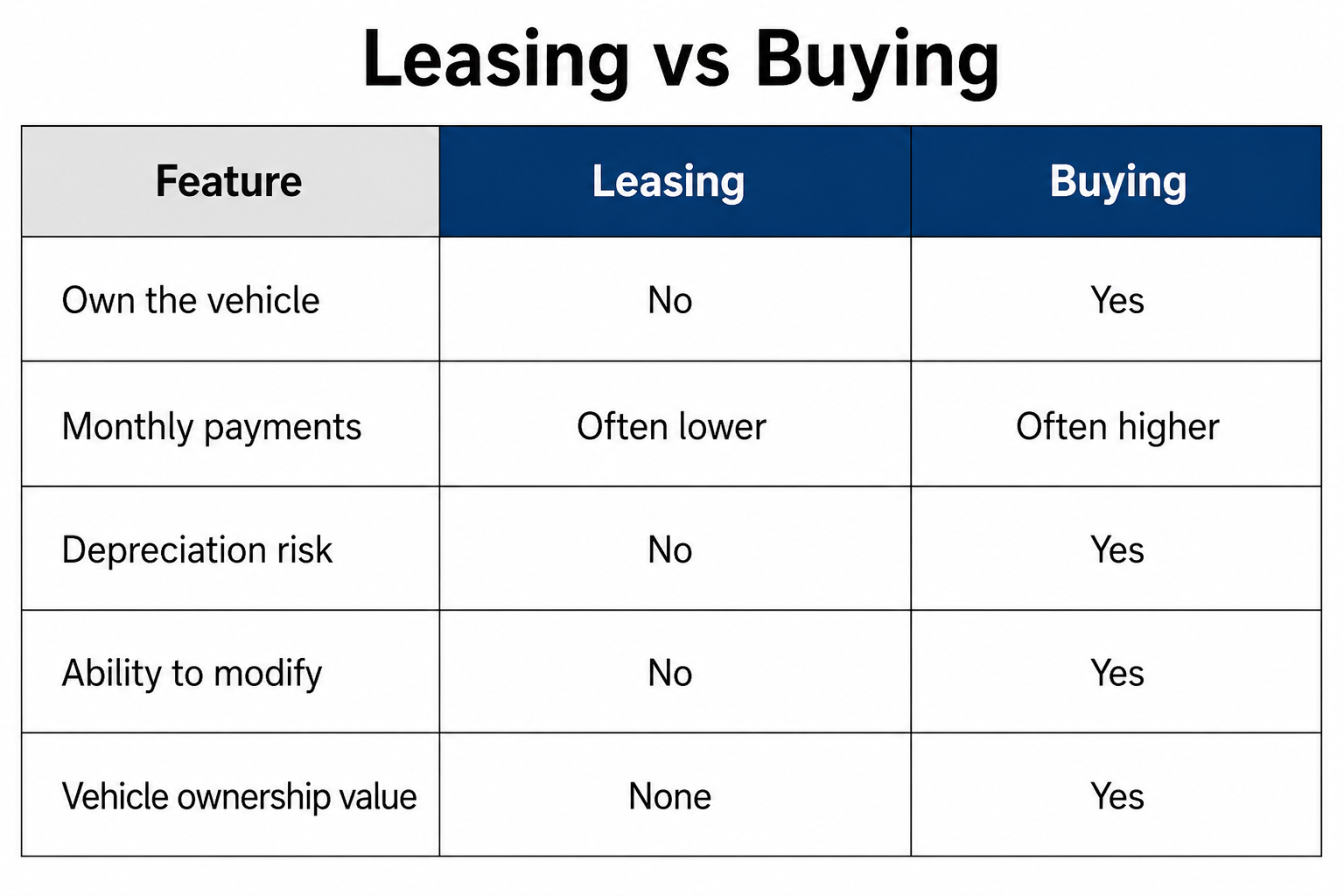
Leasing vs buying (at a glance)
Is Leasing Better Than PCP?
Many drivers compare leasing with Personal Contract Purchase (PCP).
The biggest difference is ownership.
With PCP, you have the option to buy the vehicle at the end of the agreement by paying a final balloon payment. With a PCP you’ll also generally be responsible for annual VED (a.k.a. road tax), with a lease (PCH) generally includes this in the pricing.
With leasing, there is no guaranteed ownership option. The vehicle is simply returned at the end of the lease (unless you manage to negotiate a purchase).
If you know you don't want to own the vehicle, leasing can be the simpler and, sometimes, more affordable solution.
What Happens At The End Of A Lease?
At the end of your contract:
The leasing company arranges collection.
The vehicle is inspected for damage.
Any excess mileage or damage charges are assessed.
The agreement ends.
You can choose another lease vehicle if you wish.
There is no need to negotiate trade-in values or worry about selling the vehicle privately.
What Are The Advantages Of Leasing?
The biggest benefits include:
Low monthly payments.
Fixed motoring costs.
Access to the latest vehicles.
No depreciation concerns.
Manufacturer warranty cover.
Ability to change cars regularly.
For many drivers, leasing offers a predictable and hassle-free way to drive a new car.
What Are The Disadvantages Of Leasing?
Leasing isn't perfect for everyone.
Potential drawbacks include:
You never own the vehicle.
Mileage limits apply.
Excess mileage charges can be expensive.
Modifications are generally prohibited.
Early termination charges can be significant.
Drivers covering very high annual mileages may find buying or traditional finance more suitable.
What Credit Score Do You Need To Lease A Car?
Most leasing companies will carry out a credit check before approving an application.
There is no universal minimum score, but applicants with a strong credit history generally have a higher chance of approval and access to the most competitive deals.
Can You Lease An Electric Car?
Yes.
Electric vehicle leasing has become increasingly popular as drivers look to access the latest battery technology without worrying about long-term depreciation.
Many manufacturers also offer particularly attractive lease deals on electric vehicles, making them more affordable than many buyers expect.
If you can charge from home on a cheap tariff, consider how switching to EV coukd potentially be ofset by your fuel savings.
What Mileage Should You Choose On A Lease?
Choosing the right mileage allowance is important.
Most lease agreements are available with annual mileage limits ranging from 5,000 to 30,000 miles.
Selecting a realistic mileage figure can help avoid excess mileage charges when the vehicle is returned.
If you're unsure, check your MOT history or service records to see how many miles you typically drive each year.
Where Can You Compare Car Lease Deals?
Once you've decided that leasing is right for you, it's important to compare multiple offers before committing.
To get a view of what's on offer in the market, check out Leasing.com, host to more car lease deals than any other UK car leasing comparison site. Comparing several providers can help you understand current pricing, available promotions and how lease costs vary between manufacturers and models.
It's also worth following the DefinitelyNotAGuru YouTube channel, where we regularly highlight standout lease deals, discuss market trends and explain whether headline offers genuinely represent good value (in our opinion, of course).
How do I get the best car lease deal?
You’ll often get the best bang for your buck by keeping an open mind about the car, or the specifics of it, and shopping with your monthly budget instead of thinking “I want this exact car in this exact colour”. You can often find that similar lease prices are available on cars that have wildly different purchase prices - for example if the VW Golf is cheaper to Lease than the smaller, cheaper VW Polo, you’d be getting better value by going for the Golf.
As a wise man once said, shop for the deal, not for the car - if you want to get the best value that is.
Is Car Leasing Worth It?
Car leasing is often a great choice if you:
Like driving new vehicles.
Want predictable monthly costs.
Change cars every few years.
Don't want to worry about depreciation.
Prefer warranty-covered motoring.
It may not be suitable if you:
Drive significantly above average mileage.
Want to own your vehicle.
Frequently modify your cars.
Keep vehicles for many years.
Frequently Asked Questions
Can I buy a leased car?
Most Personal Contract Hire agreements do not include a purchase option, although many lease companies will allow you to buy the vehicle at the end of the lease - there’s just no guarantee.
What happens if I exceed my mileage allowance?
You will usually be charged an excess mileage fee based on the terms of your agreement.
Is insurance included with a lease?
In most cases, no. Insurance is arranged separately. Check out a car insurance comparison site like QuoteZone to shop around for your insurance.
Can I end a lease early?
Yes, but early termination charges will usually apply.
Is leasing a good idea in 2026?
For many UK drivers, leasing remains one of the most affordable and convenient ways to access a new vehicle while avoiding depreciation risk. If it’s a good idea for you or not really depends on your financial situation and your personal preferences.
The Verdict
Car leasing is best viewed as paying for the use of a vehicle rather than paying towards ownership.
If you enjoy driving new cars, want fixed monthly costs and prefer to avoid depreciation concerns, leasing (PCH) can be an excellent alternative to buying or PCP finance.
The key is understanding your mileage requirements, comparing multiple deals and choosing a contract that suits your driving habits and budget.
While we aim to provide accurate and up-to-date information, this article should not be considered financial advice. Always do your own research and ensure any leasing or finance agreement is suitable for your individual circumstances.