UK Car Production Declines in July
UK Car production fell overall by -10.6% to 61,767 units in July 2026 despite a 9.3% rise in output for UK consumers. Exports were heavily impacted by a -15.8% decline.
Shipments to all major markets were down:
The EU declined -15.2%
The US fell -17.7%
Turkey was down -18.5%
China declined a huge -36.9%
Japan fell significantly by -24.4%.
Commercial vehicle output also fell sharply, down -34.4% to 1,888 units, with deliveries to UK customers and export markets down -49.6% and -18.5% respectively.
However electrified car production is showing the way forward with fully electric and hybrid models recording the first monthly increase in production of the year, up 6.8% to 25,678 units.
Electrified models accounted for more than four in 10 cars built in July, up from around three in 10 a year ago, and it seems export customers across continents are choosing electric and electrified vehicles in greater numbers.
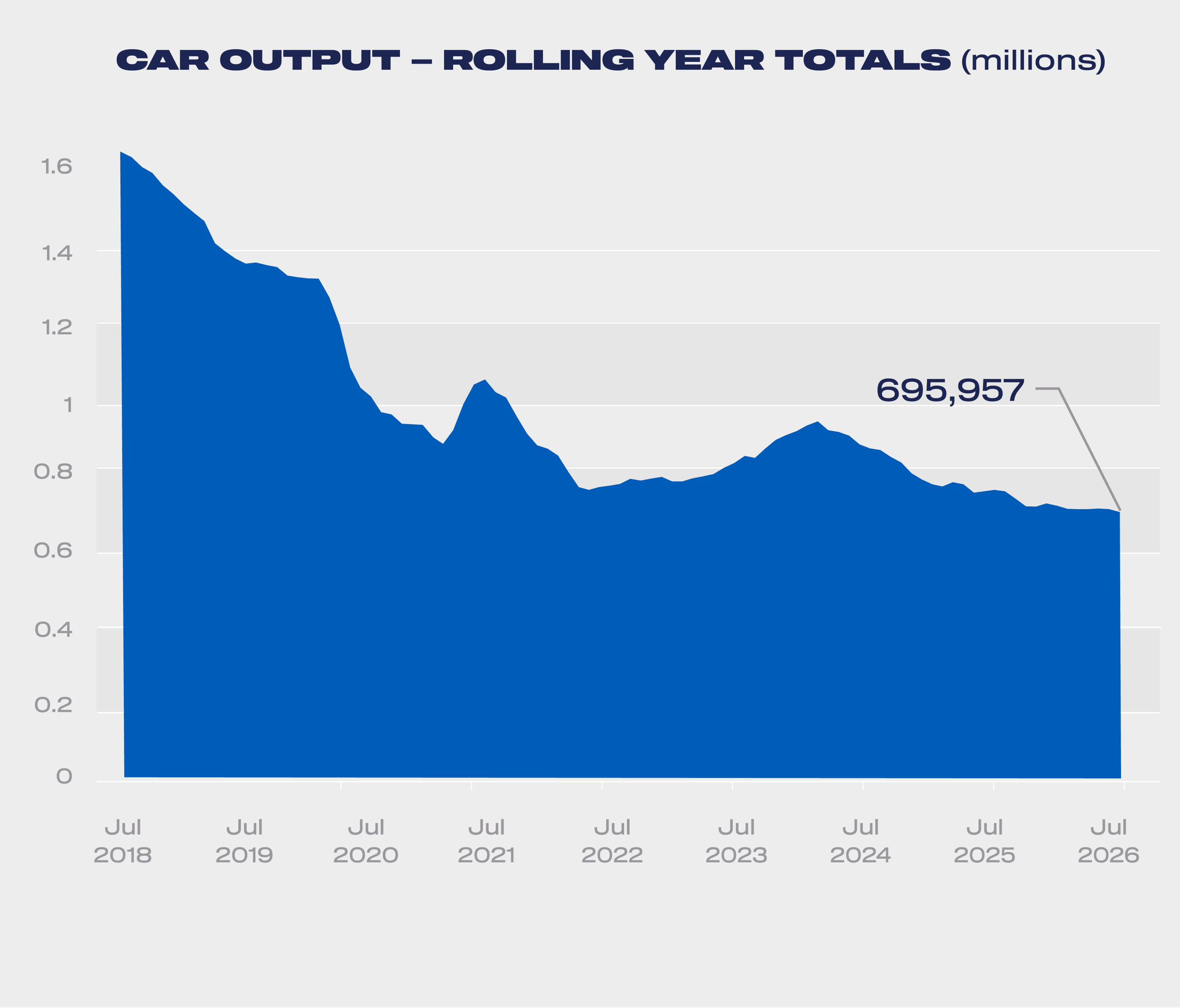
SMMT Data July Production from 2018 - 2026
UK factories have turned out just under 450,000 cars and commercial vehicles Year to date, which is down -8.1% from July 2025. The SMMT says this is “reflecting model changeovers, the closure of a plant last year, and continued trade and investment uncertainty”.
Despite this gloomy picture, the SMMT states “the latest independent forecast expects UK car and light vehicle output to remain broadly stable in 2026, at 740,000 units, before growth resumes in 2027.” And there is some confidence that out put could return to the one million units mark by the end of the decade.
Mike Hawes, SMMT Chief Executive, said, “July’s figures underline the intense pressure under which UK vehicle manufacturers are currently operating. Although the negative performance is exacerbated by shutdown calendarisation and model changeovers, it is being compounded by weaker overseas demand and fierce global competition. The rise in electrified vehicle production is encouraging, but long-term success depends on making the UK a more competitive place to make and sell vehicles. Meaningful and urgent reform of the ZEV Mandate, reduction of the UK’s sky-high energy costs and negotiations to safeguard free and fair trade with our largest and closest export market are essential to put UK automotive manufacturing back on a path to growth.”
Energy costs need to drop to help drive down manufacturing costs, but this requires the UK to restructure it’s energy markets. For now, this puts the U.K. at a manufacturing disadvantage compared to other countries that have significantly lower energy costs.
Other headwinds loom such as the UK-EU automotive trade proposals which could make UK-produced vehicles uncompetitive in European markets, plus tougher rules of origin requirements are on their way under the EU-UK TCA which come into force in January. This puts at risk cross-Channel automotive supply chains which is currently an €80 billion-a-year trading relationship.
———
About the Author
Graeme Cobb is a lifelong car enthusiast with a passion for writing about cars, EVs, industry updates and more.
You can find Graeme on 𝕏 at @graeme_cobb