Autonomous Self-Driving Cars Approved in First European Country
It’s rare that not driving cars makes automotive headlines, but the Dutch vehicle authority (RDW) announced late on Friday 10th April that it had granted Tesla the first-ever European type approval for its Full Self-Driving (Supervised) system following 18 months of rigorous testing.
Full Self Driving Supervised allows for hands off, feet off control whilst the car does the driving with the human “driver” remaining attentive and undistracted. It’s not the much coveted Level 4 autonomy, so there can be no looking at mobile phones, reading newspapers or sitting elsewhere in the car, but this technology is the next step to L4 autonomy, which can be unlocked via an over-the-air software update with regulatory approval.
However, the car tracks driver distractions, or inattentiveness via its in-car camera and will disable FSD Supervised by bringing the car to a safe stop and then forcing the driver to take over manual control. It will also strike the driver out from using FSD for the remainder of the journey. However, warnings will be given in advance of autonomous intervention.
With this in mind, the RDW laid out strict Driver rules that are enforced for type approval, which Tesla must align FSD to:
You must remain fully attentive and legally responsible at all times.
Hands do not have to be on the wheel, but must be ready to take over immediately.
Interior cameras monitor eye gaze and attention; the system issues visual, audio, and haptic warnings if you look away.
If ignored, FSD disables itself and can bring the car to a controlled stop.
A mandatory tutorial + quiz is required before first use. Activities like reading or using your phone are not allowed.
The advantage is a huge safety improvement. With 8 - 9 cameras (depending on the car) it has full 360 degree vision, uses an AI trained neuralnet and has 9 billion miles of driven data - and counting - that it has learned, and adapted from. Tesla’s own data states that with FSD engaged, there are:
7x fewer major and minor collisions overall
5x fewer off-highway collisions
Roughly 7–8.5x safer than average human-driven miles in real-world statistics
And these stats will only improve along with the car’s self-learning capabilities and over-the-air updates. Tesla’s aim with FSD is for their cars to behave like a perfected human driver, without distraction, emotion, intoxication, fatigue, or ailment. In other words, there is very little that can impair FSD enabled Tesla’s, and with near-perfected driving, its cars with FSD active will make teh roads safer for everyone.
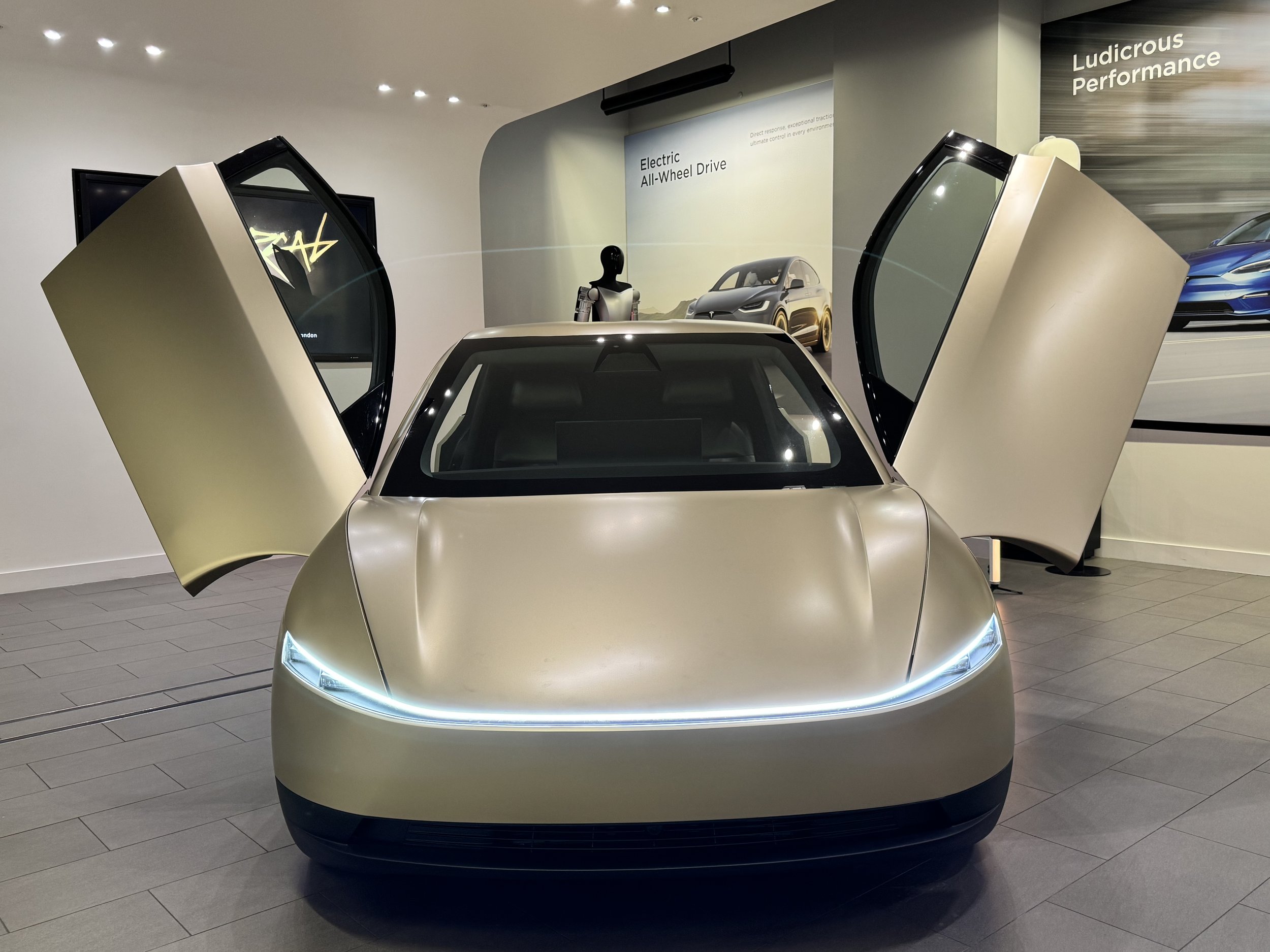
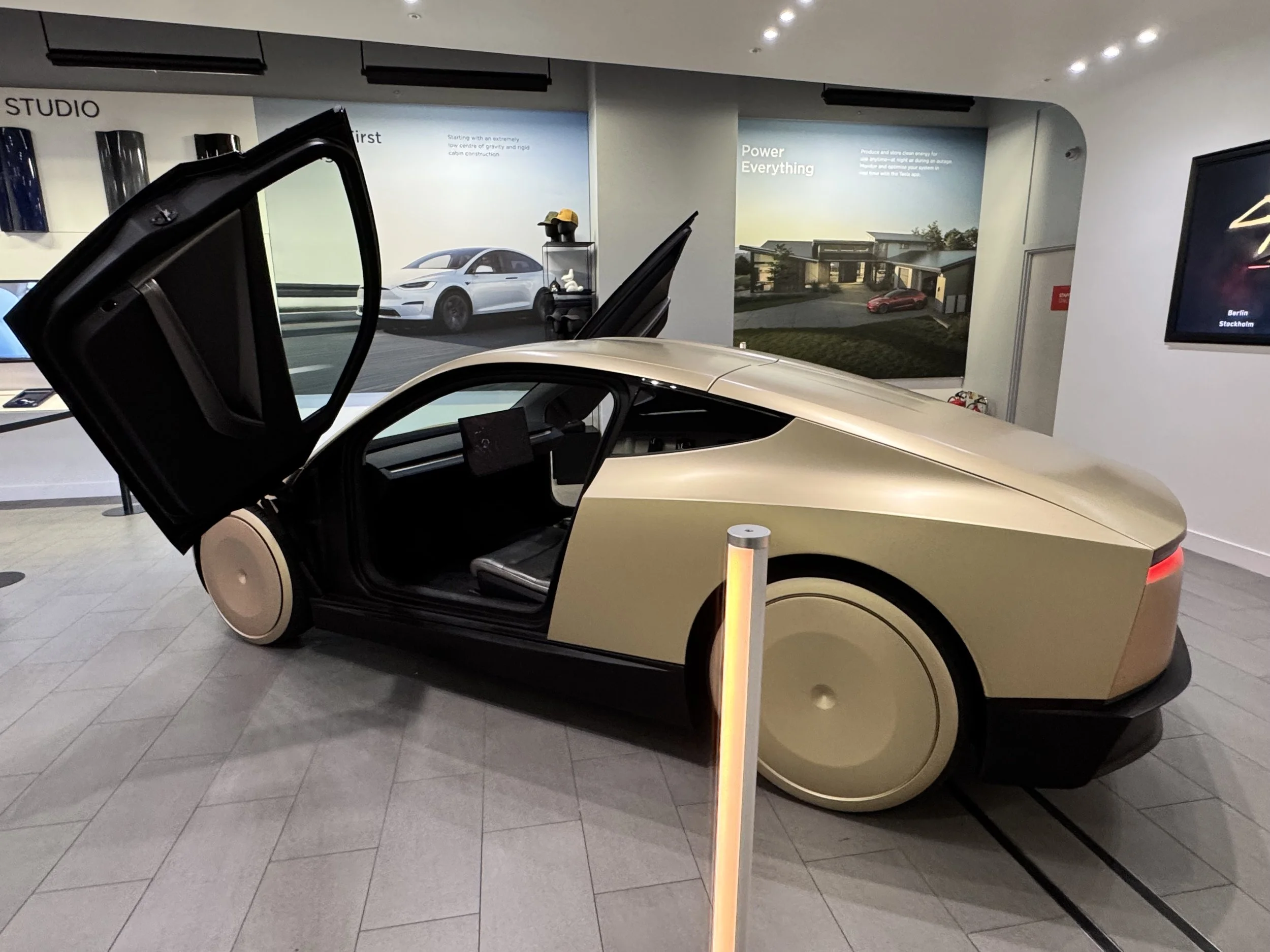
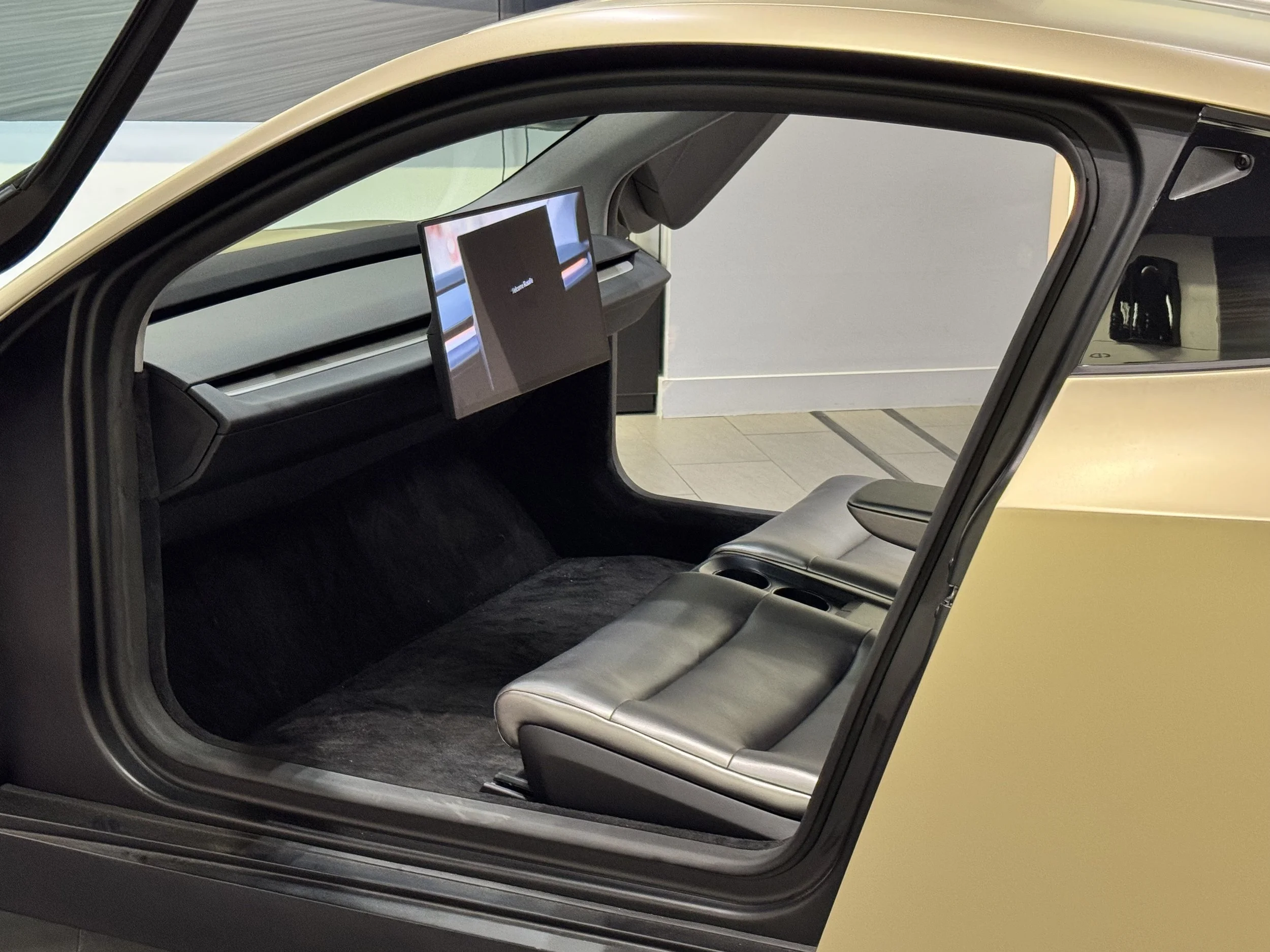
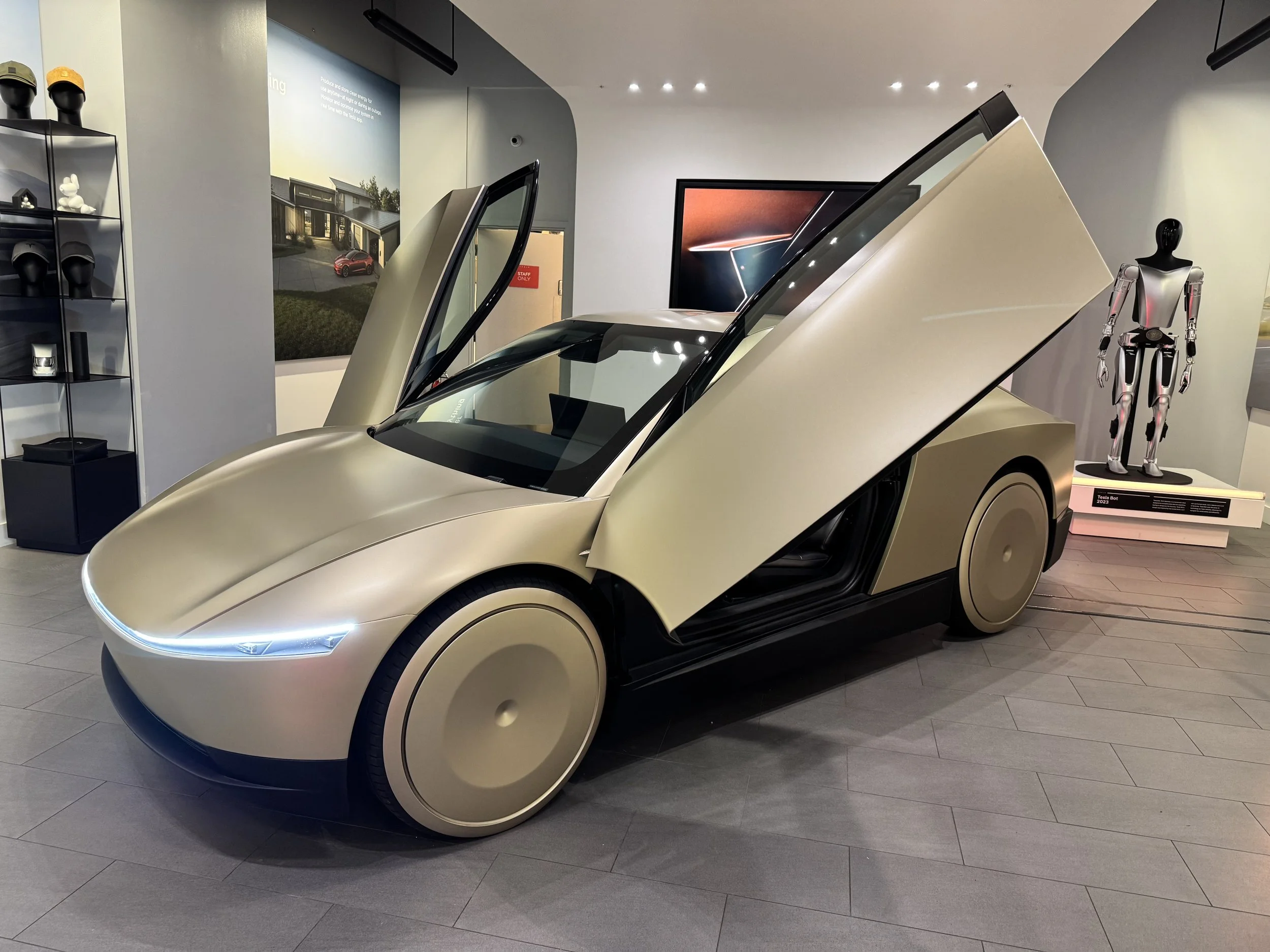
Tesla Cybercab - Westfield Tesla, London
The RDW stated "Due to the continuous strict monitoring of the driver in the vehicle, the system is safer than other driver assistance systems. We have thoroughly researched and checked this system, more than a year and a half.
The RDW has issued a type approval for Tesla's driver's assistance system, FSD Supervised. This driver's assistance system has been extensively researched and tested on our test track and on public roads for more than a half years. Safety is paramount for the RDW. The proper use of this driver's system makes a positive contribution to road safety."
This is a bold and confident statement by the EU’s leading regulator on road safety.
Full Self Driving (FSD) is available in the United States, Canada, Mexico, Puerto Rico, Australia, New Zealand, South Korea and The Netherlands with the U.K.’s governing body, UNECE, set to make a decision as early as this summer to permit FSD Supervised on U.K. roads, but it has also stated that a decision could also be pushed back to early next year.
RDW has explicitly designed this as guidance for the whole EU and the next steps are:
RDW submits the full application to the European Commission.
All EU member states review and vote in the relevant technical committee.
A majority vote in favor makes FSD Supervised valid across the entire European Union.
Currently the purchase price for FSD in The Netherlands is €7,500 outright, or €99 per month on subscription which can be opted into, and out of, via the Tesla app.
Pricing for the U.K. is expected to be around £89 to £99 per month on subscription, or if prefered, an outright purchase cost of £6,800.
Tesla and stock market analysts expect the broader European rollout to take place as early as summer 2026 when EU-wide ratification has been approved. However, individual countries can choose to recognize the Dutch approval and roll-out FSD sooner.
Tesla Europe announced “FSD Supervised has been approved in the Netherlands & will begin rolling out in the country shortly. … We’re excited to bring FSD Supervised to more European countries soon.”
Although this is Supervised FSD, North America currently has unsupervised FSD which is enabling their Robotaxi fleet rollout in several states, such as Florida, parts of California, Georgia, Texas and San Jose with Tesla starting early production models of it’s two-seat Robotaxi Cybercab. This is Tesla’s first car to be produced without a steering wheel, or pedals.
Robotaxi’s are currently using the Tesla Model Y for 5-seat passenger cabs, but despite having a steering wheel, they have an absence of drivers in their cars. Robotaxi is modelled like Uber, but without drivers where cars are hailed via the Tesla Robotaxi app (currently not available here) at a much lower cost point than Uber, or other taxi services.
———
About the Author
Graeme Cobb is a lifelong car enthusiast with a passion for writing about cars, EVs, industry updates and more.
You can find Graeme on 𝕏 at @graeme_cobb or YouTube @REV-EV.