Petrol Prices Soar in Time for the Bank Holiday Getaway
UK petrol prices have once again hit highs not seen since 2022 (when Russia invaded Ukraine) just in time for the busiest weekend of the year, and the busiest in 11 years since records began, according to RAC data.
With the average cost of petrol hitting 161.6p a litre, and diesel averaging 183.4p a litre (according to the AA Motoring research), motorway services up and down the country will charge a premium over those average prices, hitting motorists hard as they bring to an end the summer holidays, or start their long-weekend getaways.
With millions of motorists taking to the roads over the weekend, millions of pounds will be collectively spent on inflated fuel prices as global oil prices hit a near $90 per barrel at the beginning of the week - since falling back slightly - but the impact on petrol and diesel prices at the forecourts will be felt for weeks.
Crude oil prices were around $71 per barrel pre-Middle East conflict in February, and they have remained elevated since. And the impact of higher oil and fuel prices has seen the sale of petrol and diesel cars shrink rapidly in favour of electric cars and plug-in hybrid cars, according to SMMT data, as motorists look to fix their fuel costs via a home tariff where fuel bills can be cut by upto 90%.
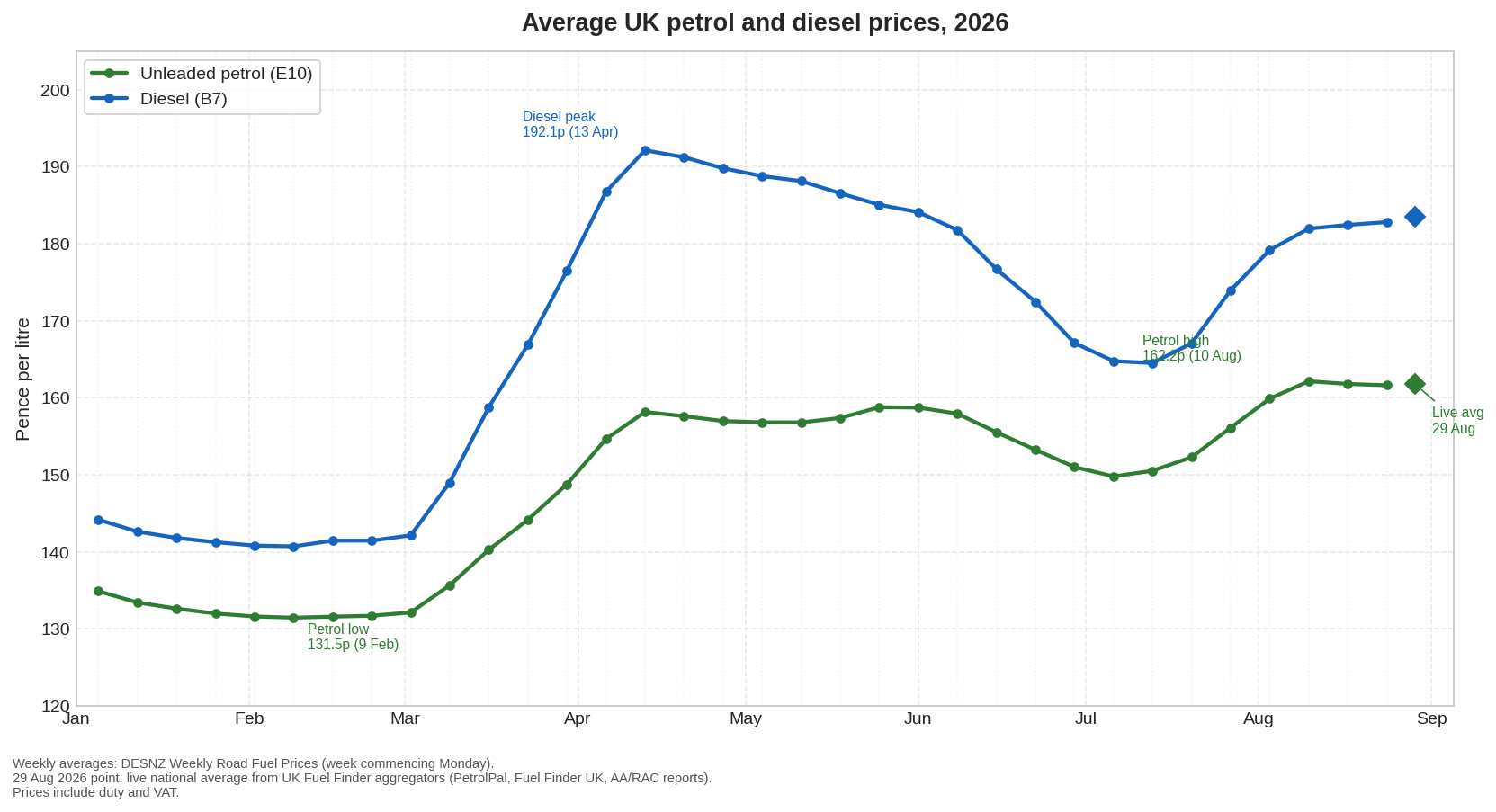
Average petrol and diesel prices since January 2026
What is compounding the issue for many is choice of car as a report by data technology specialists, Vehicle Data Global Ltd, concluded that there has been a decline in fuel efficiency for over a decade, despite the EU regulating for cleaner emissions and better fuel economy.
The report shows the average petrol car fuel efficiency peaked at 55 mpg in 2016, then fell back to 47 mpg in 2026, with diesel now at 43 mpg compared to 64 mpg in 2016.

Higher Fuel Consumption Cause
The root cause is the U.K.’s appetite for SUV’s and crossovers that now comprise of 60% of the market share.
Despite their obvious advantages with an elevated ride height and ease to get in and out, the hit is on fuel consumption is significantly worse than a tradition hatchback, saloon or estate car.
For those struggling with high fuel prices, and are unable to switch to more fuel efficient cars, there are ways in which money can be saved on fuel costs with a few tweaks to habits. You can find out more with our guide to Saving Money on Fuel Costs.
The Government’s Fuel Finder scheme brings together live retail fuel prices and forecourt information across the UK and has been live since February 2026. It’s now a legal requirement for fuel retailers to provide the latest fuel prices within 30 minutes of any change. This should help motorists find the least expensive petrol station close by.
Apps such as Waze and other navigation apps, plus dedicated pricing apps already show the latest information so that drivers can scan for the cheapest fuel nearest to them, saving them money on each fill up.
If you are fed up with high fuel prices there are useful guides for buying or selling a car as well as information on leasing a car, plus a Beginners Guide to EV Ownership.
For the latest deals on cars, headover to the Definitely Not A Guru YouTube channel for weekly deals on new cars and vans from all fuel types.
However, if changing your car isn’t an option, there are the above tips to follow that may help ease the burden whilst fuel prices remain high.
———
About the Author
Graeme Cobb is a lifelong car enthusiast with a passion for writing about cars, EVs, industry updates and more.
You can find Graeme on 𝕏 at @graeme_cobb