
BYD's 3,019PS electric hypercar has become the first production car to break the 500km/h barrier, reaching 503.17km/h during a record attempt in Abu Dhabi.
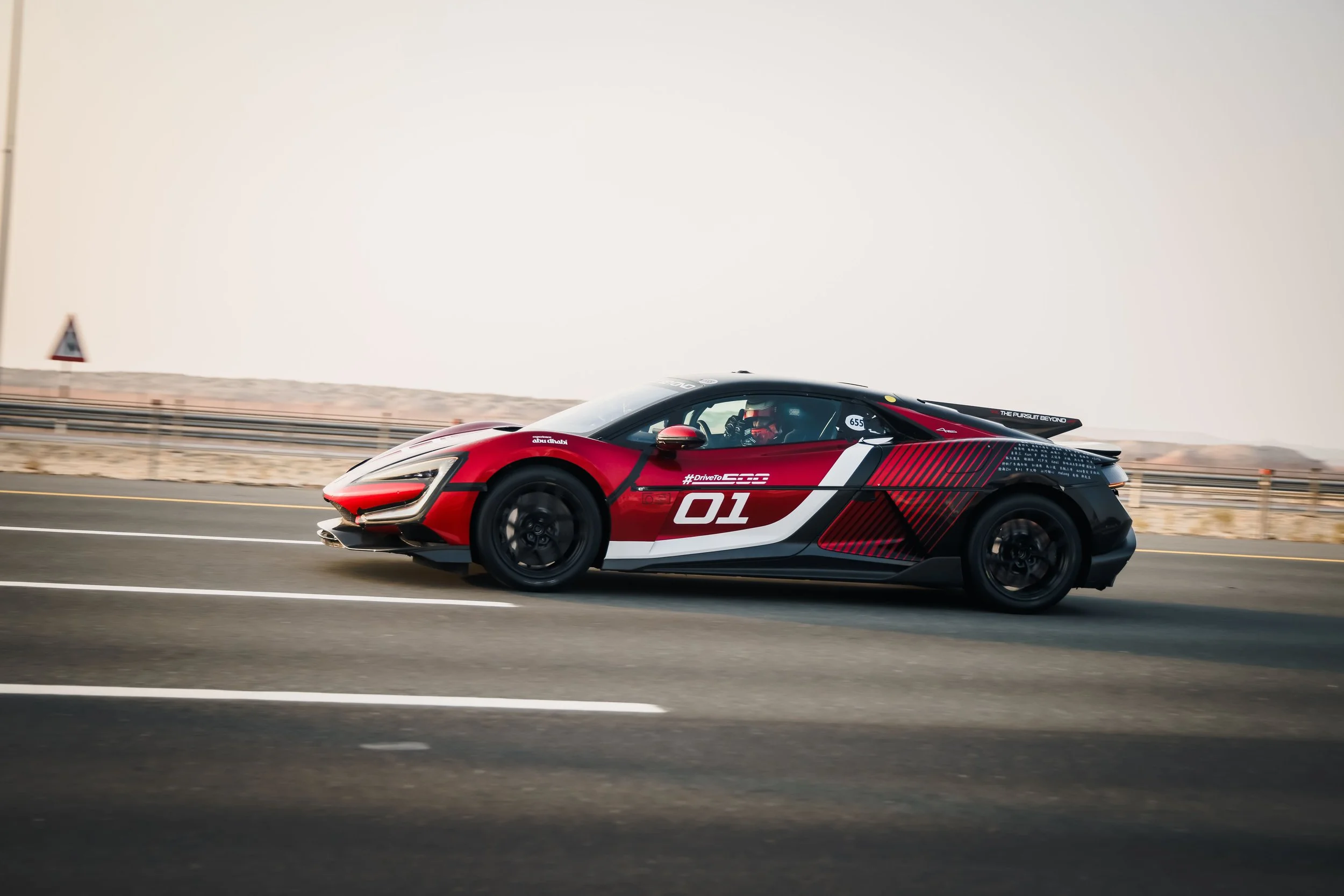
The race to build the world's fastest production car has taken another extraordinary turn, with BYD's luxury YANGWANG brand recording a top speed of 503.17km/h (312.65mph) with its U9 Xtreme hypercar.
The achievement makes the U9 Xtreme the first production car to officially pass the 500km/h mark and gives it two Guinness World Records: the highest speed achieved by a production car in a single-direction run, and the highest speed achieved by an electric production car in the same category.
It also beats the car's previous record of 496.22km/h, set in Germany in September 2025.
The latest attempt took place on 1 November 2026 on Sheikh Khalifa Bin Zayed International Road (E11), in Abu Dhabi's Al Dhafra Region. Behind the wheel was German racing driver Marc Basseng, who also drove the car during its previous record-breaking run at the ATP Papenburg proving ground.
While the headline figure is impressive enough, there's plenty more to the achievement than simply adding another few kilometres per hour to an already remarkable top speed.
Getting past 500km/h
The challenge of building a car capable of travelling faster than 500km/h has occupied the automotive industry for decades. Doing it with an electric powertrain presents an entirely different set of engineering challenges, particularly when it comes to battery output, heat management and keeping the car stable at such extreme speeds.
The U9 Xtreme is a considerable step on from the standard YANGWANG U9. Its four electric motors produce a combined output of more than 3,000PS, giving it a power-to-weight ratio of 1,217PS per tonne.
Each motor can spin at up to 30,000rpm, while the car uses BYD's e4 Platform, which independently controls torque at each wheel more than 100 times per second.
The latest record attempt also required some careful preparation. The team had access to a 10km stretch of closed road in Abu Dhabi, with a seven-kilometre straight available for the high-speed runs.
The road needed to be swept before testing because of its proximity to the desert and the regular traffic that normally uses it. Even then, the team had to inspect the surface for tiny particles of wire left behind by the cleaning equipment, which could have caused problems for the car or its specially developed Giti tyres.
Two runs on 31 October produced a maximum speed of 490km/h. The engineering team then worked overnight, adjusting the car's preparation and setup ahead of another attempt the following day.
Changes included adjusting the rear wing to increase downforce over the rear axle, revising the suspension software to provide greater rebound damping over uneven sections of road, and fine-tuning tyre pressures.
The work paid off. Two further runs were completed on 1 November, with the second producing the new record of 503.17km/h.
Serious engineering beneath the bodywork
The U9 Xtreme's performance isn't simply the result of fitting more powerful electric motors. BYD has made substantial changes to the electrical architecture and battery technology to cope with the demands of sustained high-speed running.
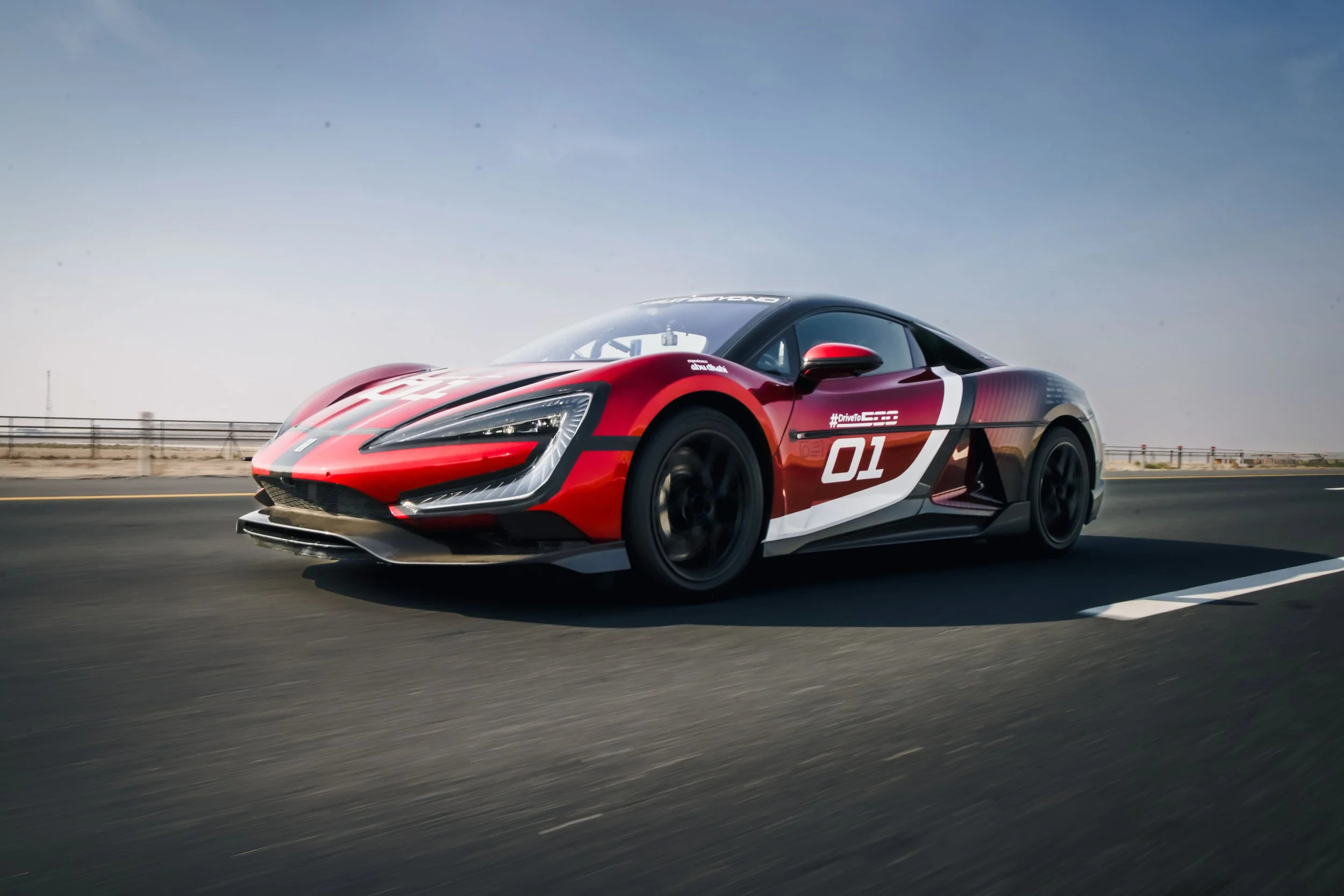
The car uses a 1,200V electrical platform, compared with the 800V system found in the standard U9. According to BYD, this makes it the first production model to use a 1,200V ultra-high-speed platform.
The four motors produce up to 755PS apiece, with the combined output exceeding 3,000PS. To achieve this, BYD uses exceptionally thin 0.1mm super-silicon steel in the motor stators, ultra-high-strength silicon steel in the rotors and aerospace-grade aluminium in the motor housings.
The battery is another important part of the equation. The U9 Xtreme retains BYD's Blade Battery technology, using lithium iron phosphate (LFP) chemistry.
BYD says the revised battery and electrical system can support discharge rates of 30C, with single-cell power density increased by 170 per cent compared with an 800V system. The company claims this is up to ten times the discharge rate of a conventional electric vehicle battery.
Even with the battery at just 20 per cent state of charge, it can still deliver up to 1,800kW of power. Regenerative braking is also capable of recovering more than 700kW, helping reduce the workload on the conventional braking system.
Thermal management is particularly important when dealing with this sort of power. BYD says the 1,200V architecture can reduce heat generation by up to 67 per cent compared with an 800V system operating at the same power output.
There's also some clever suspension technology at work. The U9 Xtreme uses BYD's DiSus-X Intelligent Body Control System, which employs electronically controlled dampers to make rapid adjustments at each corner of the car.
The system can generate up to 50kN of active force within 120 milliseconds, allowing it to control body movements under acceleration, braking and cornering. BYD even claims it can achieve negative body roll, effectively leaning into a corner like a motorcycle.
Tyres were another area requiring specialist attention. Developed in collaboration with Giti Tire, the U9 Xtreme uses bespoke track-focused semi-slicks designed to cope with the forces generated at extreme speeds. The wheel and tyre interface has also been treated to reduce the risk of the tyre slipping against the rim during hard acceleration and braking.
Not just a straight-line specialist
While the headline speed has understandably attracted most of the attention, the U9 Xtreme has already demonstrated its abilities away from a straight-line run.
The car holds the production electric vehicle lap record around Germany's Nürburgring Nordschleife, with a time of 6 minutes 59.157 seconds.
What's particularly interesting is that BYD says the car used for that lap record was built to the same specification as the vehicle that achieved the top-speed record. That suggests the engineering isn't solely focused on producing a car capable of one spectacular run.
Just 30 cars will be built
As you might expect, the U9 Xtreme isn't going to become a familiar sight on the high street. Production will be limited to just 30 examples worldwide.
The first production-standard car, named 'Dawn Moment', was unveiled at the Beijing Auto Show. Its finish includes ultra-fine gold powder sealed beneath multiple layers of clear coat, with matte-gold sections incorporating techniques inspired by traditional Chinese lacquer work.
BYD says some customers have already approved their individual specifications and are moving towards contract signing and production scheduling.
Whether the U9 Xtreme will ever become a realistic proposition for buyers outside its limited production run remains to be seen. But its latest achievement is an important demonstration of just how quickly electric hypercar technology is developing.
For years, the 500km/h barrier has been a target that seemed almost impossible to reach with a production car. BYD has now done it with an electric vehicle, and it has taken the company just three years from the start of the U9 project to get there.