Vehicle Production Falls in February impacting Domestic and Export Volumes
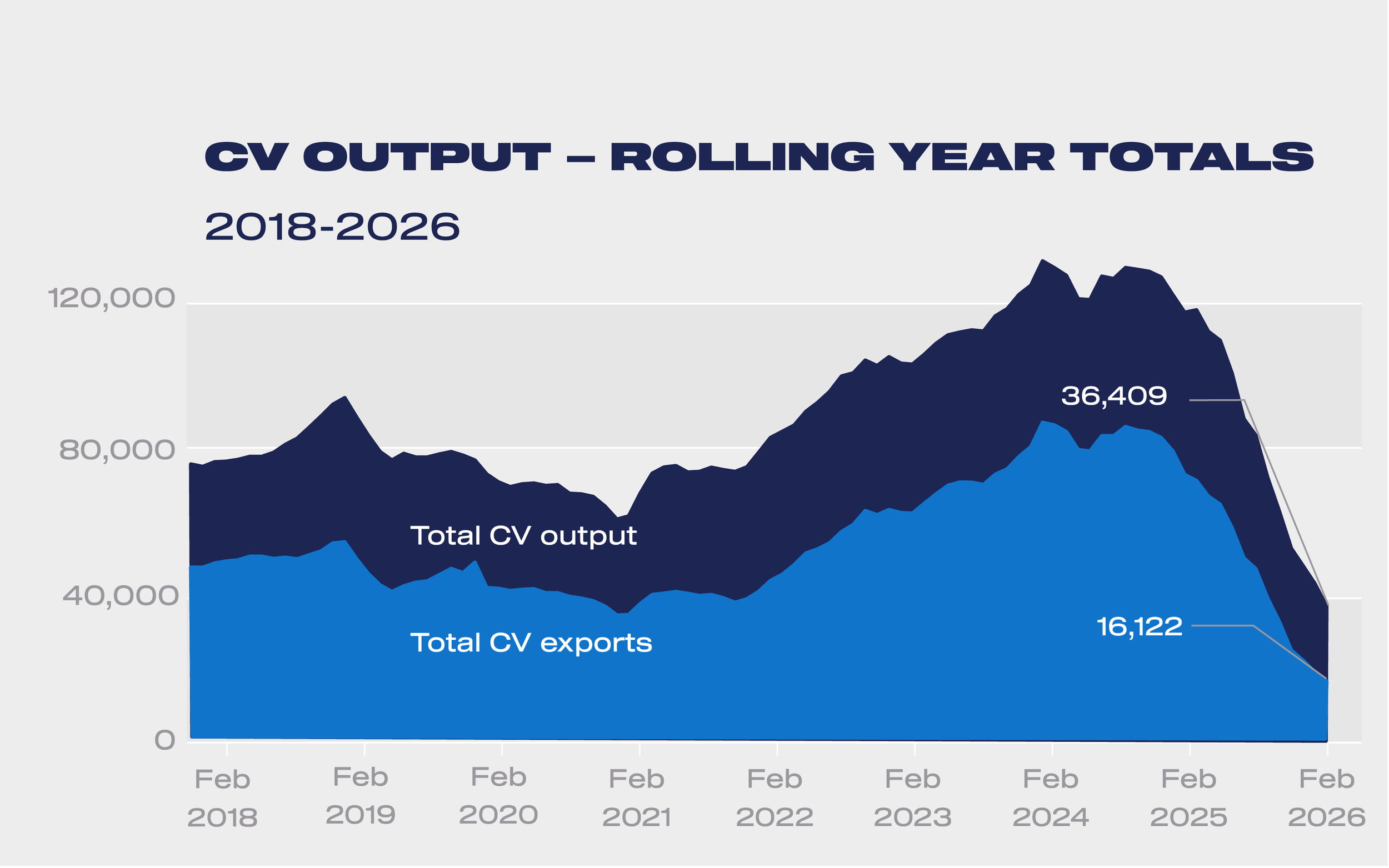
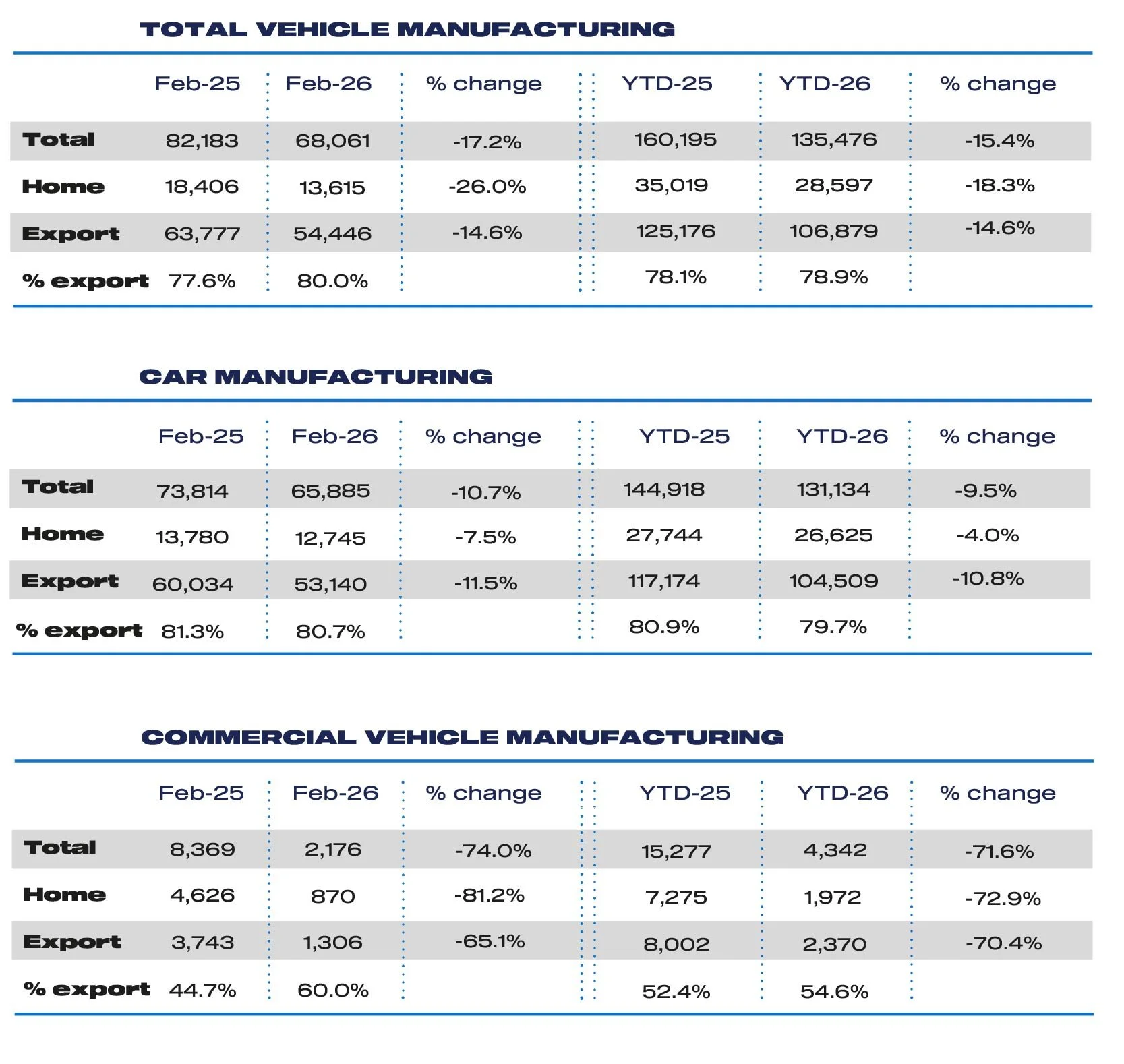
The Society of Motor Manufacturers and Traders reported that U.K. vehicle production fell sharply in February by 17.2% with car output down -10.7% to 65,885 units and commercial vehicle volumes drop -74.0% to 2,176 units.
This follows news from January that vehicle production fell 13.6% and further confirms troubles in the industry, effecting both domestic and export markets.
Mike Hawes, Chief Executive of the SMMT, said “Weak global demand for new vehicles, ongoing model changeovers and a major plant restructuring continue to dampen volumes and the immediate outlook is uncertain, particularly since these figures pre-date the crisis in the Middle East, the impact of which, if the conflict is prolonged, could be significant”.
Commercial Vehicles Graph
The Commercial Vehicles graph illustrates an unexpected and sharp fall in output from all-time highs just one year ago, showing how quickly decline can set in.
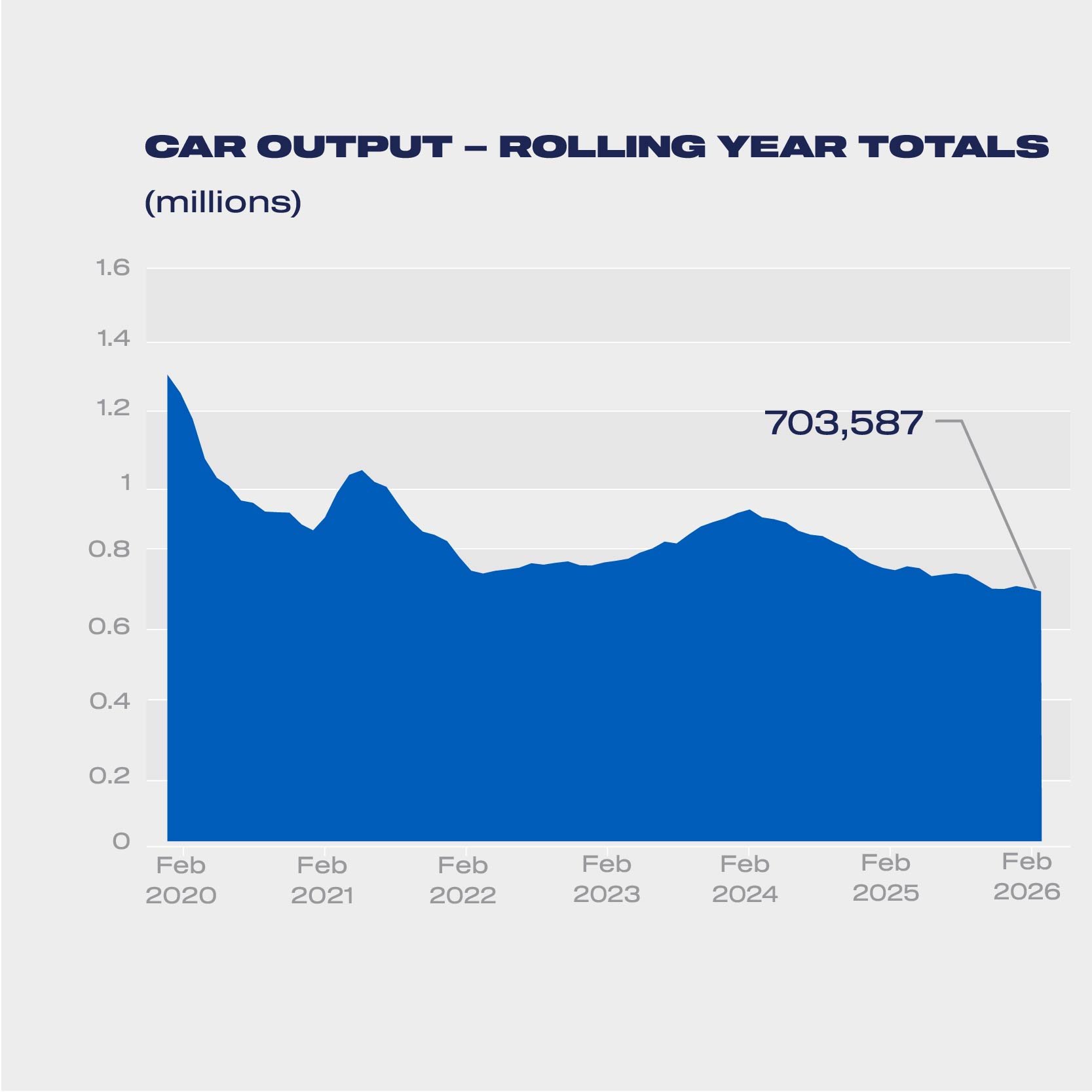
The story for car manufacturing is also concerning illustrating that the industry has not yet recovered to pre-Covid levels and is now at its lowest point with output in recent history.
Car Output Graph Since 2020
The news comes at a point where oil prices - having risen sharply in a matter of weeks - is having a huge impact on energy costs further impacting manufacturers and drivers, affecting petrol and diesel drivers the hardest with pump prices hitting £1.50 per litre for petrol and £1.75 per litre for diesel, on average.
The squeeze on finances won’t help the industry shift more cars to buyers struggling with rising costs, with people putting off big purchases until certainty returns.
But it’s not just domestic buyers in the U.K. that are impacted, exports have fallen sharply too, both for passenger cars and commercial vehicles.
Car exports have fallen -11.5% in February with commercial vehicle exports having crashed -65.8% year on year.
U.K. Vehicle Manufacturing
Mike Hawes, SMMT Chief Executive, summarised it as, “Another decline for UK vehicle production and exports is extremely worrying, given these figures pre-date the crisis in the Middle East. While the sector has made efforts to build resilience into its logistics and supply chains post Covid, the conflict adds further strain. Now more than ever we must focus on our industrial competitiveness by driving down energy costs, backing our suppliers, supporting our domestic market and securing free and fair trade with Europe.”
Now more than ever, the focus should be showing support for our automotive manufacturing industry, talking it up, rather than singling out EVs as the root cause of the problem, when energy costs are spiraling.
The industry is in crisis and the conflict is just adding thumb screws to the torture.
The SMMT is encouraging Governments to “work together to extend full, trusted partner status to the UK automotive sector to ensure choice and affordability for consumers, particularly of zero emission vehicles, on both sides of the Channel.”
The aim is to drive economic growth across the UK and Europe, securing jobs in an industry facing headwinds from multiple directions.
———
About the Author
Graeme Cobb is a lifelong car enthusiast with a passion for writing about cars, EVs, industry updates and more.
You can find Graeme on 𝕏 at @graeme_cobb or YouTube @REV-EV.