The used car market records its second quarter of growth, up 0.5% compared to the same period last year, but also showing its best Q3 since 2021, when the supply chain issues curtailed new car production.
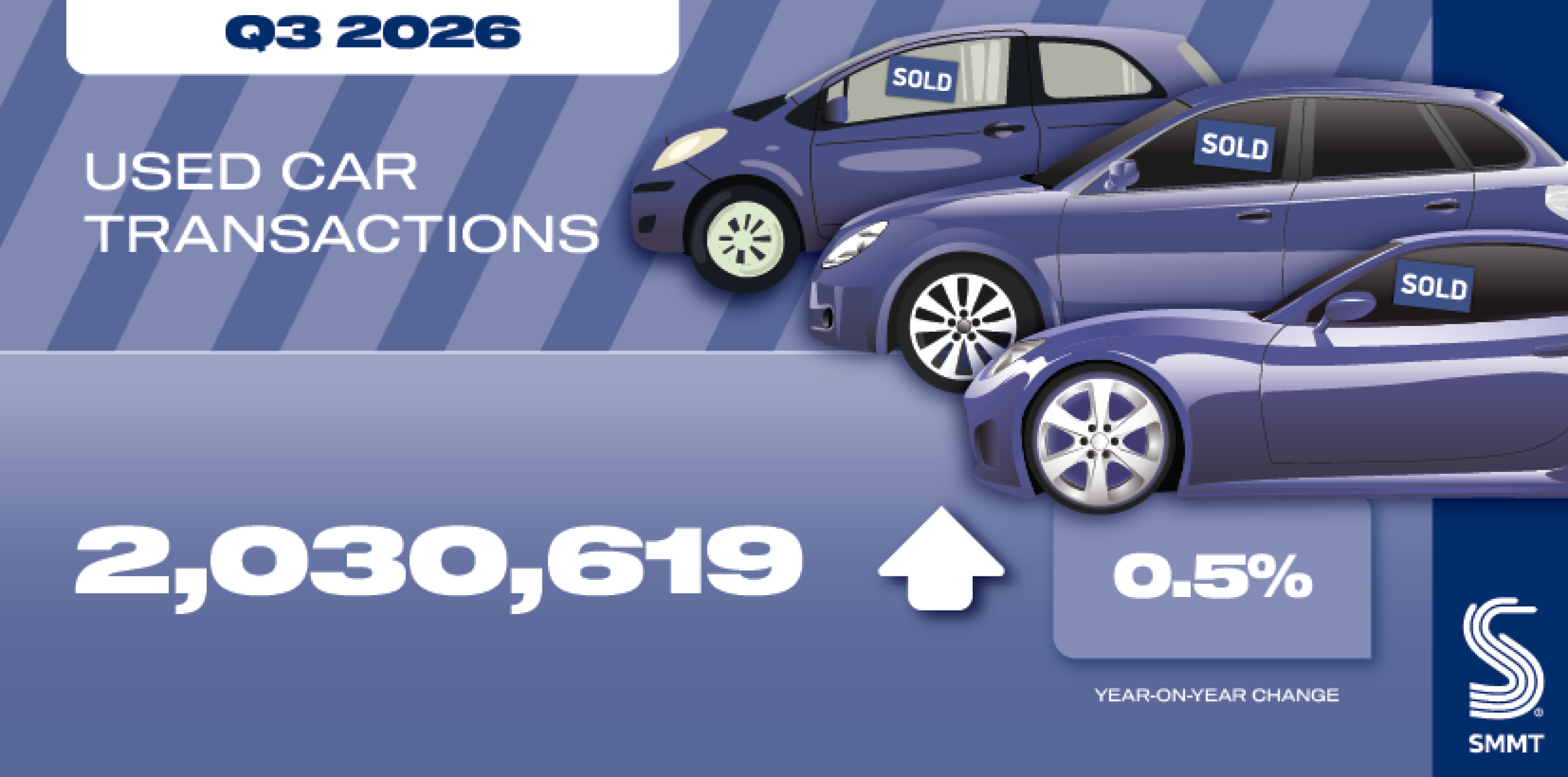
The UK’s used car market continued to grow in Q3 shifting an almighty 2,030,619 vehicles, according to the latest figures from the Society of Motor Manufacturers and Traders (SMMT).
This marks the strongest Q3 performance since 2021 with year-to-date, showing a 0.3% growth taking cumulative transactions to 6,056,169 vehicles this year so far, and the best first three quarters since 2019.
Sales by Fuel Type
Whilst petrol and diesel registrations plunge in the new car market, its a different story on the used market as each still overwhelmingly dominate.
Battery Electric Vehicles (BEV)
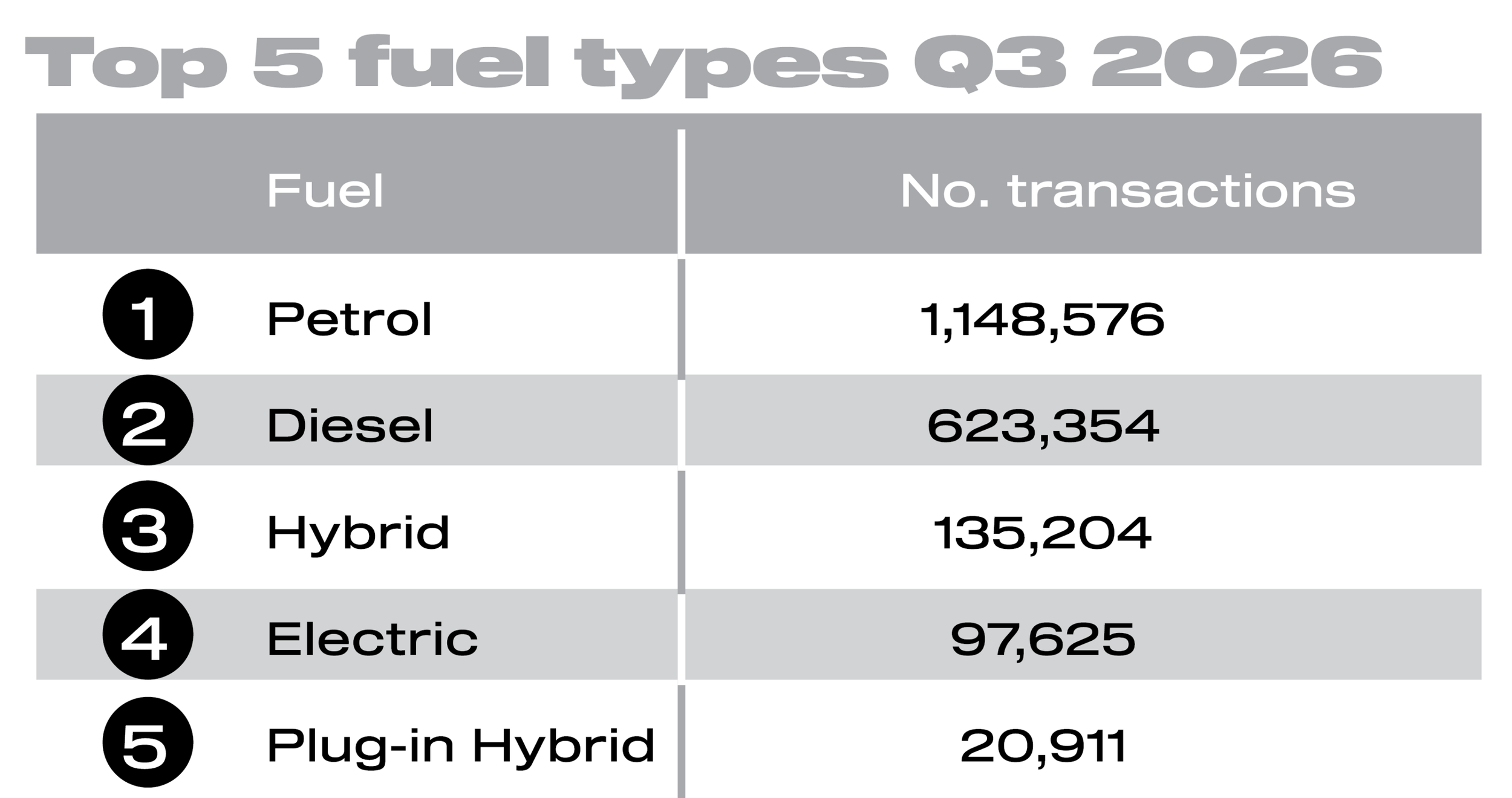
The big news is a significant uptick in sales for battery electric cars rising 23.2% to 97,625 units in Q3. That equates to one in 20 used car buyers (4.8%) choosing an EV, up from 3.9% in the same period last year.
Year to date, used battery electric car demand has surged thanks to high petrol and diesel costs at the forecourts. That translates to transactions rising 39.6% to 295,524 units throughout 2026.
Hybrid electric vehicle (HEV)
Hybrid sales also grew strongly in Q3 as drivers look to reduce their running costs where they are unable, or as yet unwilling to switch to a car with a plug. Sales rose 25.9% to 135,204 units increasing market share to 6.7%, up from 5.3% a year ago.
Plug-in Hybrid Vehicles (PHEV)
Bucking the new car trend, PHEV transactions actually fell by -13.3% to 20,911 units, accounting for 1.0% market share. The SMMT describes PHEVs as a “small segment of the market [that] is subject to volatility.”
Petrol and Diesel cars
Petrol remained the most popular fuel type, with 1,148,576 vehicles taking 56.6% of the market. Whilst its a different story for Diesel sales which saw a -5.3% decline to 623,354 units taking a 30.7% share. This reflects a reduced supply and reduced demand given the cost of diesel hitting £2 per litre and remaining high throughout the year.
Despite the high pump prices this year, non-electrified vehicles comprised almost nine in 10 (87.5%) used car sales, compared with 89.5% in Q3 last year. That’s purely down to the saturation of petrol and diesel cars that remain in circulation, whilst electrified technology remains relatively new in comparison, and is trickling through to the used market from a smaller base.
Best Sellers
The best sellers remain the cheaper options as superminis account for 32.0% of sales, with 650,511 units changing hands, up by 0.1%.
Lower medium cars were second with a market share of 26.6% despite a small decline of -0.5%, whilst “dual purpose” cars recorded the strongest growth, rising 8.5% to 368,428 units to secure 18.1% of the market.
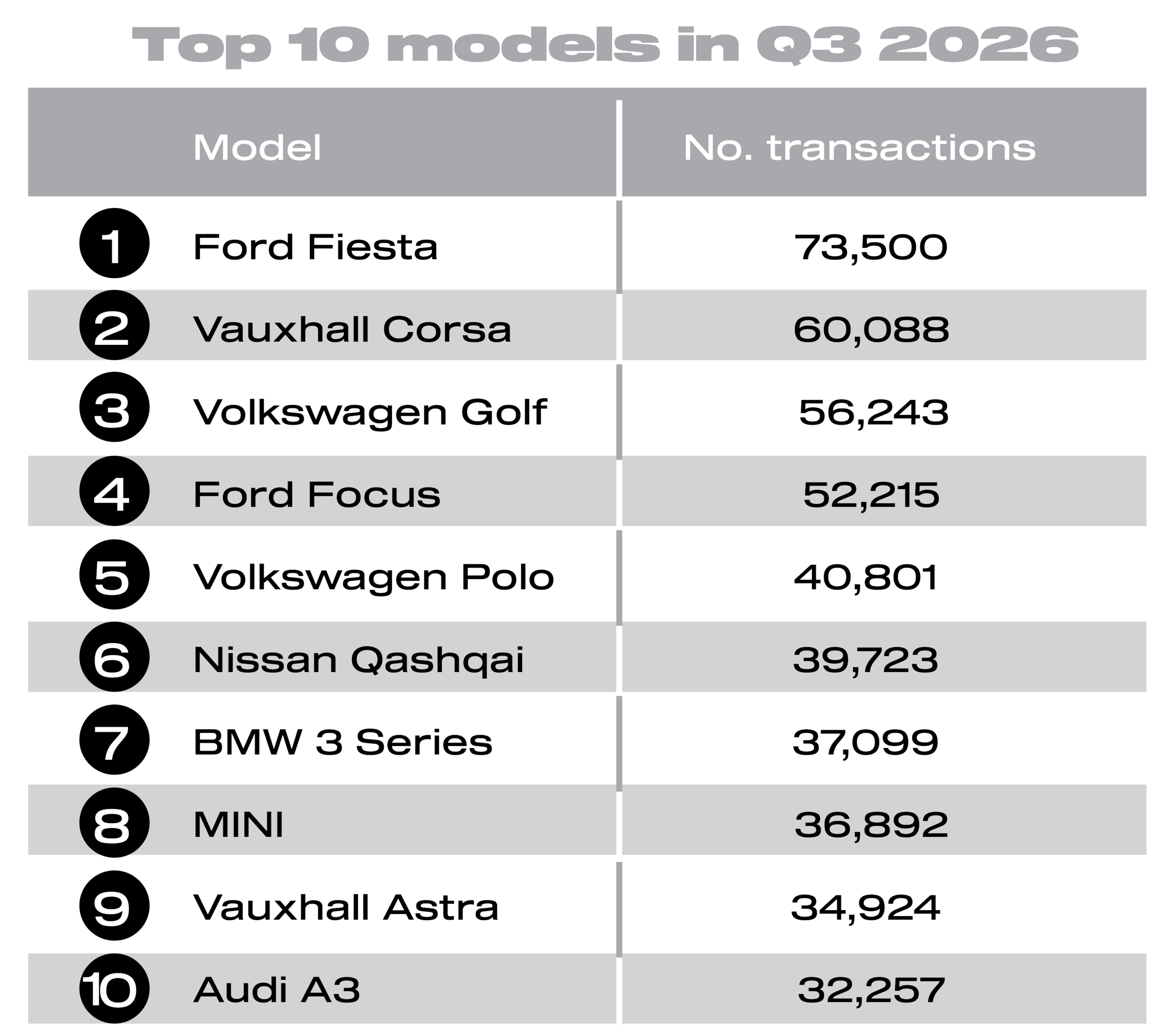
The top selling car remains the Ford Fiesta despite production ending over two years ago, which outsold the next best seller, the Vauxhall Corsa by 13,500 units.
The Volkswagen Golf remains the most popular C-segment car with 56,243 units changing hands, whilst the out-of-production Ford Focus followed closely behind it in 4th place with 52,215 units.
Most Popular Colours
Monochrome colours remain a buyers choice with black, grey and white maintaining top spots. Together, these three colour choices accounted for more than 1.15 million transactions taking 56.7% of the market.
However, it’s black that remains the most popular choice with a 21.2% market share whilst silver is dropping out of favour showing the largest decline, down -6.7%, although it still represents a mighty 254,714 sales
Mike Hawes, SMMT Chief Executive, said, “Another quarter of growth means Britain’s used car market remains on course for its best year since the Covid-19 pandemic. Long-term investment in new models is broadening choice for used car buyers, while growth in new EVs is driving a surge in second-hand uptake. To sustain this progress and make zero emission mobility possible for all motorists, the new car market must remain strong, underpinned by measures that boost EV demand – including affordable and widely accessible charging infrastructure and compelling fiscal incentives.”
———
About the Author
Graeme Cobb is a lifelong car enthusiast with a passion for writing about cars, EVs, industry updates and more.
You can find Graeme on 𝕏 at @graeme_cobb