
Suzuki eVitara Review : A first EV from the Japanese giant
The Suzuki e-Vitara is one of the most important cars Suzuki has launched in years. Not because it is especially groundbreaking, fast or technologically advanced, but because it finally gives the brand a proper foothold in the electric car market. In typical Suzuki fashion, it also arrives with a clear focus: affordability, simplicity and everyday usability.
Starting from just £26,249, the e Vitara massively undercuts many established electric SUV rivals while still offering decent equipment levels, a standard heat pump and Suzuki’s impressive service-activated 10-year warranty. On paper, it looks like exactly the sort of honest, value-focused EV many buyers have been waiting for.
But after spending time with it, the e-Vitara quickly reveals itself as a car built very much to a budget. It offers a lot for the money, but there are compromises almost everywhere you look.
Visually, the e-Vitara works surprisingly well. It looks chunky, upright and rugged without trying too hard to appear futuristic. There is a hint of old-school Vitara toughness in the styling, especially in the ALLGRIP-e all-wheel drive model. Unlike many electric SUVs, which simply use dual motors for acceleration figures, Suzuki’s AWD system is designed more for traction in mud, snow and poor weather conditions. That alone could make it genuinely appealing to rural buyers.
It also shares its platform and drivetrain technology with the Toyota Urban Cruiser, which gives some reassurance underneath. Suzuki and Toyota have collaborated heavily here, and the e-Vitara feels far more substantial than some may expect from Suzuki’s first global EV effort.
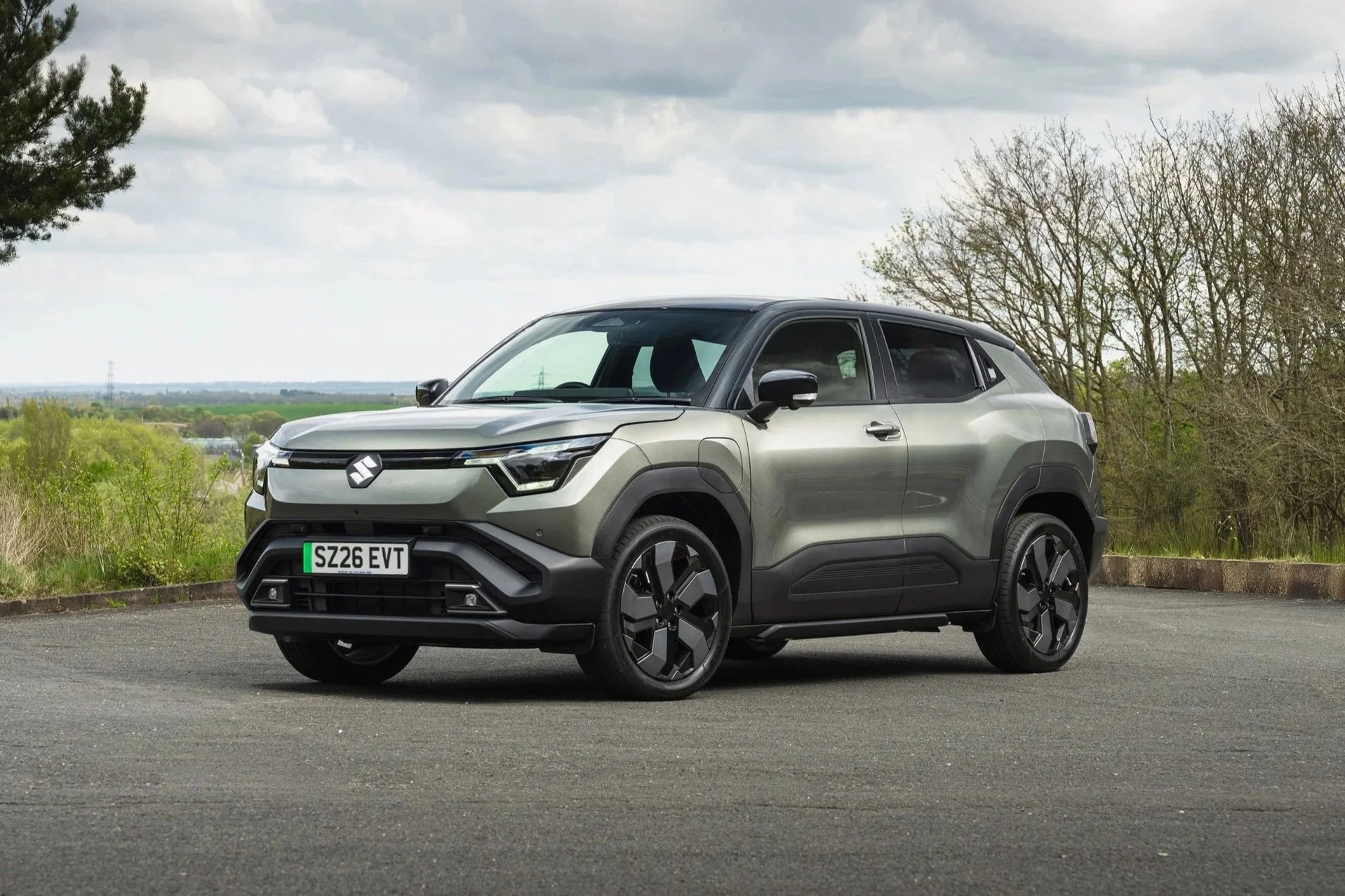
The Suzuki e-Vitara has a ruggedly handsome look
Interior & Tech
Inside, the cabin follows the same straightforward approach. Motion trim already includes plenty of kit, such as twin 10-inch displays, adaptive cruise control, blind spot monitoring, ambient lighting and sliding rear seats. Ultra trim adds a panoramic glass roof, upgraded Infinity audio system, electric driver’s seat and a 360-degree camera system.
However, the interior quality is where the low price starts to show. There is a lot of hard plastic throughout the cabin and while everything feels reasonably solid, it lacks the sophistication of rivals like the Kia EV3 or Volvo EX30. Some materials feel durable rather than premium, and the overall design already feels slightly dated compared to newer EV interiors.
The infotainment system is probably the biggest weak point of the entire car. It feels like technology from several years ago rather than a brand-new EV launched in 2026. The graphics are basic, response times are slow, and almost every input is met with noticeable lag. Even simple actions can involve frustrating menu diving. It doesn’t end there either. The reversing camera is nice to have on a car of this price, but the picture quality is reminiscent of some of the very first camera phones - it’s really quite poor by modern standards.
Wireless Apple CarPlay also appears somewhat volatile. Connections can occasionally drop or take longer than expected to initialise, and because the native system itself is so slow, it can be frustrating. Thankfully, once CarPlay is properly connected, you will probably spend most of your time bypassing Suzuki’s own software entirely.
It should also be noted that headroom in the back is tight (6 footers should look elsewhere).
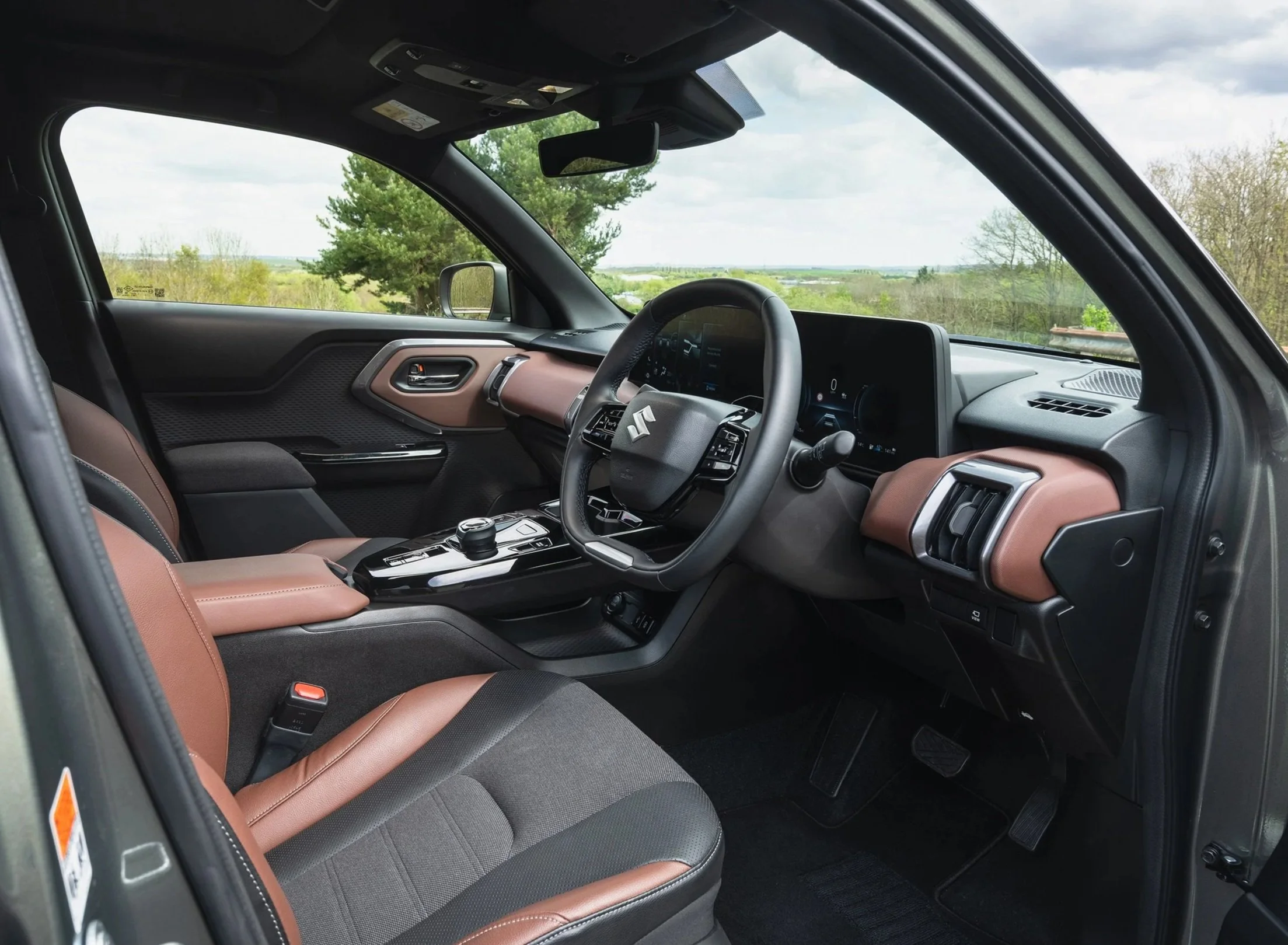
Whilst the interior looks OK, the material choices rather let it down.
Performance, Pricing and Practicality
The e-Vitara range starts with a 49kWh battery and 144PS driving the front wheels, while the larger 61kWh battery increases power to 174PS in two-wheel drive form. At the top of the range sits the ALLGRIP-e AWD model with 184PS and 307Nm of torque, cutting the 0-62mph time to around 7.4 seconds.
None of the models are especially fast by EV standards, but performance is perfectly adequate for everyday family driving. The AWD version feels like the one most buyers will gravitate towards, not because of outright speed, but because it offers something genuinely unusual in this class. While we have not yet tested its off-road ability properly, Suzuki claims the ALLGRIP-e system has genuine capability away from tarmac, something that remains extremely rare among compact electric SUVs.
Pricing is undoubtedly one of the e-Vitara’s biggest strengths. Starting from £26,249, it undercuts many key rivals by several thousand pounds while still offering a generous level of standard equipment. Even entry-level Motion models come well specified, while Ultra trim adds desirable extras like a panoramic roof and upgraded sound system without pushing the price into premium EV territory.
Range figures are acceptable rather than impressive. The larger 61kWh front-wheel drive version claims up to 264 miles WLTP, although around 200 miles in mixed real-world driving feels more realistic. The smaller battery version manages up to 213 miles WLTP, while the AWD model drops slightly to 245 miles officially.
Charging is one of the weaker areas. Maximum DC rapid charging tops out at 70kW, meaning longer motorway journeys will require more patience than many newer rivals. In a market where charging performance is becoming increasingly important, the Suzuki already feels slightly behind the curve.
Practicality is another mixed bag. Suzuki heavily promotes the sliding rear seats, and they do help improve flexibility. Push them forward and the boot grows from around 244 litres to just over 300 litres, while folding the seats expands capacity to 562 litres.
The issue is that the standard boot itself feels surprisingly small for a family SUV, especially compared with key rivals like the Kia EV3. Sliding the seats forward improves luggage space, but rear passenger legroom suffers quite noticeably when you do so. The cabin itself feels airy enough thanks to the upright design, and visibility is excellent, but outright practicality is not class-leading.
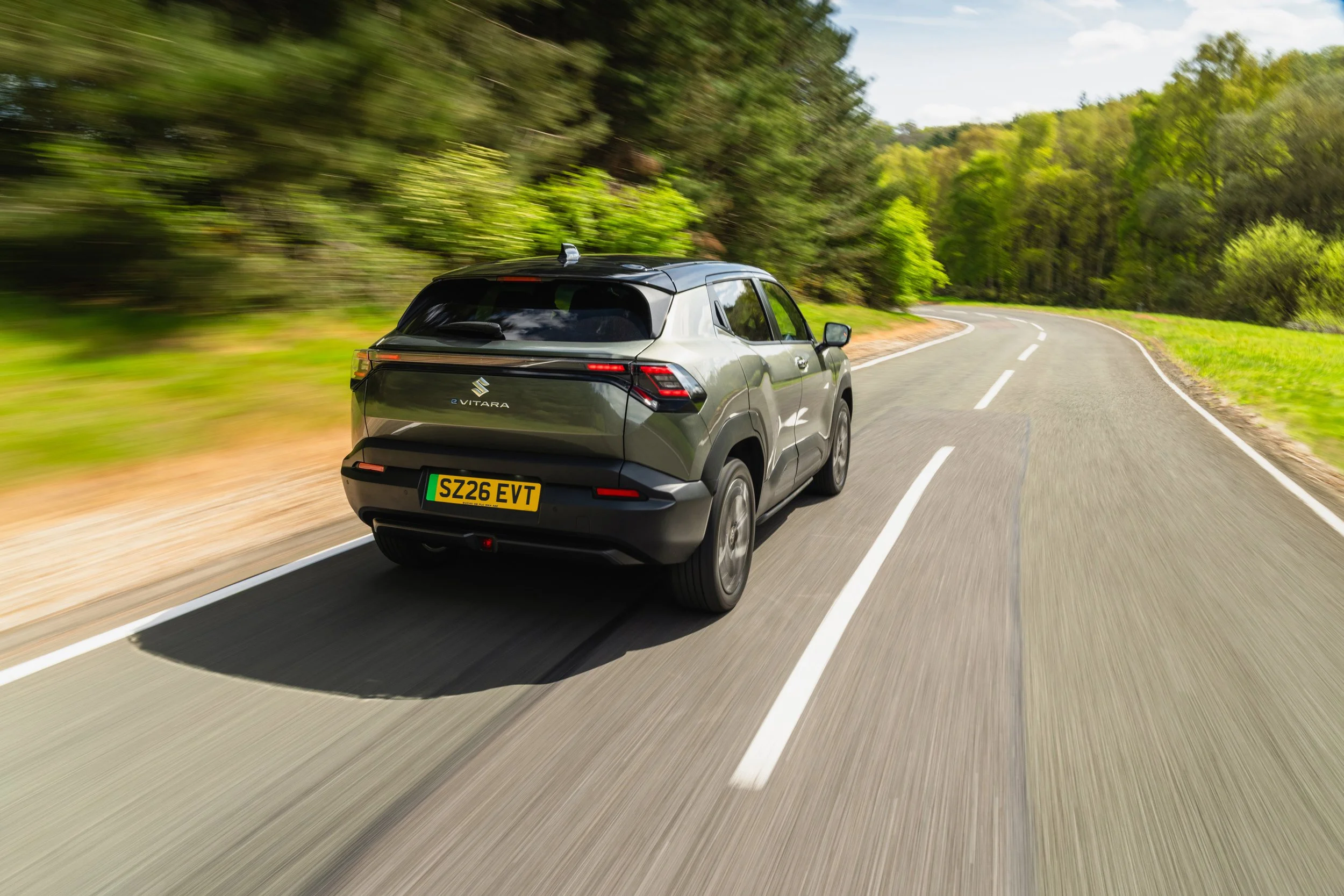
ALLGRIP AWD versions of the car are competent off-roaders, but the ride quality on the black-top can be a little disappointing
Driving Impressions
The e-Vitara drives exactly how you would expect a budget-focused electric SUV to drive. It is easy to manoeuvre, visibility is excellent and the controls are all very straightforward. Around town, it feels compact and unintimidating, making it well-suited to urban driving and daily commuting.
However, it does not take long to notice that comfort has been compromised slightly. The suspension setup is relatively firm and can feel quite busy over rough British roads. Sharp potholes and broken surfaces are transmitted into the cabin more noticeably than in softer rivals, and at times the ride can become genuinely uncomfortable on poor road surfaces.
Refinement is also only average. There is a noticeable amount of road noise, especially at motorway speeds, and while the steering is predictable, it feels quite heavy and lacks the polish and precision of the best EVs in this segment.
Still, there is something refreshingly honest about the way the Suzuki drives. It is not trying to be something it isn’t - I just wish it tried to be a tiny bit better...

Verdict
The Suzuki e-Vitara is a cheap electric SUV that offers a surprising amount of equipment, technology, and everyday usability for the money. The standard heat pump, strong warranty, and affordable pricing make it very easy to justify on paper, whilst the availability of proper all-wheel drive gives it a genuinely unique selling point in this segment.
However, it is also a car that feels compromised in several important areas. The infotainment system already feels outdated, charging speeds lag behind rivals and the boot space is disappointingly small unless you sacrifice rear passenger room. The suspension can also feel too firm and unsettled on poor roads, while the interior lacks the polish of class leaders. Add this to the slow maximum charging speeds and the disappointing real-world efficiency figures, and it becomes rather less attractive.
For some buyers, especially loyal Suzuki customers looking for a straightforward and affordable EV, that will be perfectly acceptable. But next to the best electric SUVs in this class, the cracks begin to show quite quickly.