
Production version of the all-new electric VW ID. Cross revealed
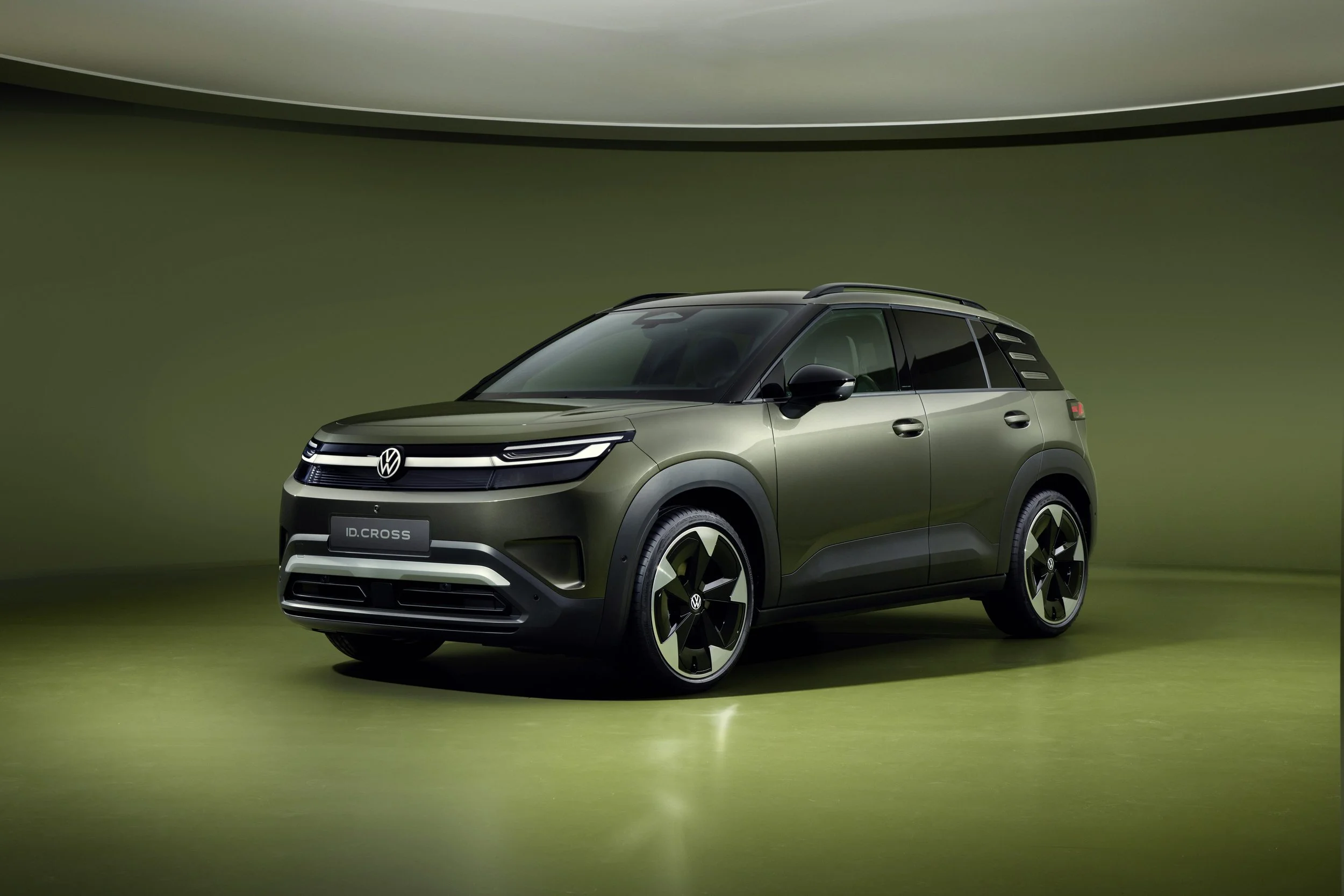
The production car design remains close to the concept version
Volkswagen has officially revealed the production version of the all-new ID. Cross, a compact electric SUV that will sit below the ID.4 and alongside the forthcoming ID. Polo in the brand's electric vehicle line-up.
Built on Volkswagen's updated MEB+ platform, the newcomer combines compact dimensions with family-friendly practicality, while aiming to make electric SUVs more accessible with an expected entry price of around €28,000 in Germany.
Although UK pricing and specifications have yet to be confirmed, the ID. Cross is expected to play an important role in Volkswagen's plans to broaden its electric range, particularly as demand continues to shift towards smaller, more affordable EVs.
Measuring 4,153mm long, 1,794mm wide and 1,581mm tall, the ID. Cross is broadly comparable in size to the petrol-powered T-Cross; however, thanks to its dedicated electric platform, Volkswagen says interior space has been significantly improved, offering room for five adults and a larger luggage area than its ICE counterpart.
The boot offers 475 litres of capacity, around 20 litres more than the T-Cross, while a variable floor provides additional storage beneath the luggage compartment. A 25-litre front storage compartment, or frunk, is also included, giving owners somewhere convenient to store charging cables or smaller items.
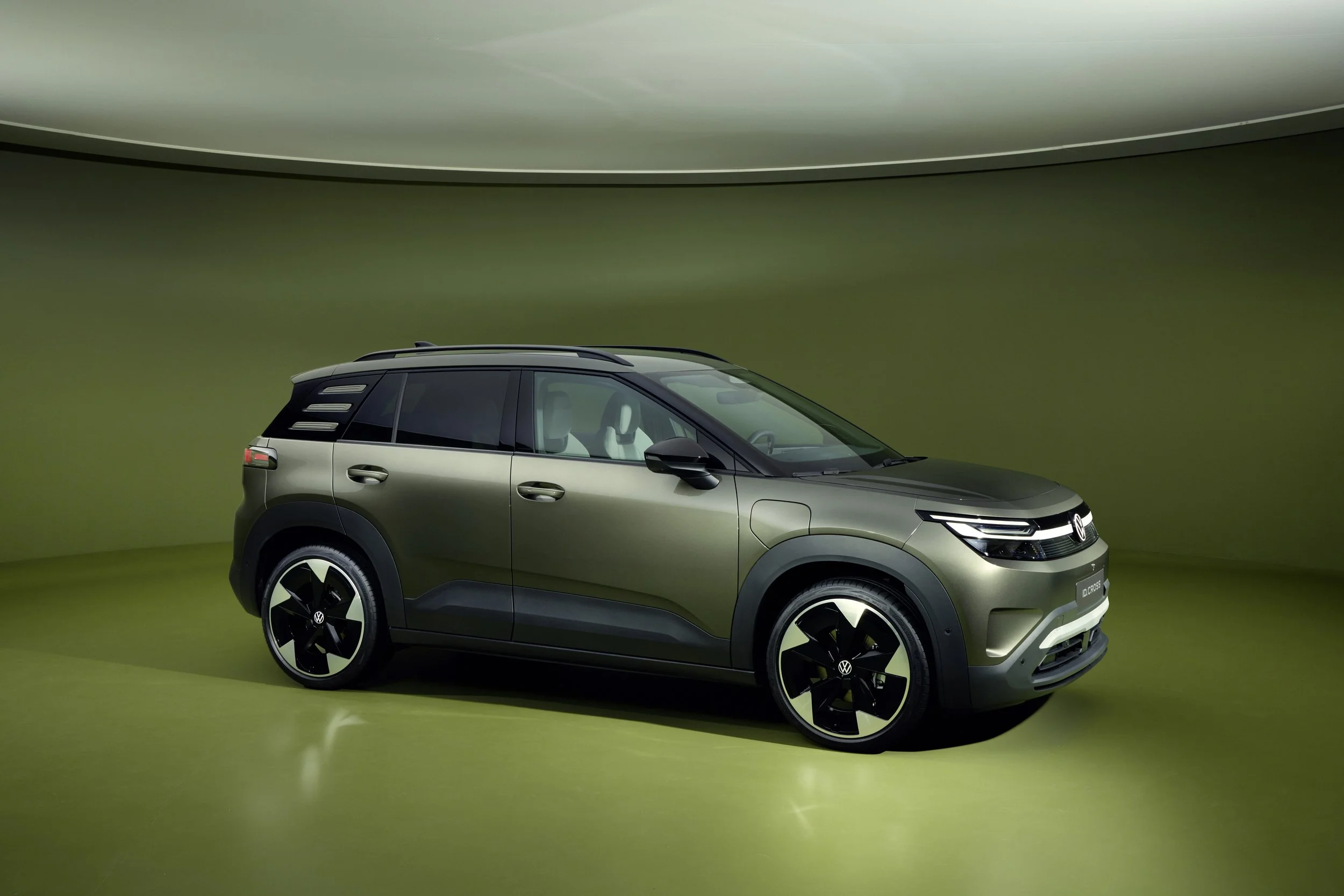
Visually, the production model closely follows the concept shown earlier this year. Volkswagen has adopted a cleaner, more upright SUV design than many of its existing ID. models, with a distinctive floating roofline, pronounced rear pillar and slim lighting signatures front and rear. Higher specification versions gain IQ.LIGHT LED matrix headlights, illuminated Volkswagen badges and full-width LED light bars.
Inside, the company appears to have addressed one of the main criticisms levelled at earlier ID. models. The cabin features more soft-touch materials, fabric-covered dashboard surfaces and redesigned controls intended to create a more premium feel. Volkswagen says particular attention has been paid to the tactile quality of switches, buttons and frequently touched surfaces.
The dashboard is dominated by a new 12.9-inch infotainment touchscreen, complemented by a 10.25-inch digital instrument display positioned directly ahead of the driver. One unusual feature is an optional retro display mode that recreates the appearance of the original Mk1 Golf's analogue instruments, albeit adapted to display electric vehicle information such as power consumption rather than engine revs.
Under the skin, the ID. Cross introduces Volkswagen's latest MEB+ architecture. Buyers will eventually be able to choose from three electric motor outputs producing 116PS, 135PS and 211PS respectively, all driving the front wheels. Two battery options will also be available, offering usable capacities of 37kWh and 52kWh.
Volkswagen quotes a maximum WLTP driving range of up to 427 kilometres (around 265 miles), although that figure applies to the most efficient version of the car. Official UK range figures will be confirmed closer to launch.
Charging performance is competitive for this class. Both battery versions support 11kW AC charging, while DC rapid charging allows the battery to be replenished from 10 to 80 per cent in around 23 to 24 minutes under ideal conditions. Maximum DC charging speeds vary depending on battery size, with the smaller pack accepting up to 90kW and the larger battery capable of charging at up to 105kW.
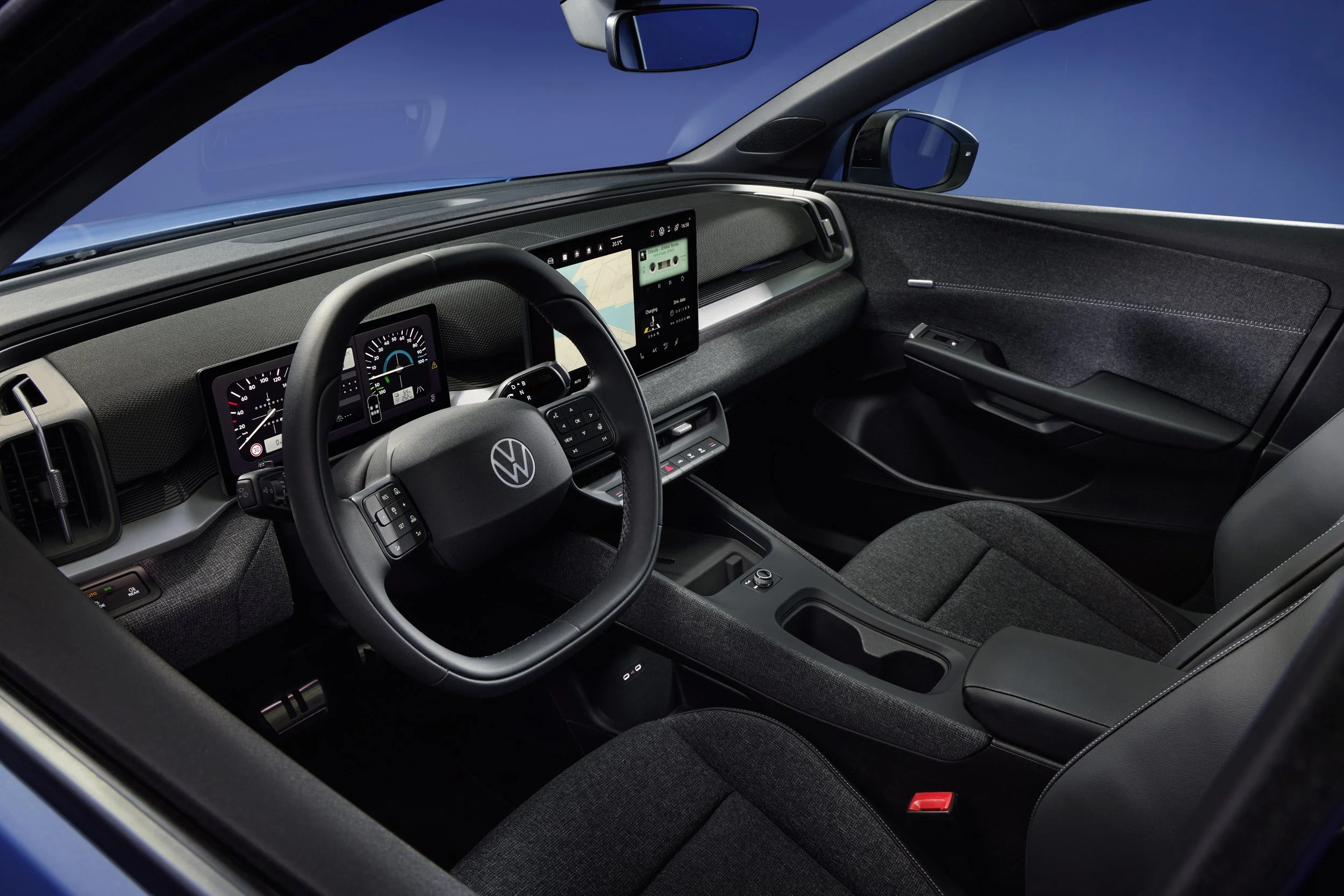
VW addresses interior concerns with the new ID-Cross cabin
Volkswagen has also equipped the ID. Cross with a range of technology typically associated with more expensive models. One of the headline features is Connected Travel Assist, which combines adaptive cruise control with lane-centering technology and uses online mapping data to improve performance. It also introduces automatic traffic light recognition, allowing the vehicle to brake for red lights where local regulations and system limitations permit.
The ID. Cross also supports One Pedal Driving, enabling drivers to control acceleration and much of the braking using only the accelerator pedal in many everyday situations. Parking technology has also been expanded, with optional 360-degree cameras, remote parking via smartphone and Park Assist Pro capable of carrying out automated parking manoeuvres.
Volkswagen says considerable effort has gone into refining the vehicle's ride quality. The suspension has been specifically tuned for the front-wheel-drive electric platform, while additional sound insulation and vibration reduction measures are intended to deliver a quieter driving experience than many rivals. The most powerful 211PS version will also be offered with a newly developed adaptive DCC suspension system that continuously adjusts the dampers according to road conditions and driving style.
Several optional extras are unusual for a vehicle in this segment. Buyers will be able to specify electrically adjustable front seats with a pneumatic massage function, a Harman Kardon premium audio system delivering 425 watts through ten speakers, and a large panoramic glass roof with an electrically operated sunblind.
Practicality extends beyond passenger space. Every ID. Cross comes with vehicle-to-load capability, allowing owners to power external electrical equipment using the car's battery. The system can supply up to 3.6kW, making it suitable for charging electric bikes, camping equipment or small appliances. Models fitted with the larger 52kWh battery can also tow trailers weighing up to 1,200kg, broadening the vehicle's appeal for leisure users.
With competition intensifying in the compact electric SUV market, the ID. Cross represents an important addition to Volkswagen's line-up. Could this be one of the brand's most significant electric launches in recent years? Final judgement will depend on UK pricing and driving performance - let’s hope we get an early drive once it reaches British roads.