
2026 Lotus Emeya 900 Review : a HUGE surprise
The Lotus Emeya 900 is one of those cars that really shouldn't work. It is more than five metres long, weighs 2,650kg and has an interior that wouldn't look out of place in a six-figure German luxury car. Yet somehow, Lotus has managed to retain enough of its traditional character to make the Emeya genuinely exciting to drive, and perhaps most surprisingly, genuinely Lotus.
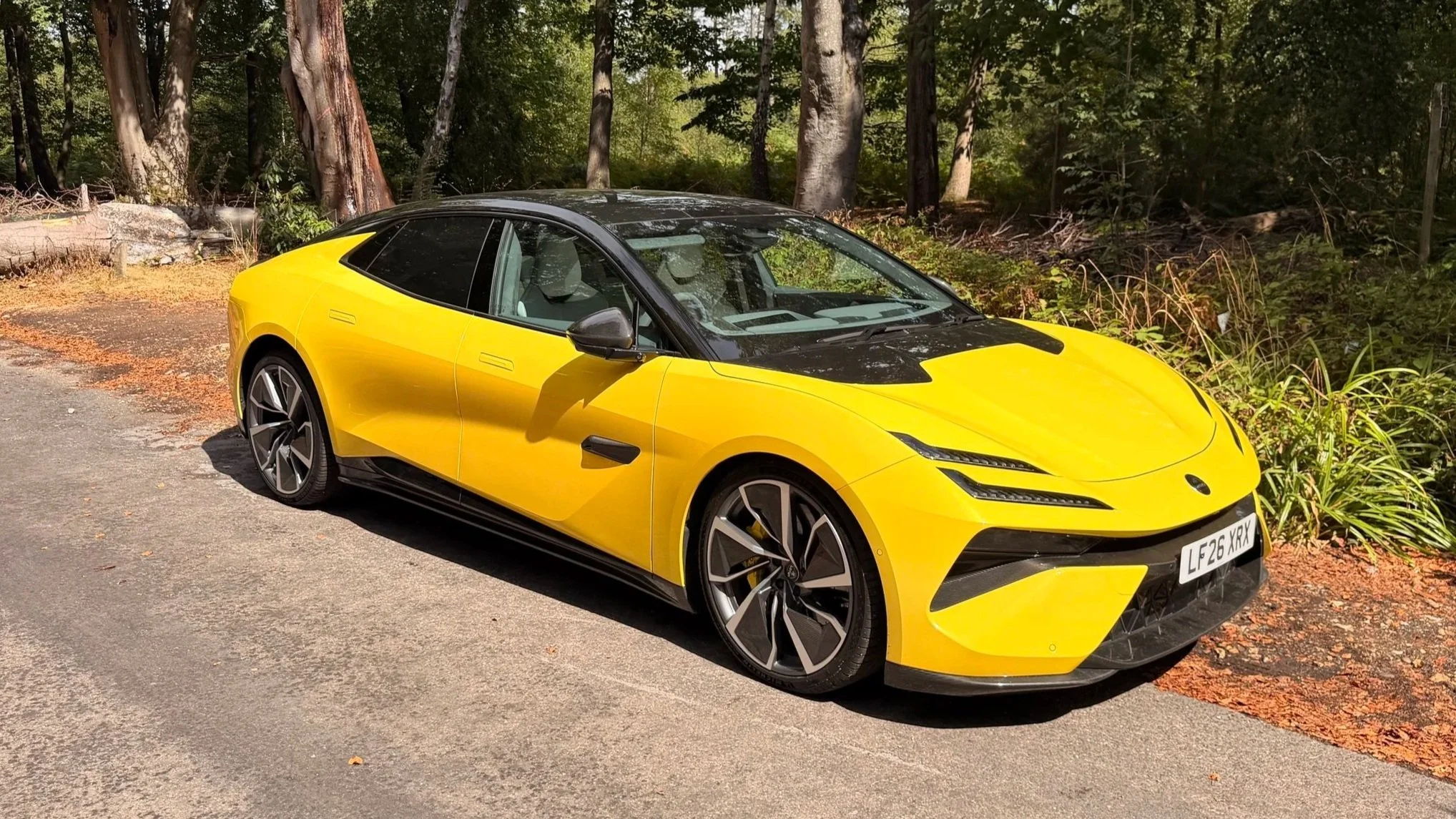
My test car is an Emeya 900 Sport finished in Solar Yellow, with 22-inch wheels, an extended carbon pack, carbon-ceramic brakes with 10-piston calipers, an interior carbon pack and an intelligent glass roof. With those options, the price comes to £156,205.
The big question is whether the Emeya 900 can compete with established electric performance cars such as the Porsche Taycan and Audi RS e-tron GT.
After a week with it, I think the answer is yes, although there are some important caveats.
Styling
Let's start with the obvious: the Emeya looks fantastic.The Solar Yellow test car certainly isn't subtle, but even in a more conservative colour this is a striking car. It has a long, low bonnet, a dramatically styled front end, a flowing roofline and a wide rear end that gives it the proportions of a four-door supercar rather than a conventional executive saloon.
It is also absolutely enormous. The Emeya is 5,139mm long and 2,241mm wide with its mirrors extended, so this isn't a car that disappears into the background.
That size does have consequences, which I'll come back to, but Lotus has done an impressive job of making the car look considerably more agile than it actually is.
The other thing I've noticed during my time with it is just how much attention it gets. People stop to ask about it, have a look around it and generally seem intrigued by the Lotus badge. That's becoming increasingly rare with expensive electric cars, particularly when you consider how many Porsche Taycans you now see on British roads.
Interior and quality
The interior is probably the biggest surprise. This is a Lotus, a company historically associated with lightweight sports cars rather than luxury interiors, but the Emeya feels genuinely premium. My test car has the Quartz interior with light grey seat belts, dark grey Alcantara, dark Gunmetal accents, sports pedals, an interior carbon pack and the intelligent glass roof.
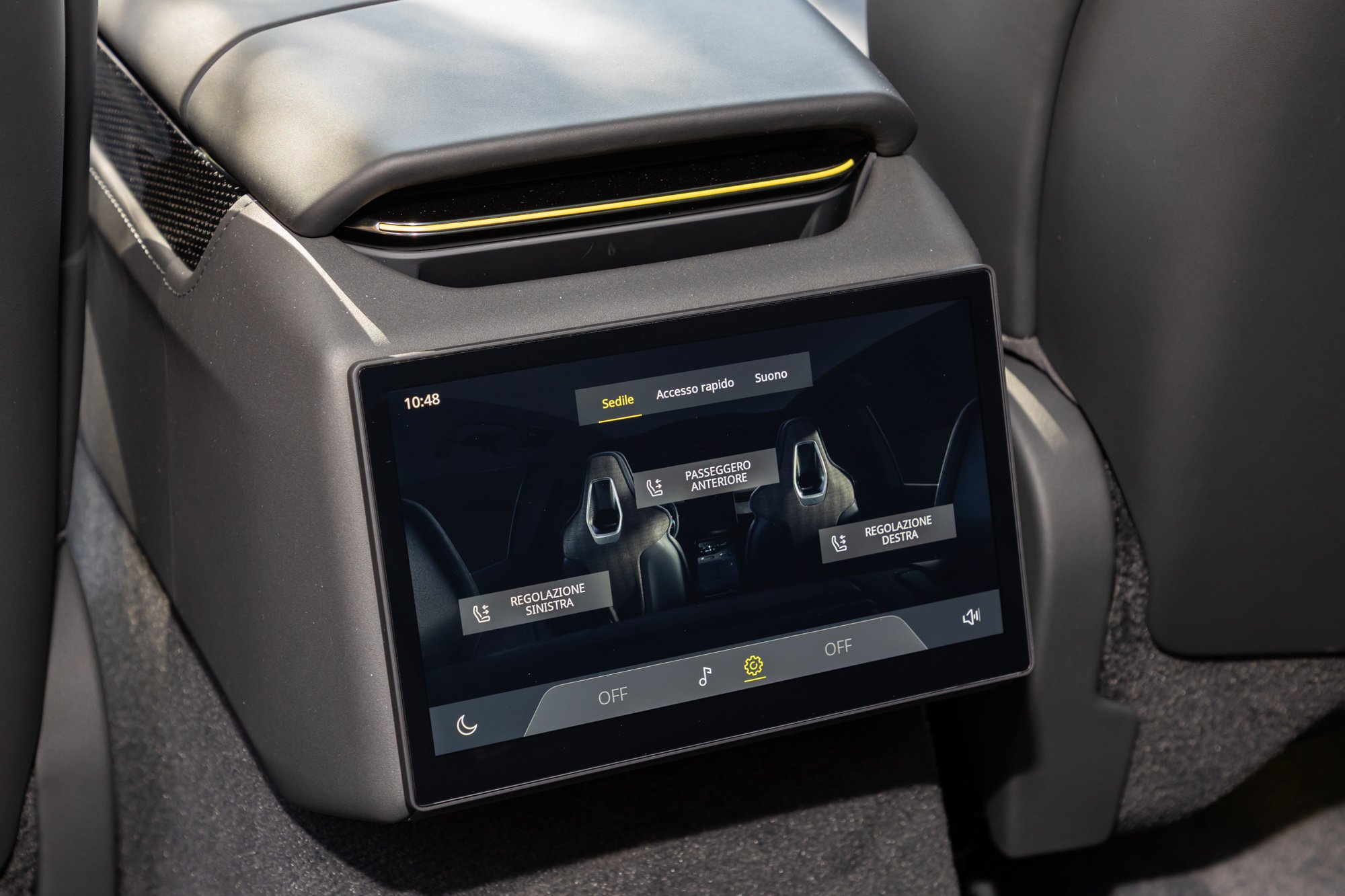
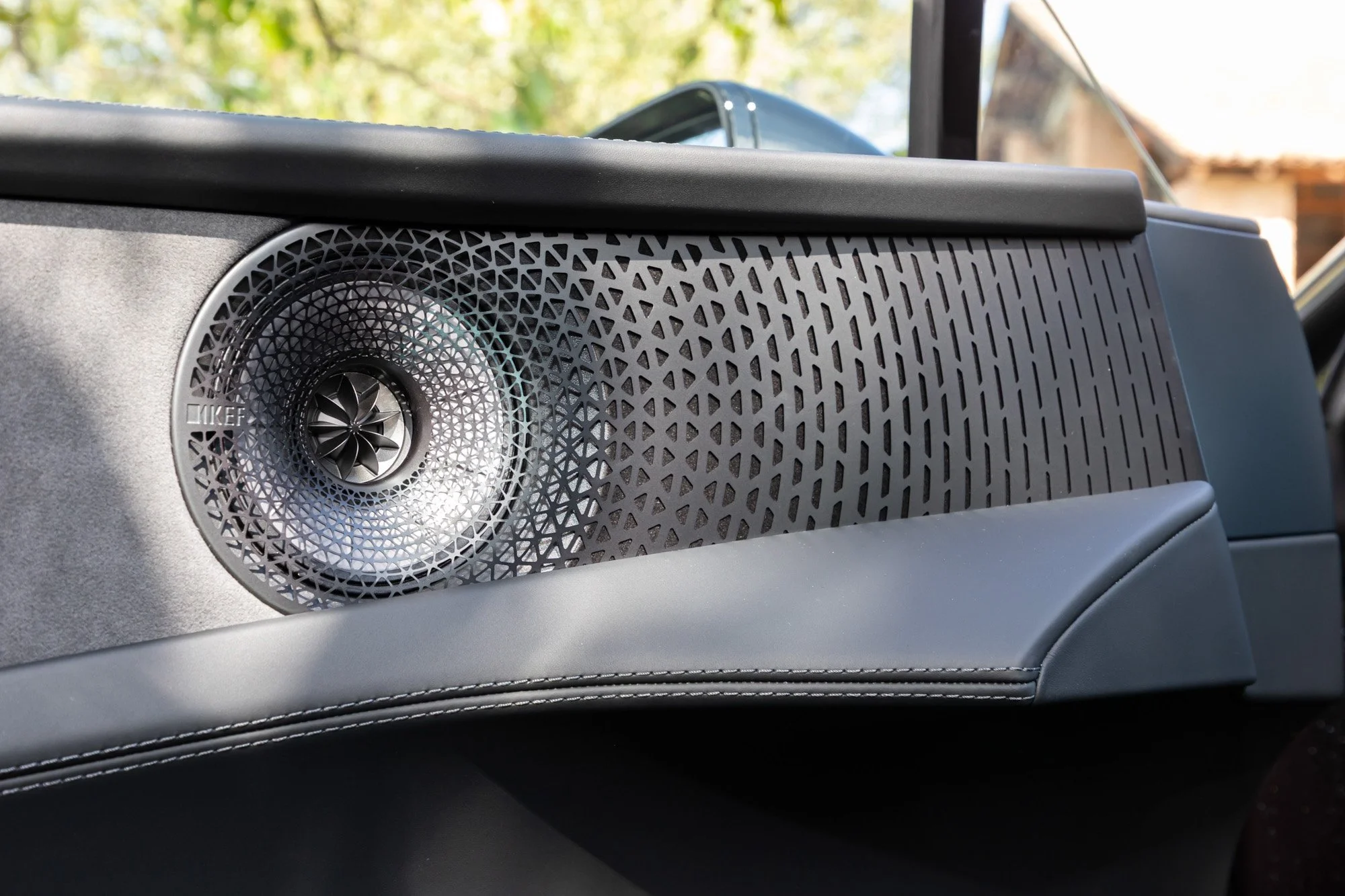
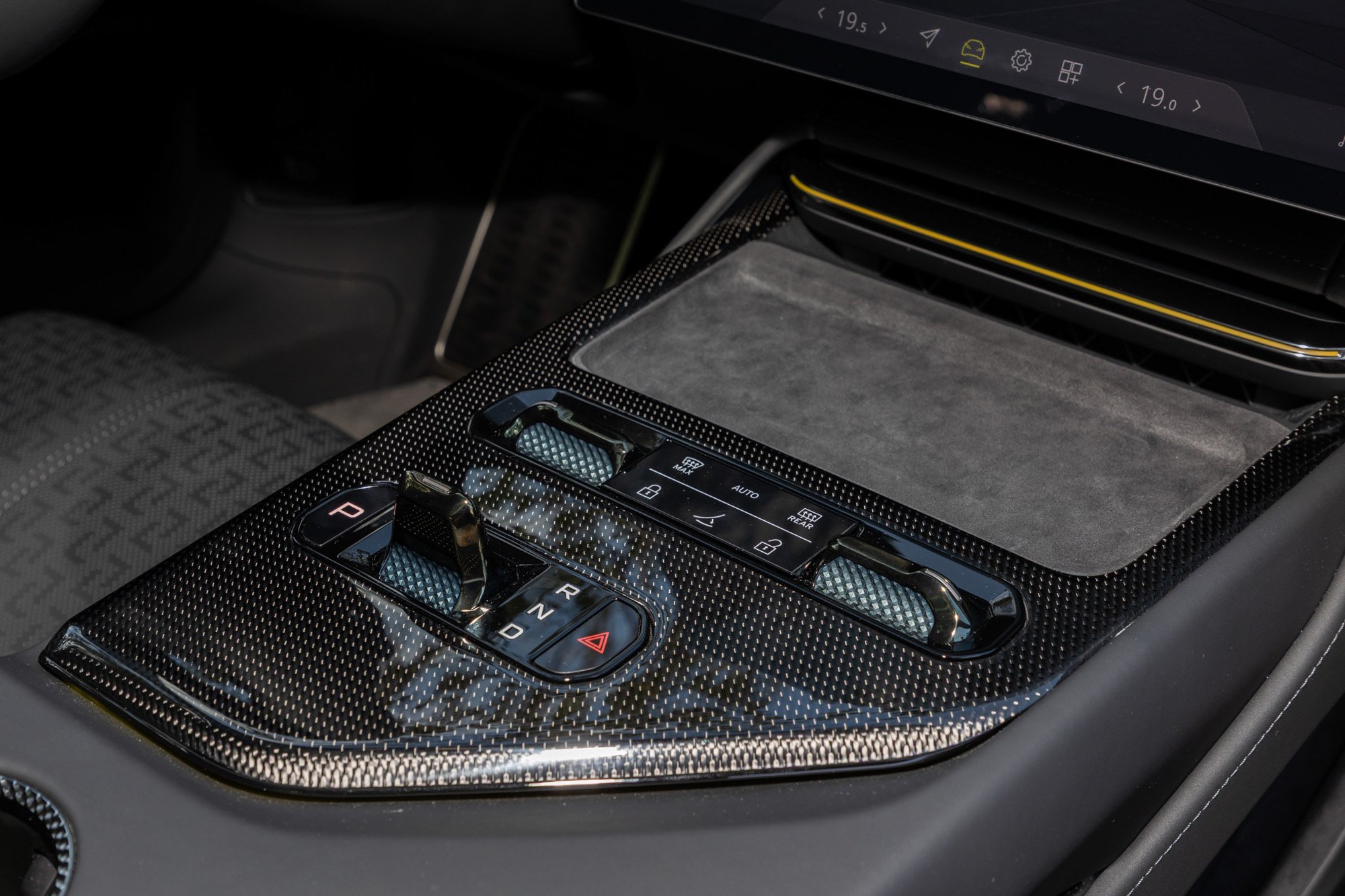
The quality is excellent throughout. The materials feel expensive, the switchgear is tactile and even the smaller details, such as the carpeted sections of the door pockets, have clearly received attention.
The Alcantara steering wheel feels particularly good in your hands, while the physical climate controls are a welcome addition in an interior that otherwise relies heavily on screens.
The infotainment system is also very good. It is responsive, the graphics are clear and Apple CarPlay is easily accessible through a dedicated shortcut. There are a few areas where the menu structure could be improved, but overall it is a system I found easy enough to live with.
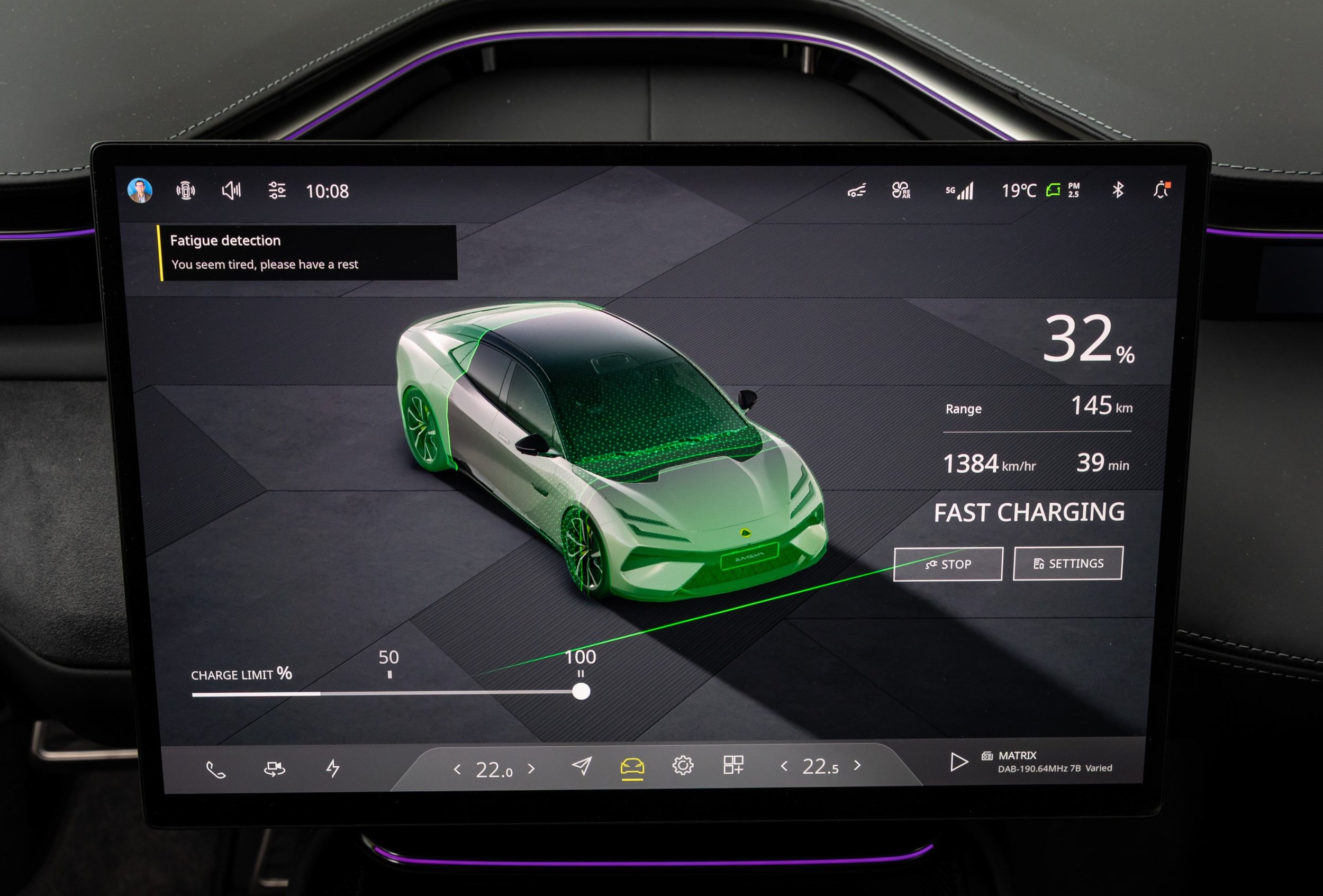
The Emeya also comes with a separate passenger display, while rear passengers have their own controls for functions including the climate system and infotainment. Apple CarPlay and Android Auto are supported, and the Lotus app provides access to functions such as charging information and live vehicle status (although I did not have acccess to the app during my testing).
Rear seats and practicality
Despite the dramatic styling, the Emeya is surprisingly practical. There's plenty of rear legroom and headroom, and while the raised section of floor beneath the front seats limits foot space slightly, the rear cabin is spacious enough for adults to travel comfortably.
It is also a genuine five-seater. There is a transmission tunnel running through the middle of the floor, which is slightly unusual for an electric car, but the middle seat remains usable.
There's a large central rear armrest and plenty of storage, while the intelligent glass roof is particularly impressive. It can switch between clear and opaque at the touch of a button, which is more than just a gimmick during hot weather.
Luggage capacity is 509 litres in the rear, with another 34-litre storage area under the bonnet. Fold the rear seats down and that increases to 1,388 litres. The Emeya can also tow up to 1,200kg.
I even used the Emeya for the weekly shop during my time with it, and it coped without any problems. That's quite an achievement for a car capable of 0-62mph in less than three seconds.
Performance
This is where things get serious. The Emeya 900 produces 905bhp and 985Nm of torque, with four-wheel drive and a claimed 0-62mph time of just 2.78 seconds. Top speed is 159mph. And believe me, it feels every bit as fast as those figures suggest.
Put your foot down from a standing start and the Emeya absolutely launches itself at the horizon. The acceleration is brutal, and there is so much torque available that you really need to be careful with the throttle if you're accelerating hard.
In fact, the amount of power is arguably one of the car's weaknesses. Give it everything and you can get significant torque steer, with the car trying to pull you away from the direction you intended to travel. A progressive approach to the accelerator is much more effective and perhaps the performance of the 600 would be a more useable overall.
The Lotus DNA is still there
A 2.65-tonne electric GT shouldn't feel particularly agile, but the Emeya corners remarkably well. It stays incredibly flat through bends and feels much more nimble than its dimensions and weight would suggest.
The sophisticated chassis is largely responsible. The Emeya uses dual-chamber air suspension, continuously controlled damping and four-wheel steering, while active aerodynamics also contribute to its high-speed stability and handling.
Switch the car into Sport or Track mode and you can really appreciate the work Lotus has put into the chassis.
It doesn't feel like a traditional Lotus, obviously. There's no getting around the fact that this is a huge and very heavy car. But the important part of the Lotus DNA has survived: it handles, and it handles very well. Put it through it’s paces and it will not dissapoint.
Everyday driving
Perhaps surprisingly, the Emeya is just as impressive when you're not driving quickly. In Range mode it is quiet, comfortable and incredibly easy to drive around town. Tour mode provides a good compromise between comfort and performance, while Sport and Track progressively sharpen up the car.
Some very fast cars can feel rather awkward when you're simply driving them around town. The Emeya simply doesn't. It is perfectly happy at 20 or 30mph, and the air suspension does a good job of keeping things comfortable.
The biggest issue in everyday use is its size. At more than 2.2 metres wide with the mirrors extended, I wouldn't particularly relish taking it into a tight multi-storey car park. The reversing camera could also be better, with the image quality and frame rate feeling way below what I'd expect from a car costing this much - infact, I’d expect better from a budget car in 2026.
The huge carbon-ceramic brakes can also feel slightly grabby at low speeds until you get used to them. Once you're driving enthusiastically, however, they are phenomenal.
Range and charging
The Emeya uses a 102kWh battery and 705V electrical architecture. Lotus quotes an 18-minute 10-80 per cent charging time using a suitable 350kW DC rapid charger, while a 22kW AC wall box takes around 5.5 hours.
The charging performance is one of the car's strongest technical features. It isn't simply about achieving a huge peak charging figure; the Emeya is designed to maintain a high rate of charge for a significant part of the charging session.
The slight downside is range. The 900 is quoted at up to around 270 miles WLTP in the specification tested here, although Lotus's figures vary according to the exact specification and wheels. The official technical information lists the 900 versions at either 270 or 301 miles depending on specification.
In my experience, around 250 miles showing at a full charge was a realistic indication based on the driving already done in the car. That's perfectly usable, but it's not particularly impressive for a car costing more than £150,000.
What about the Emeya 600?
The Emeya range starts with the 600, which produces 603bhp and 710Nm. It still manages 0-62mph in 4.15 seconds, while certain versions offer up to 379 miles of WLTP range. Given that the 600 is dramatically cheaper than the 900, it is arguably the more rational choice for somebody who wants an Emeya as a daily driver.
But rationality isn't really what the 900 is about. The 900 exists because Lotus wanted to build an electric GT with supercar-level performance. And in that respect, it succeeds.
Verdict
The Lotus Emeya 900 is an extraordinary piece of engineering. It takes the traditional Lotus philosophy and applies it to a completely different type of car.
It is big, heavy, luxurious and packed with technology, yet it still manages to feel genuinely exciting through a set of corners. The performance is staggering, the brakes are superb and the interior is one of the nicest Lotus has ever produced.
The biggest surprise is that it works just as well as a comfortable everyday car. You can take five people, carry a decent amount of luggage, drive it around town without drama and then find a good road and discover that there is a proper driver's car underneath all that weight and technology.
The 900's biggest problem is perhaps that it has too much performance. You have to be careful with the throttle when driving hard, and the 270-mile WLTP range isn't particularly impressive at this price. The Emeya is also a very large car, which can make parking and manoeuvring in tight spaces something of an event.
But there is something special about it. Unlike some of its more established rivals, like the Porsche Taycan to name just one, the Emeya still feels unusual. It gets noticed, it feels special every time you get behind the wheel and, most importantly, it has managed to retain some of that elusive Lotus character.
For me, its one of the most interesting electric GTs currently on sale.
Pros
Exceptional handling for a 2.65-tonne car
Outstanding performance and braking
Beautiful, high-quality interior with plenty of space
It looks and feels special
Cons
900's range could be better
Huge dimensions make tight car parks awkward
So much power that it can struggle to put it all down, the 600 seems more useable
Poor quality reversing camera