
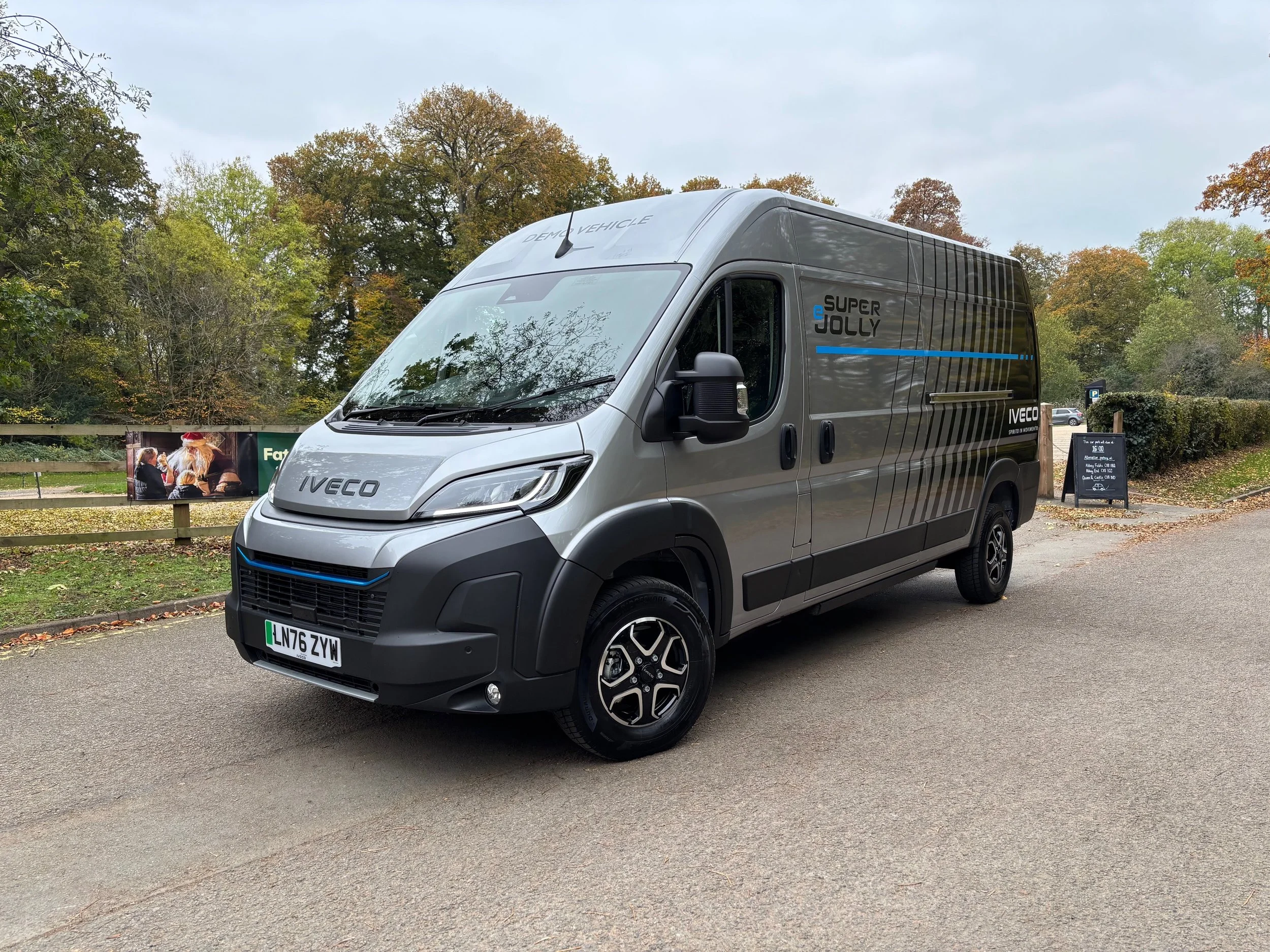
The eSuperJolly sits on Stellantis’ ‘Large Van’ platform. (Cameron Richards)
Iveco is a brand that started out in 1975 as a merger of five different truck companies within the Fiat Group.
Fast forward 50 years, and the firm has built up a reputation for making some of the most technologically advanced trucks and light commercial vehicles in the world.
Now that the electric van market is starting to take shape, Iveco has introduced several new models to the market, with the eSuperJolly being one of its latest additions.
So, is Iveco already ahead of the game with the eSuperJolly, or has the rest of the commercial vehicle industry caught up?
Updates
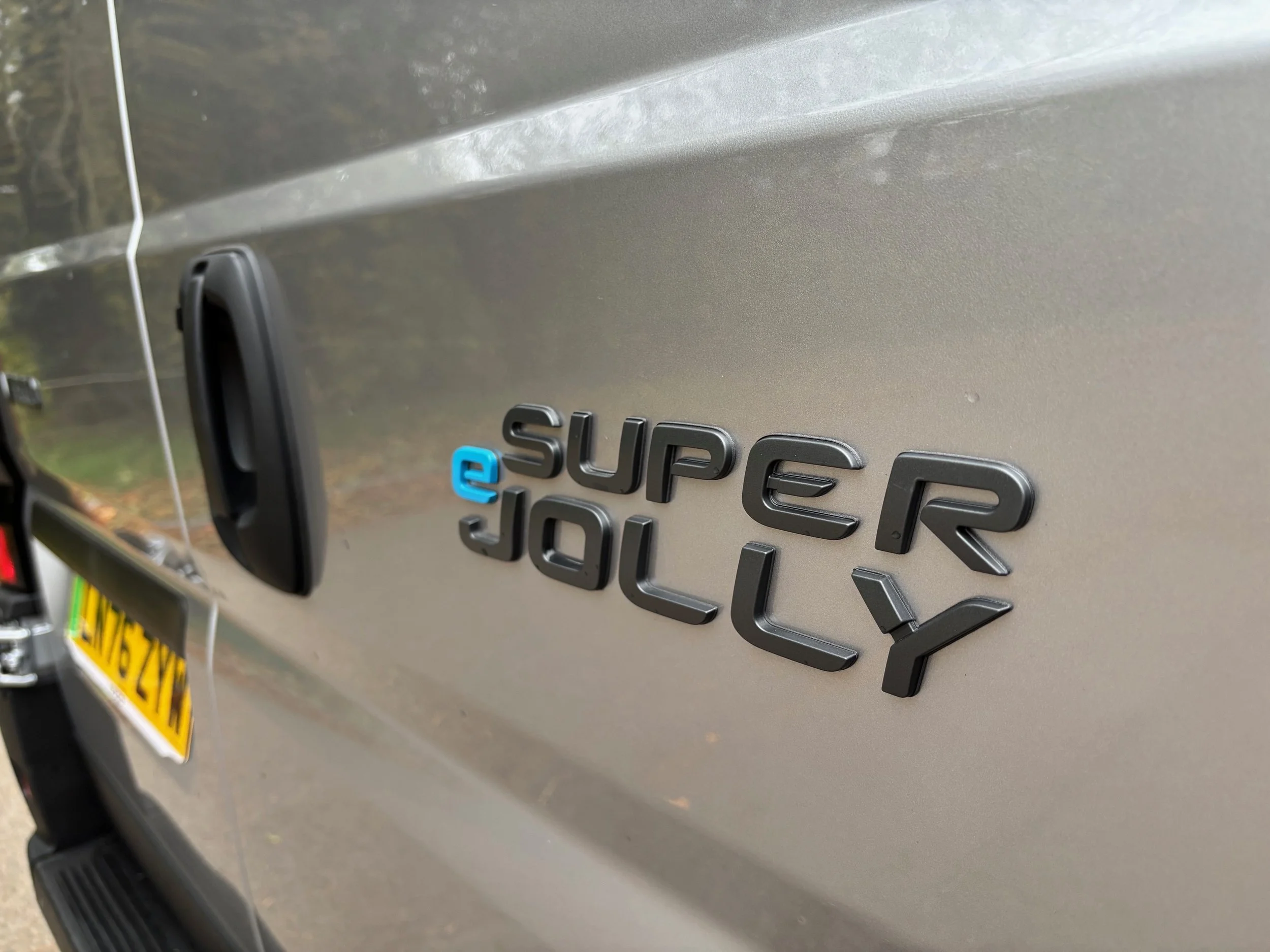
It comes with its own unique styling cues, up-to-date technology and electric power. (Cameron Richards)
At first glance, the eSuperJolly looks familiar, and that’s because it sits on Stellantis’ ‘Large Van Platform,’ which is shared with the Citroen e-Relay, Fiat E-Ducato, Peugeot E-Boxer, Toyota Proace Max and Vauxhall Movano Electric.
The Iveco has its own unique styling cues, while it boasts a more modern interior design with some of the latest advanced driver safety assist systems.
The van also comes with the option of different body lengths and heights, while it has a competitive aftercare package and long warranty to entice buyers away from its rivals.
Engines and transmissions
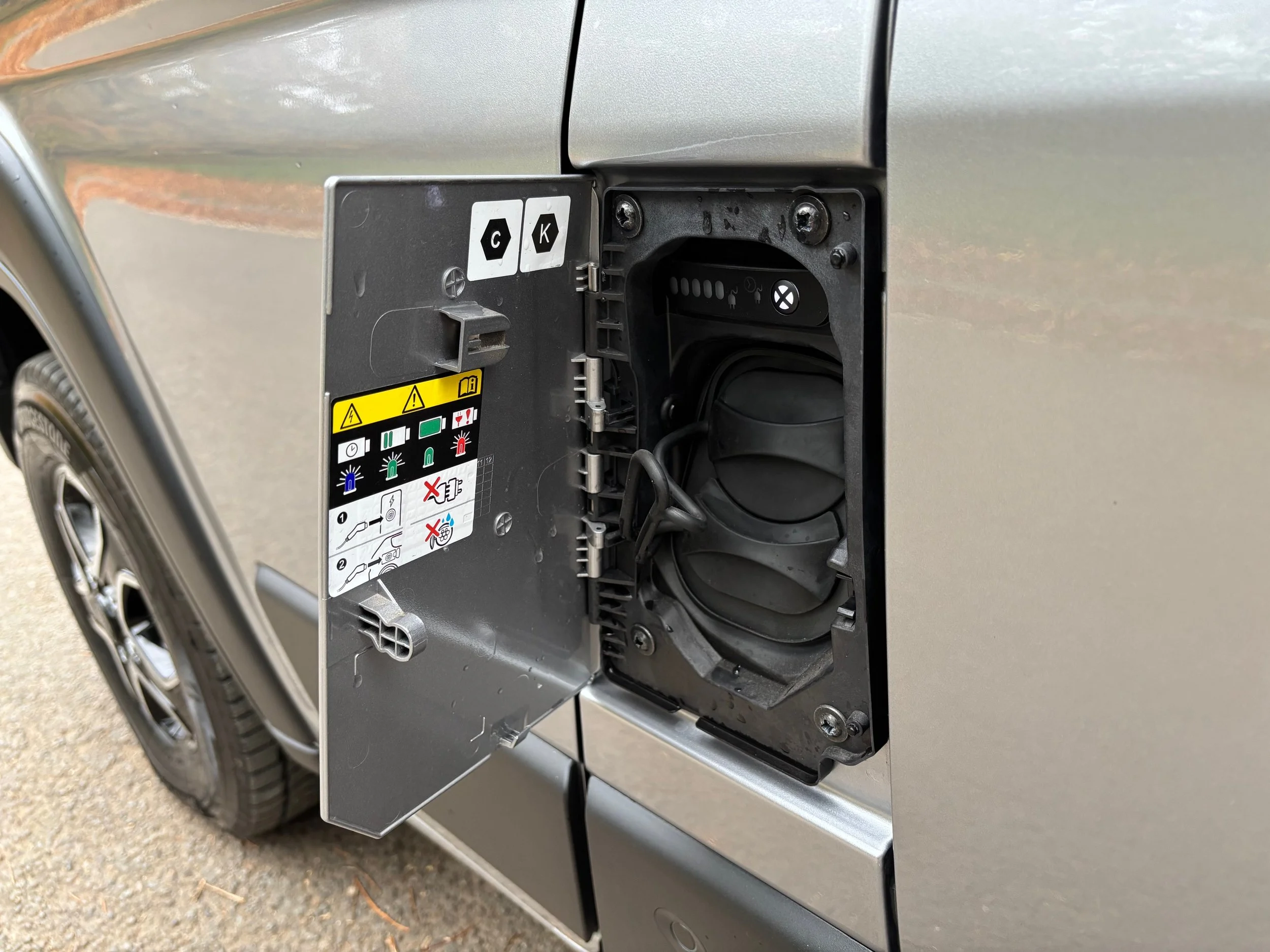
Powering the eSuperJolly is a 110kWh battery pack with a single electric motor. (Cameron Richards)
There’s just one powertrain option with the eSuperJolly: a 110kWh battery pack mated to a rear-mounted, single electric motor.
The electric motor produces 275bhp, while there are three drive modes: Normal, Power and Eco, which can alter the levels of torque available, with Power offering up to 400Nm of torque.
In terms of performance, the eSuperJolly has an electronically limited top speed of just 56mph, while every van sends its power through to a single-speed automatic gearbox.
Iveco claims that the van can travel up to 261 miles between charges, depending on the van’s size, while 150kW DC rapid charging allows a zero to 80 per cent charge to take 55 minutes, or 62 miles of range can be added in 15 minutes.
Behind the wheel
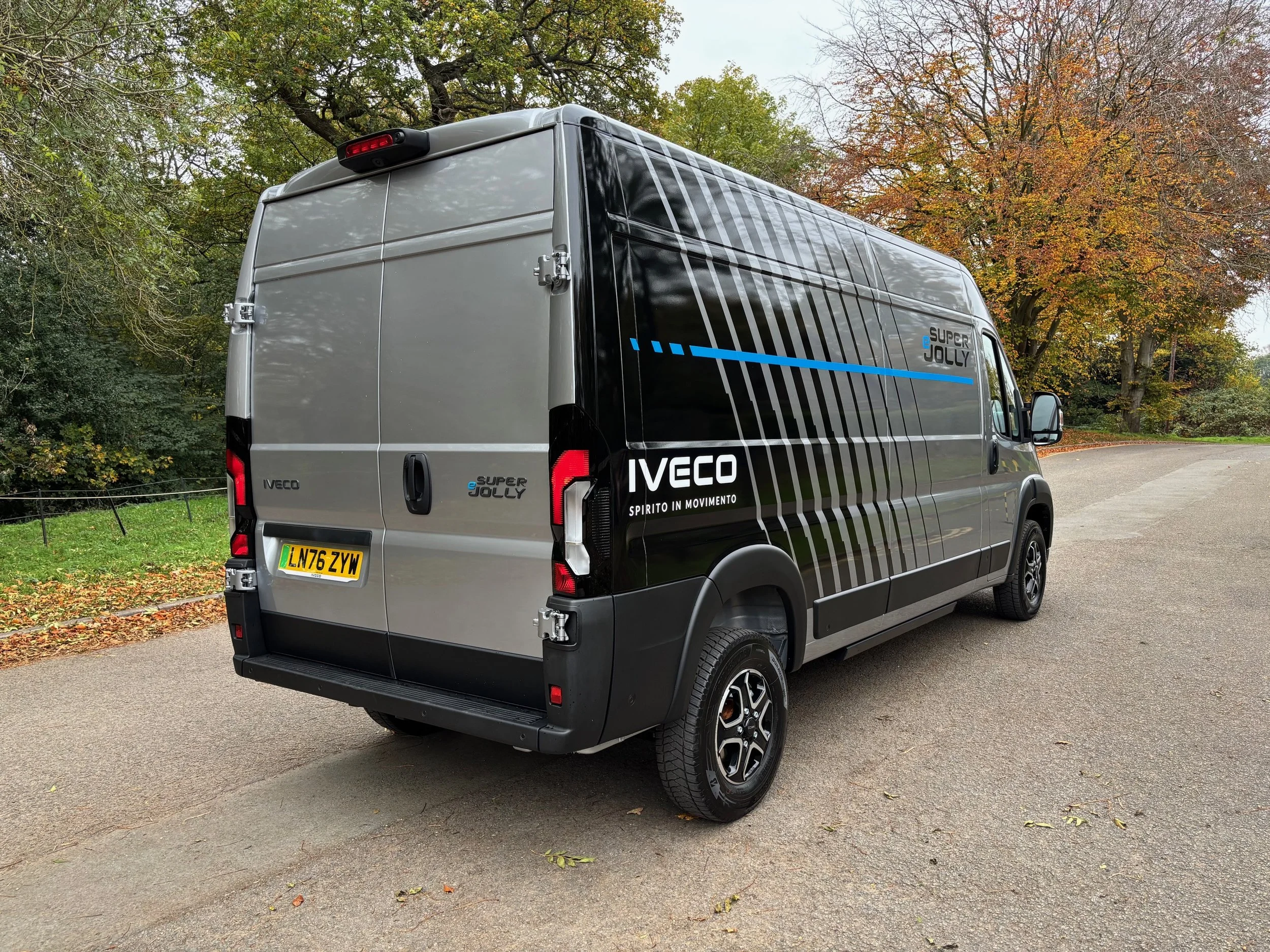
The van provides a smooth and refined driving experience. (Cameron Richards)
Without it sounding like a cliché, the eSuperJolly drives like a van. The elevated driving position gives you a commanding view of the road ahead, while the deep side windows and huge door mirrors help with visibility.
Despite its size, the van is surprisingly easy to drive around town, thanks to its light steering, tight turning circle, reversing camera and digital rear view mirror.
With a limited top speed of 56mph, the eSuperJolly isn’t going to win any sprint races, but with up to 400Nm of torque, it has more than enough overtaking power.
The electric powertrain is smooth, quiet and refined, while wind and road noise are kept to a minimum. However, the van’s multi-leaf spring rear suspension means the ride is very bouncy, with even the slightest imperfection in the road jolting the van’s chassis.
Over a 40-mile journey, the eSuperJolly averaged 2.1 miles per kWh – that works out at a real-world range of 231 miles. That’s not bad for a van being driven in winter conditions, and is only 28 miles off the manufacturer’s claimed 261-mile figure.
Looks
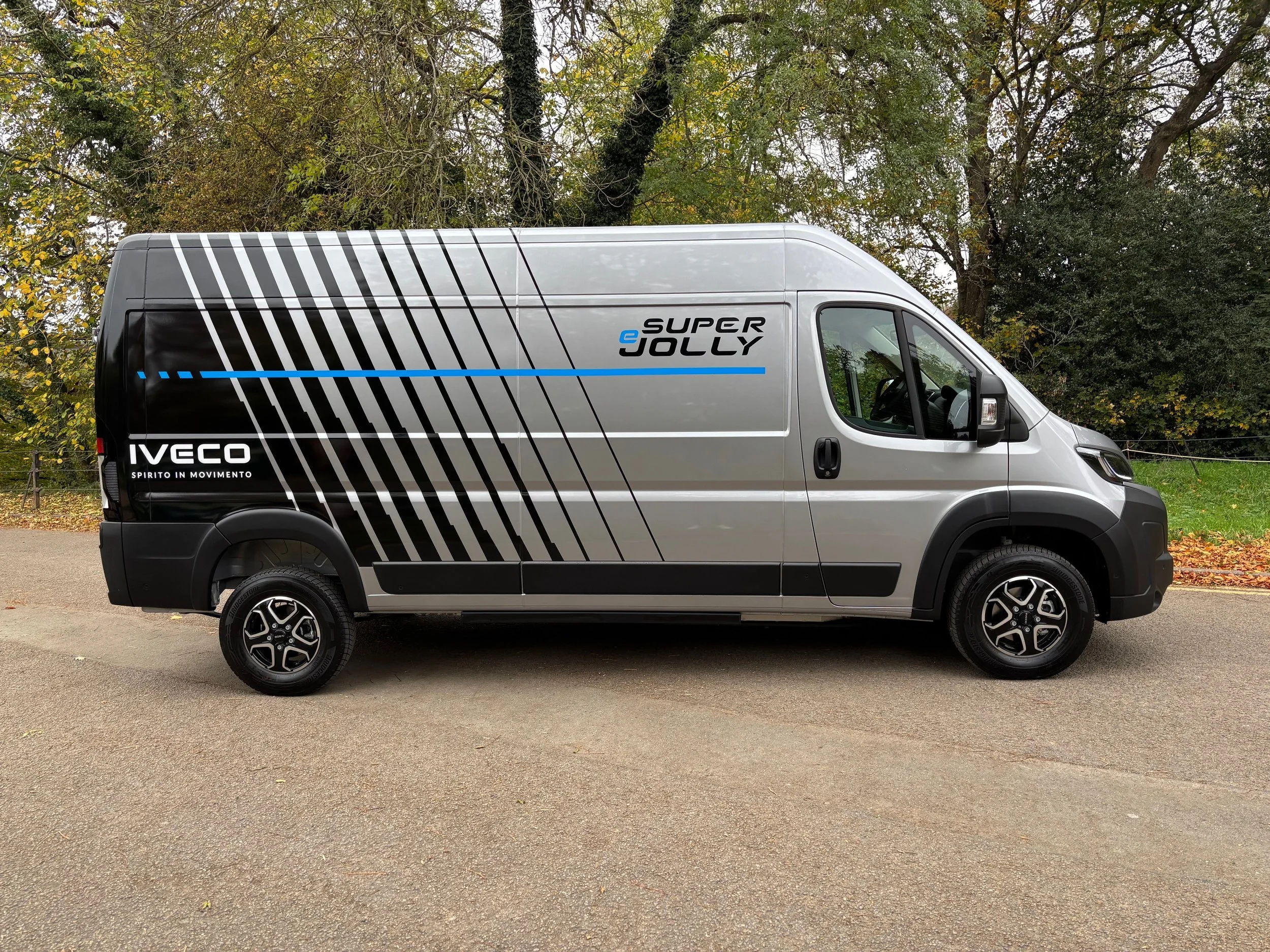
The Iveco looks almost identical to its rivals. (Cameron Richards)
If you know your vans, it won’t take long for you to realise that the eSuperJolly shares the same body and structure as the Citroen e-Relay, Fiat E-Ducato, Peugeot E-Boxer, Toyota Proace Max and Vauxhall Movano Electric.
It has a tall, boxy profile, while the curved front end is distinguished by its Stellantis stablemates with a large Iveco logo on the bonnet and a low-mounted front grille. At the back, there are some black-housed taillights and smart diamond-cut alloy wheels.
But, overall, the eSuperJolly looks almost identical to the rivals with which it shares its platform.
Interior and practicality
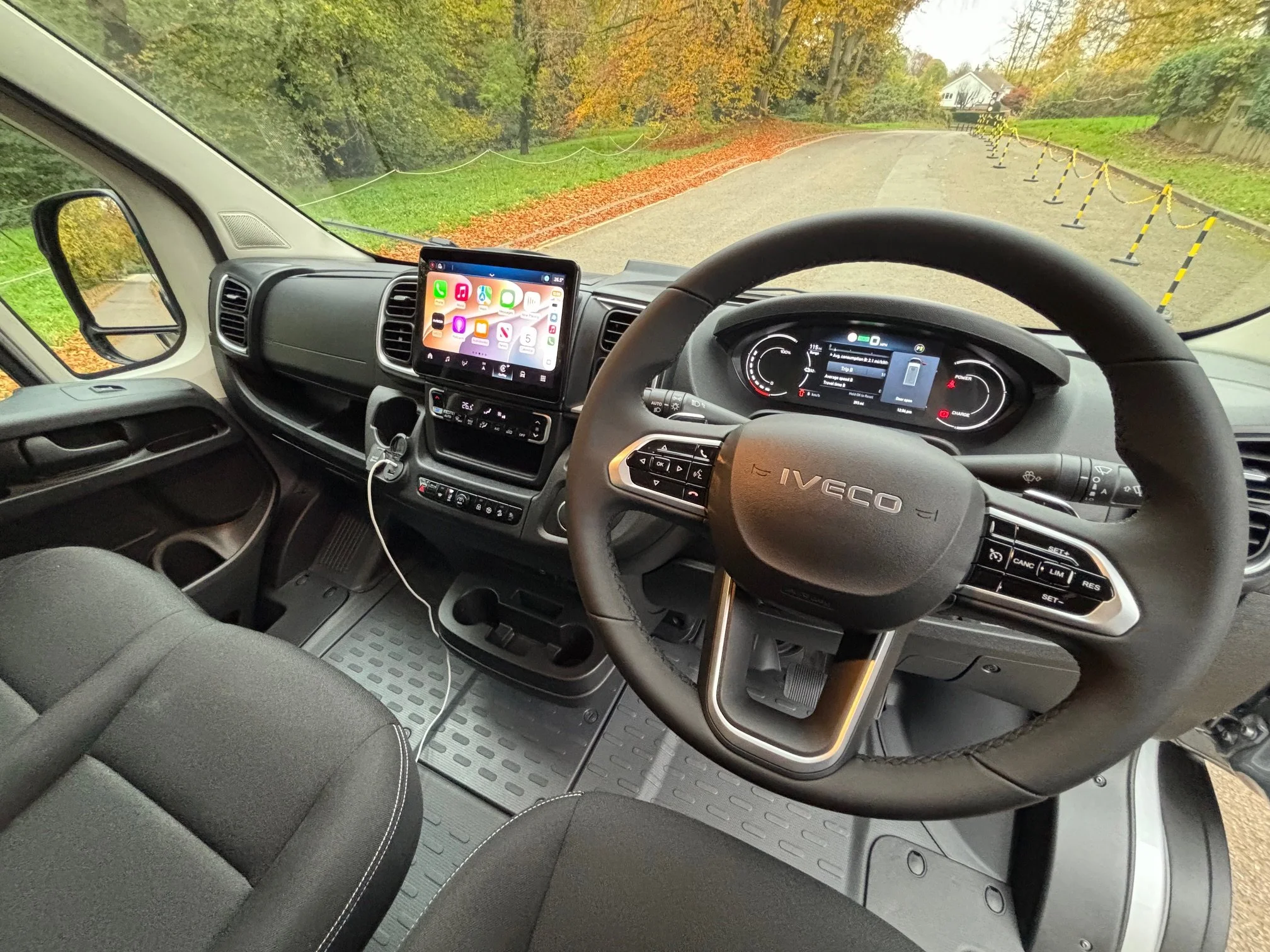
The interior is hard-wearing, while there is plenty of storage compartments. (Cameron Richards)
It’s the same story inside, as the eSuperJolly’s cabin is identical to that of the Toyota Proace Max, although there are some subtle changes.
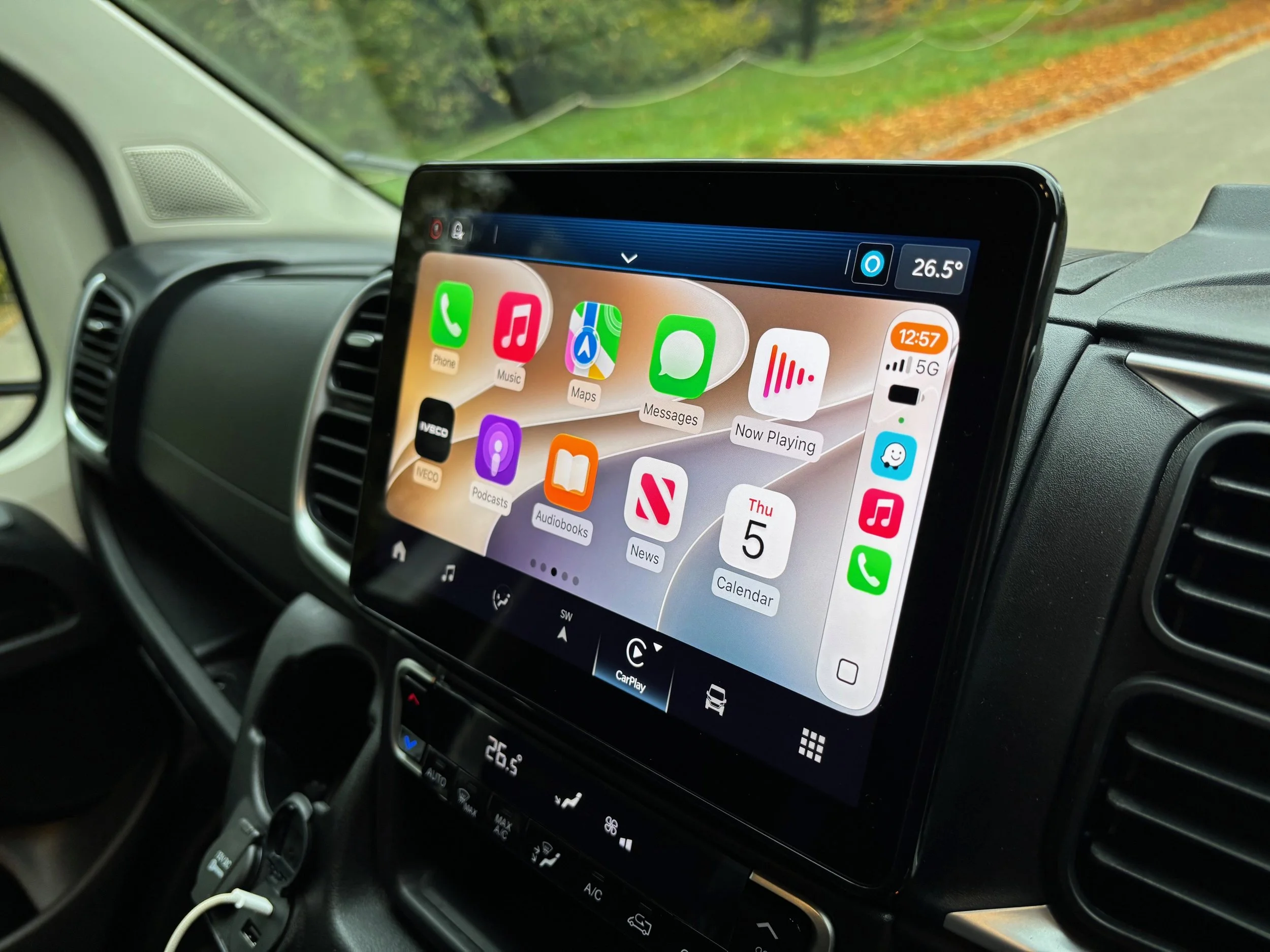
There’s a revised 10-inch infotainment system that includes wireless Apple CarPlay and Android Auto, DAB radio and a reversing camera.
The cabin materials won’t be winning any beauty contests, but everything is hard-wearing and feels purposeful for a busy, hard-working life. It’s just a shame that some of the interior fit and finish is poor in places, with the glovebox lid not fitting flush with the dashboard.
In terms of storage, the van is brimming with space, including overhead storage compartments, huge front door bins, a glovebox, two USB charging ports, a shelf on the dashboard, cup holders, a couple of trays and a centre armrest.
You can spec the eSuperJolly in two different body lengths and heights. Our test vehicle is the smaller variant, which measures 5.99 metres in length and 2.61 metres in height. The larger variant has a longer rear overhang and comes in at 6.36 metres long, while the van can be ordered with a taller roofline, measuring 2.85 metres.
Our van has a total load volume of up to 13,000 litres, while the longer and taller variants have a cargo capacity of up to 17,000 litres. Furthermore, the eSuperJolly can be ordered with a choice of 3.5-tonne or a 4.5-tonne gross vehicle weight, while it has a maximum payload of up to 1,460kg, putting it on a par with its Stellantis rivals when it comes to carrying capacity.
Prices and aftercare
The eSuperJolly is eligible for the maximum government plug-in van grant incentive. (Cameron Richards)
Prices for the Iveco eSuperJolly start at £49,890 (Ex VAT), while every model is eligible for the government’s Plug-in Van Grant.
That means customers can save up to £5,000, which reduces the list price to £44,890 (Ex VAT) – that’s £746 less than a Toyota Proace Max with the PIVG incentive.
To make the eSuperJolly stand out from its rivals, Iveco offers a competitive aftersales package called the ‘555’ bundle.
Customers put down a £3,555 deposit, and then contribute to a monthly payment of £555 over a five-year period. Plus, the eSuperJolly boasts a five-year, 100,000-mile warranty and a five-year eStart Connectivity Package to make business users stay connected on the move.
Furthermore, Iveco ensures that all of its vehicles get the best aftercare treatment, with Iveco workshops designed around every van and truck it builds. This reduces customer waiting times, and improves the overall ownership experience.
Verdict
The Iveco eSuperJolly has some stiff opposition to beat, though with its competitive prices, refined powertrain and practical cabin, it is certainly a worthy contender.
It might not be the most radical-looking commercial vehicle, due to its Stellantis-borrowed styling and switchgear, but with Iveco’s impressive aftercare package and the eSuperJolly’s generous equipment levels, this is certainly a smart choice among battery-powered vans.
RATING: ★ ★ ★ ★ ☆
Pros:
Refined, smooth and quiet powertrain
Lots of cabin storage
Easy to drive
Competitive warranty and aftersales package
Simple, no-nonsense commercial vehicle
Cons:
Quality of cabin materials is below average
Exterior design looks too much like its Stellantis stablemates
Bouncy ride
FACTS & FIGURES
Model we’ve tested: Iveco eSuperJolly J35F20e V
Price of test vehicle: £35,555 (Inc.VAT)
Engine: 110kWh battery with single electric motor
Power: 275bhp
Torque: 400Nm
0-60mph: Limited top speed of 56mph
Top speed: 56mph
CO2 emissions: 0g/km
Electric range: 261 miles
Maximum charging speed: 150kW
