The New Audi RS 5 is a Sizzling Plug-in Hybrid Saloon or Estate
The successor to the Audi RS 4 has arrived and it’s Audi’s first ever high-performance plug-in hybrid. But fear not, as Audi is promising the RS 5 will have real RS DNA as well as being able to embrace those additional instant horses from an electric motor.
Audi feels confident that, despite the weight gain, it has mastered agility and precision whilst remaining a comfortable family car for day-to-day use. But plop that foot down on the accelerator peddle and the RS 5 turns into the hot performer that everyone expects.
The 2.9 litre V6 puts out a whopping 503 bhp with the electric motor topping that up with a further 176 hp. Combined, the Audi pushes out 620 bhp and 825 NM of torque via its hybridised 8-speed gearbox.
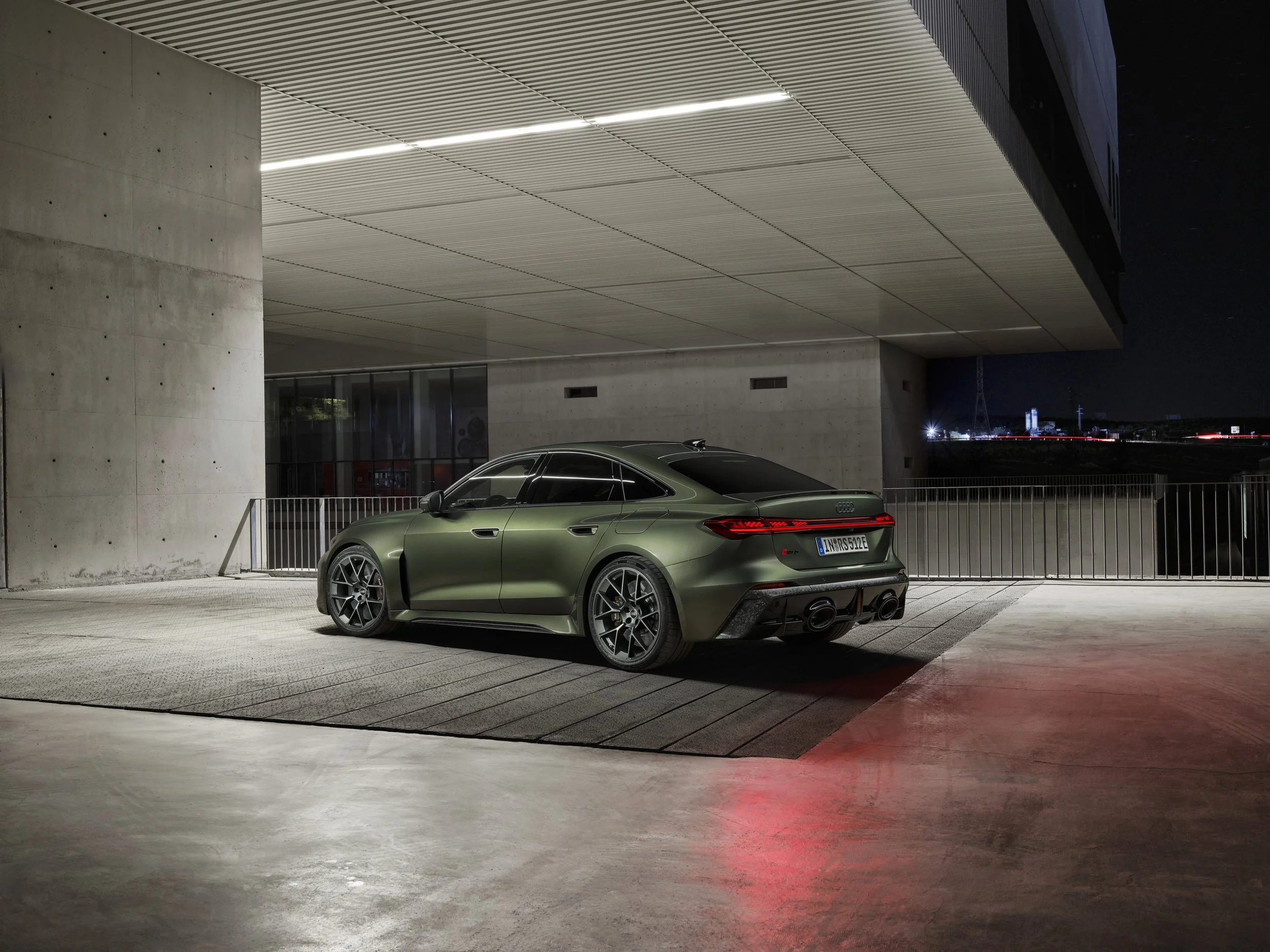
Audi RS 5 Saloon
In another first, Audi claims it has a “completely new rear transaxle with electro-mechanical torque vectoring – a world first in a production model - to intelligently transfer torque between the rear wheels”, which will undoubtedly ensure it feels well planted on the tarmac under load.
The batteries are buried beneath the boot floor with a total capacity of 25.9 kWh or 22 kWH usable. This is on the low side for a plug-in hybrid released in 2026, but the electric motor and batteries are tuned more for performance and less for economy.
The onboard AC charger is rated at 11 kW taking a potential 2.5 hours to recharge from flat to full at an appropriate Type 2 charger, but just over 3 hours from your average domestic 7 kW AC charger.
However, on the downside, this PHEV does not have an onboard DC charger so there can be no quick top-ups at the motorway services on a rapid charger, and yet Audi recommends maintaining a high state of charge to get the best performance from the car.
With the engine and electric motor combined, the performance figures are quite breathtaking with the 0-60 mph sprint taking a mere 3.6 seconds. And if you find yourself on a test track, or an empty stretch of Autobahn, it tops out at 177 mph.
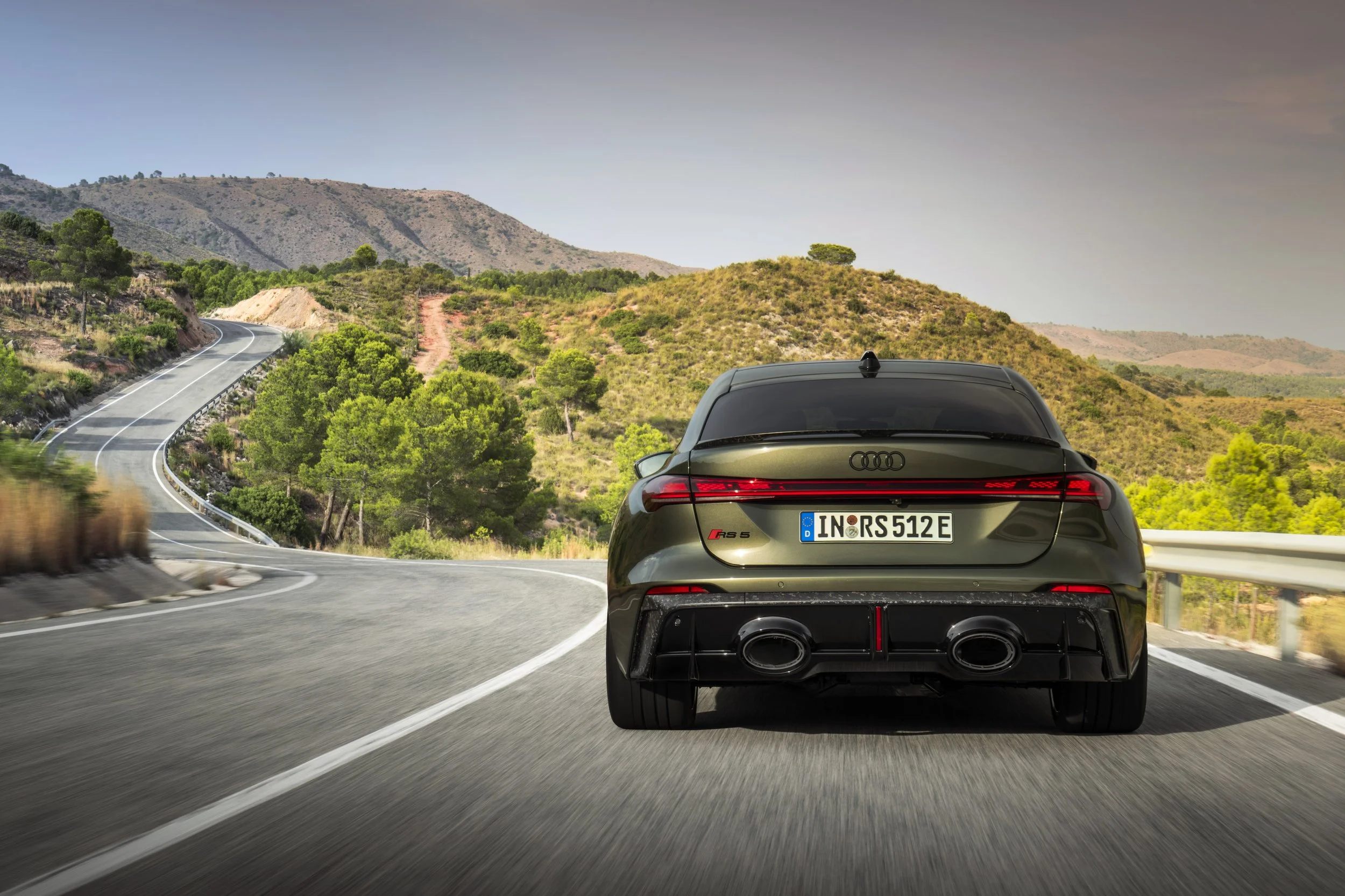
Large rear-end and some big pipes
But there is a cost for the hybrid system and that cost is additional mass. The curb weight for the saloon RS 5 is a hefty 2,355 kilograms and the Avant is even heftier at 2,370 kilograms. But, Audi promises the weight is hidden well claiming it “delivers pure performance with precise handling, impressive stability, and feels quick on its feet.”
Like RS’ before it, this RS 5 has a much wider stance measuring 90 mm in extra girth vs the standard Audi A5.
There’s flared front wings and blistered rear arches sitting on large 20-inch and 21-inch wheels giving the Audi a muscular, low and purposeful stance.
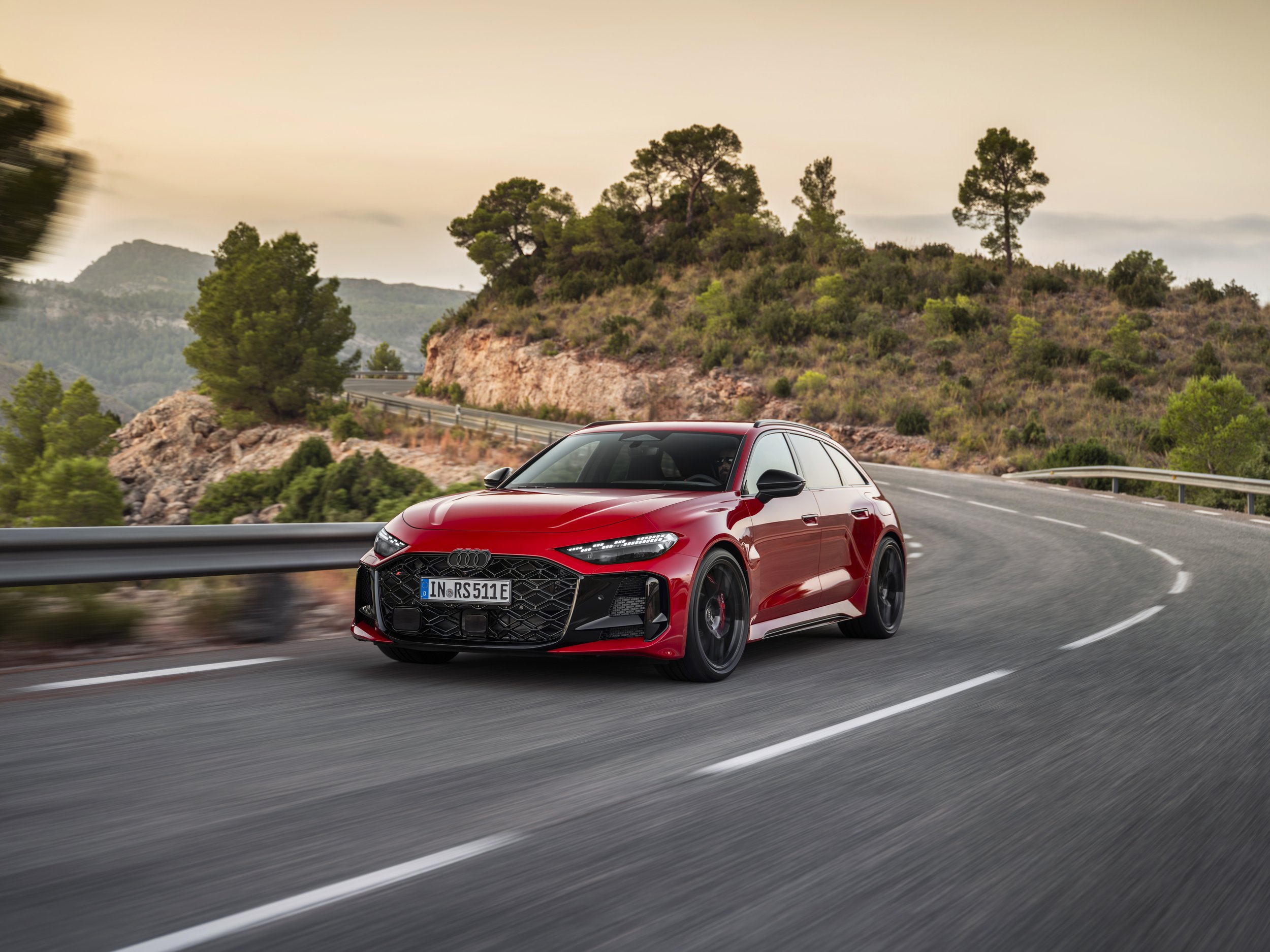
Audi RS 5 Avant
Inside the driver is hemmed in by an enormous curved display called Audi’s MMI Panorama display. This is made up from an 11.9-inch OLED Audi virtual cockpit and the 14.5-inch OLED MMI Touch Display. An additional 10.9-inch passenger display is standard fit for entertainment.
The Audi virtual cockpit offers the driver with plenty of data such as G forces, temperatures and tyre pressures, lap times, and information on the drivetrain and performance, such as power and acceleration.
And if the driver is not content with full car-width screens there is also a head-up display to project engine revolutions, speed, and the current gear onto the windscreen. There’s even guidance on the next time to shift gears in your eye-line, too.
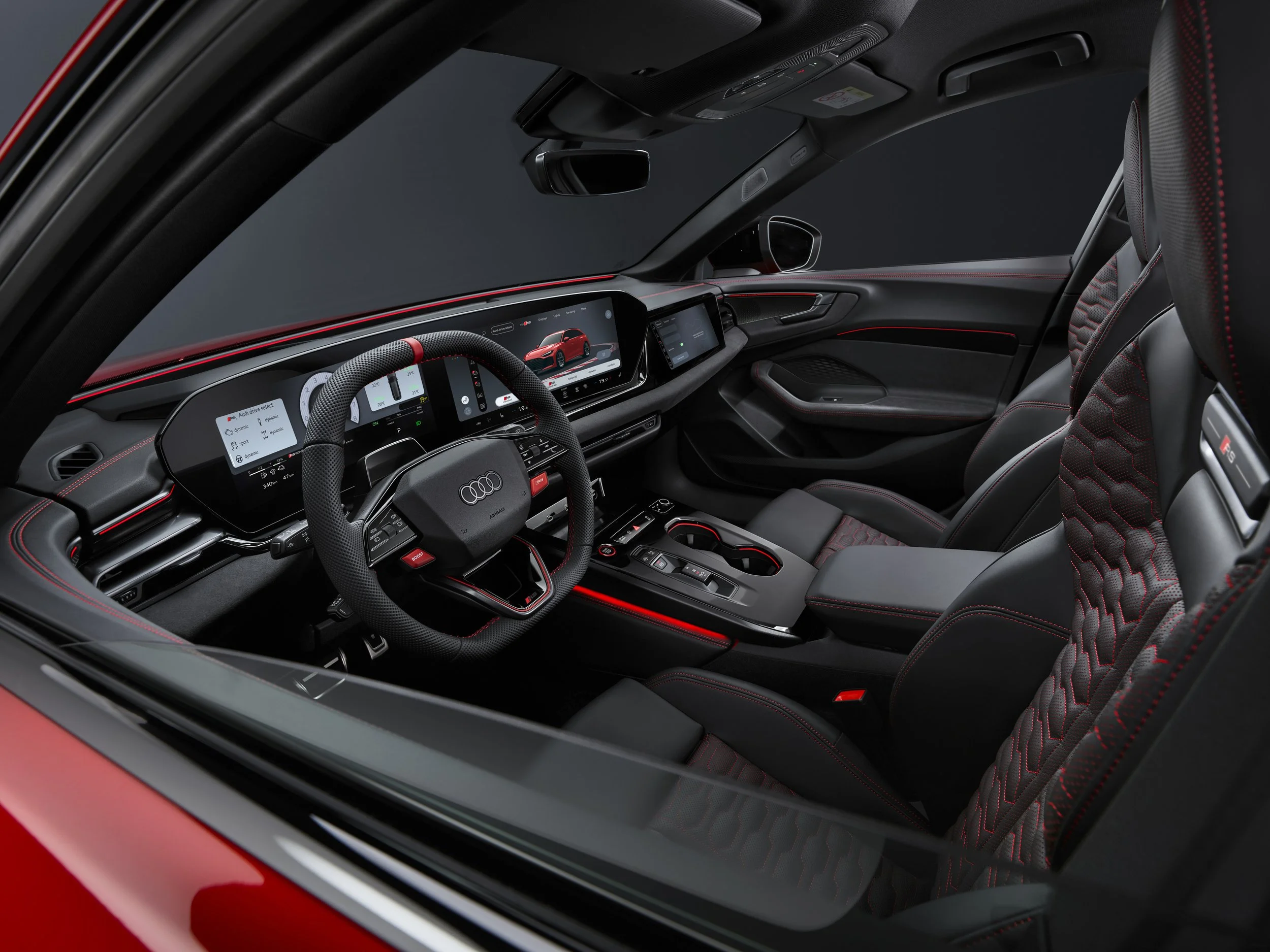
Interior of the Audi RS 5
Audi has undoubtedly put a huge amount of effort into making the RS 5 feel special in every sense, from its muscular stance, to it’s precision handling and how it puts its power down. But there are a few negatives to take from this.
Inside, there is perhaps a sense of technology in abundance on display with a screen-heavy dashboard. Some may welcome it, but for a driver-focused performance car, could the old adage “less is more” be applicable here?
Audi may have nailed down the handling and agility, but is it enough to disguise the sheer weight of the car. Time will tell when journalists will be lucky enough to test it rigorously themselves.
The last point to make is that without rapid charging capabilities, those long road trips may result in all that potential performance not being accessible if the battery has depleted. The engine should be able to recharge the battery on the move, but at the cost of efficiency. A small compromise, perhaps.
However, I don’t want to end on a negative, so I will say this. Audi has a history of making their RS cars extra special ever since Porsche co-developed the Audi 80 based RS2 Avant in the early 90’s, and I don’t think Audi would let themselves down with their new RS 5 PHEV.
Available to order in the first quarter of 2026 with deliveries beginning in the summer, this does have the potential to be the best of both worlds - a comfortable, practical family car as well as the return of the high performance legend.
———
About the Author
Graeme Cobb is a lifelong car enthusiast with a passion for writing about cars, EVs, industry updates and more. You can find Graeme on 𝕏 at @graeme_cobb or YouTube @REV-EV.