AI Assistants - The Next Big Tech Breakthrough in Cars
We’ve seen AI assistants in the home from Amazon’s Alexa, Apple’s Siri, and Google’s inventively named Google Assistant. Many more AI brands also have home assistants, too, and these virtual assistants allow for natural language questions or commands stretching into near conversations.
Commands can even be paired to home automations such as lights, heating and hot water controls, TV, alarm systems, even communicating with the car to pre-heat or pre-cool it, for example.
But it’s taken a while for these LLM (Large Language Models) AI assistants to be integrated into cars, and this is possibly the next big tech trend of 2026.
Which manufacturers have it?
Mercedes has already introduced AI into some models, as has BMW, VW Group and some Chinese brands, and for manufacturers to get a competitive edge over other brands, this could find its way into many more makes and models in the near future.
Tesla is also introducing this new tech in it’s cars as they announced today, via it’s partnership with XAi, it’s bringing it’s virtual AI assistant Grok to Tesla U.K. cars (as well as some European countries) in the next software update for free. Although, this tech was available in Tesla’s stateside since July 2025.
But what would you use an AI assistant for in your car, and why are manufacturers scrambling to integrate AI into their models?
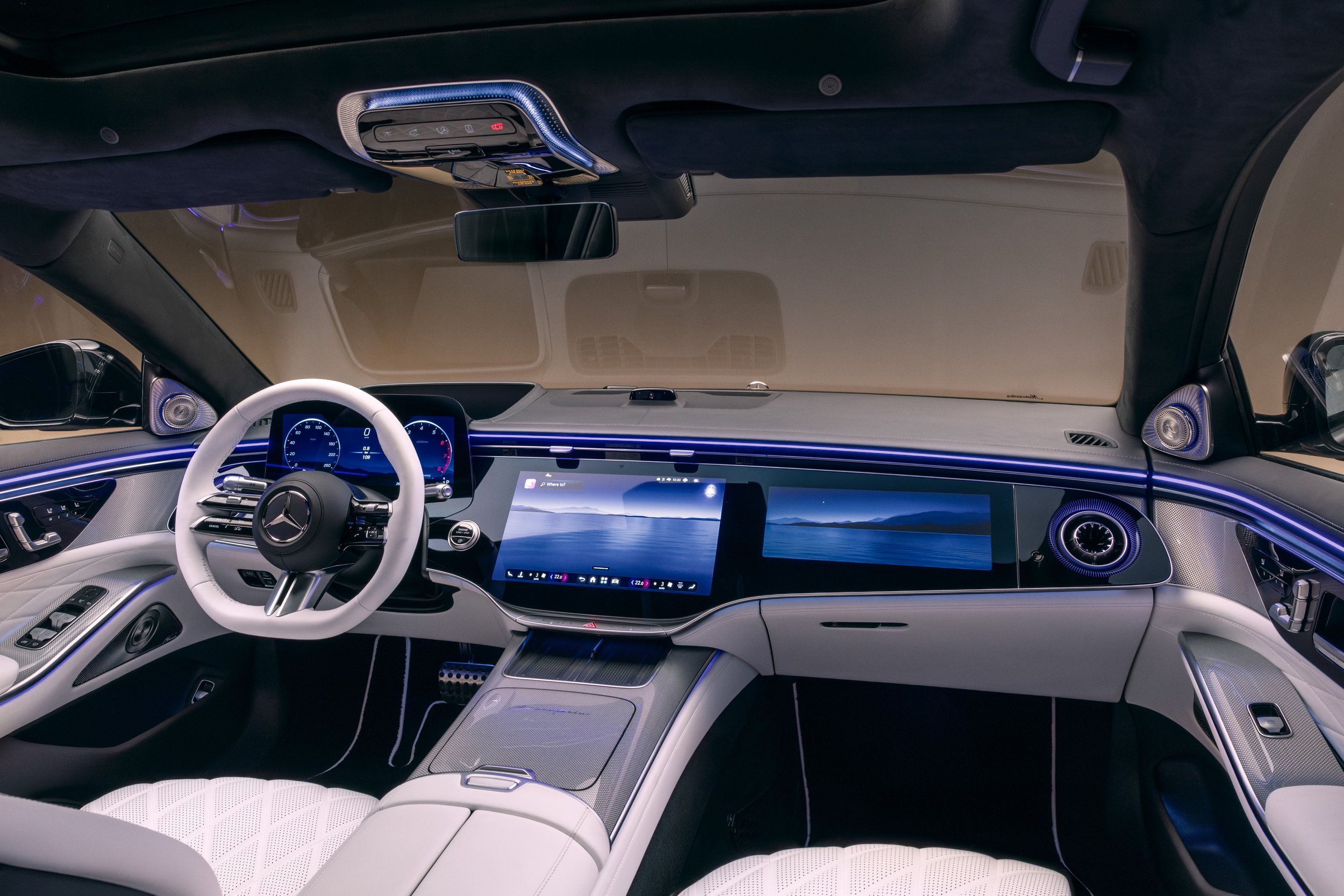
Mercedes S-Class with AI Assistant and many touchscreens
What’s the point?
This is where touchscreens will find their purpose because you will need to interact with them less. And regular software updates means that more features and functionality can be added, possibly even allowing deeper integration of the in-car AI assistant.
For example, you can ask or command your car using natural language, such as “Hey [assistants name] i’m cold, can you turn the temperature up by 3 degrees”.
And changing navigation destinations, or adding a stop en-route can now be via a command, such as “[assistants name] I need to stop for the bathroom, can you find me the nearest one”.
You may also be able to add multiple destination stops in your pre-planned route, open and close windows, or a sunroof via a command, adjust the ambient lighting, play media, such as playlists, podcasts or audiobooks just by asking the in-car virtual AI Assistant and by using natural language rather than pre-programmed command words.
But just like a home assistant, you can ask random questions, ask it to tell jokes, read aloud the current news headlines etc - useful to keep the driver amused if stuck in traffic, or waiting for someone, for example.
Manufacturers like Mercedes are deploying their MBUX virtual AI assistant into their cars using ChatGPT, Gemini and Bing. BMW is integrated Alexa+ into their Neue Klasse cars, and Honda is teaming up with Sony and Azure OpenAI.
Is it safe?
In the UK and Europe all manufacturers must comply with GDPR regulations as you could be disclosing personal information in your car, such as your home address, or asking the AI assistant to read an email, for example. So how does it comply?
It does this by requesting your authority to activate the AI assistant on initial set-up. And as it learns, it anonymises your voice and account before storing the data in its cloud servers. This data is to be used specifically for AI learning, and not for disclosure to third parties. Often commands and instructions are deleted straight after use, too.
There is also end-to-end encryption of your data. AI platforms with in-car AI must be hosted on fully compliant platforms with strict GDPR certified controls in place, plus enterprise security and strict privacy controls.
These assistants must also comply with the EU AI Act 2024 which classifies in-car AI as high risk, meaning compliance with safety, security and transparency in co-ordination with GDPR standards.
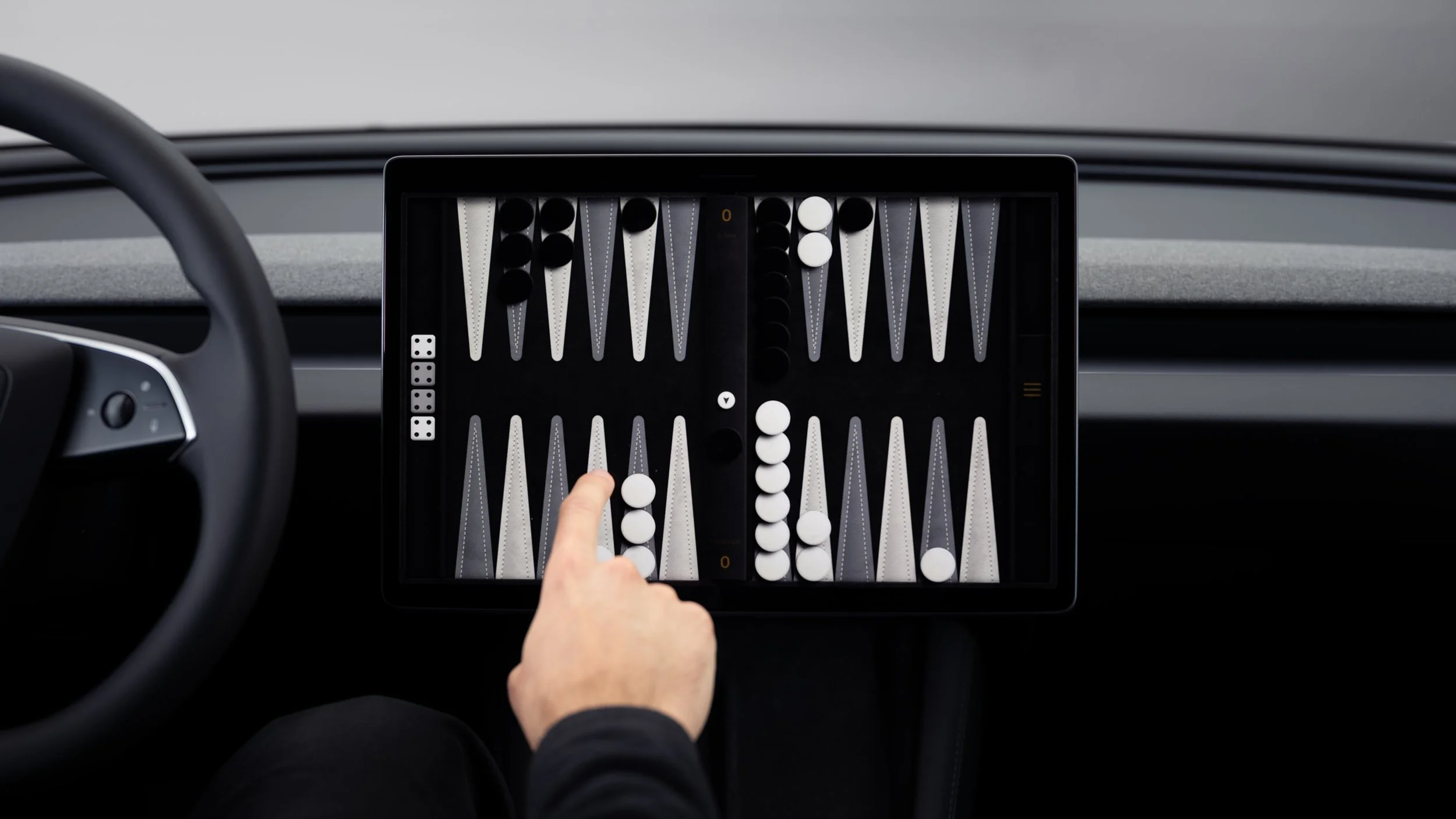
Less manual input will be required leading to fewer distractions
Is it a safety feature?
By ensuring it’s safe use in cars, it can make the roads much safer as the driver will need to interact significantly less frequently with the car’s touchscreens or physical buttons whilst driving, meaning eyes are kept on the road.
Accidents caused by distraction are on the rise, with some reports by individual studies from RoSPA and Brake put distraction as the cause of 20-30% of accidents, although there is no official data available that verifies this.
As cars become more connected, and screens start to dominate, AI assistants have the potential to cut accidents. AI virtual assistants that are integrated into cars could create an environment for fewer in-car distractions for the driver allowing for more focus on the roads.
But, will that lead to AI assisted cars having cheaper insurance premiums? It has the potential to in the long term if proven to contribute to safer driving and fewer accidents.
It also has the potential to open up an aftermarket 3rd party plug-and-play AI assistant. Google, for example, could develop something as it has with Android Auto, selling a device that could be plugged into un-assisted cars via it’s OBD port - think streaming sticks in the back of the TV. It transforms a non-smart telly into a smart TV future-proofed with regular updates.
Needless to say, this could be the next big breakthrough in cars over the coming years, making purchases with integrated AI assistants more desirable than without.
———
About the Author
Graeme Cobb is a lifelong car enthusiast with a passion for writing about cars, EVs, industry updates and more.
You can find Graeme on 𝕏 at @graeme_cobb or YouTube @REV-EV.