
The cars most likely to fail their first MOT
Nearly new doesn’t mean trouble-free
There’s a widespread assumption that a three-year-old car is still “basically new”. Clean history, low miles, maybe even still on the original tyres. But fresh data shows that the first MOT can be a much bigger reality check than many buyers expect.
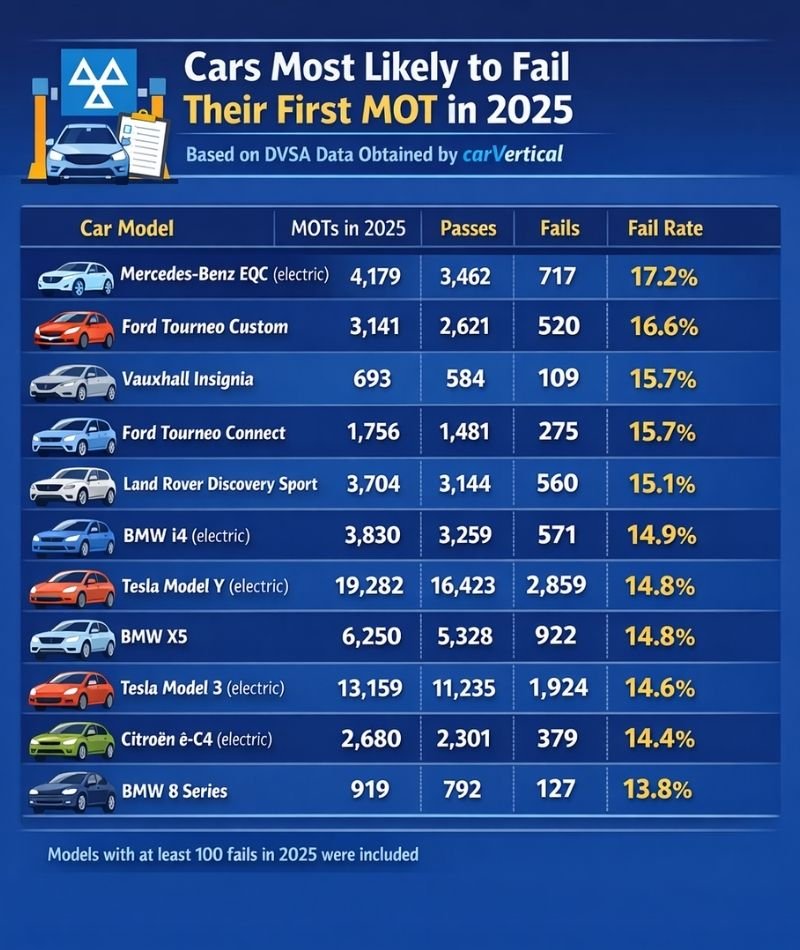
Using Freedom of Information data obtained from the Driver and Vehicle Standards Agency (DVSA) by vehicle history firm carVertical, we can now see which cars most often fail their very first MOT in 2025. These are vehicles hitting that crucial three-year mark – the point where manufacturer warranties may be ending and wear-and-tear issues start to show up.
Below are the models with the highest fail rates, considering only those with at least 100 failures recorded in 2025.
What this tells us
The headline takeaway is simple: nearly new does not equal issue-free.
By the time a car reaches its first MOT at three years old, several things often happen at once:
Factory warranties may have expired or be close to expiring
Suspension components, brakes and tyres may be worn enough to flag advisories or outright failures
Software-heavy cars can suffer from sensor, lighting or electronic faults that still count as MOT failures
It’s notable that there are electric vehicles appearing near the top of the list. That doesn’t mean EVs are unreliable, but it does underline that they’re not immune to everyday MOT items like suspension bushes, tyres, lights and brakes.
Take the two Teslas for example; Tesla’s don’t need servicing in the traditional sense, and Tesla doesn’t push annual services in the way legacy brands do. That’s great for running costs, but it means that certain things might go unnoticed :
Suspension wear
Tyres worn unevenly
Brakes sticking or corroding
Minor play in components
All of those are classic MOT failure items – and they’re things many owners simply don’t check until the MOT itself. A three-year-old Tesla can easily reach its first test having never seen a ramp.
Why this matters if you’re buying nearly new
Nearly new cars are often sold as the “safe” middle ground: cheaper than brand new, but without the headaches of an older vehicle. This data shows that the assumption needs a bit more caution.
At three years old, a car can:
Be outside its main warranty
Be just starting to show wear-and-tear issues
Require its first meaningful spend on maintenance
That doesn’t mean you should avoid these cars. It does mean you should treat them with the same diligence as any other used car.
A proper inspection, a full service history, and a detailed vehicle history check can make the difference between a smart buy and an unexpected bill shortly after purchase.
The bottom line
The first MOT is often the moment where a car’s real condition is exposed. Nearly new cars can still have imminent issues, and the idea that problems only start later in life simply doesn’t hold up against the data.
If you’re shopping in that three-to-four-year-old sweet spot, go in with your eyes open. The savings can still be worth it, but only if you factor in the reality that “nearly new” doesn’t mean “nearly perfect”.
———About the AuthorJim Starling is the founder of DefinitelyNotAGuru, a UK-based automotive media outlet focused on clear, honest, consumer-first journalism. His work cuts through marketing hype and technical jargon to help everyday drivers make sense of car buying, leasing, ownership costs, and the transition to electric vehicles.An independent motoring journalist and long-term EV owner, Jim brings real-world experience to his reporting. Whether covering major international motor shows or testing family cars on UK roads, his focus remains the same: straightforward analysis and genuinely unbiased advice that puts the audience first.