
Seven Highlights from the Brussels Motor Show 2026
he Brussels Motor Show 2026 opened its doors today, and after spending time on the show floor it’s clear this year’s event is less about wild concepts and more about what’s coming to real roads very soon. From affordable electric cars to high-performance EVs and a renewed focus on design and brand experience, Brussels once again proves why it matters on the European motor show calendar.
Here are six of the biggest highlights from the show.
1. Hyundai’s Electric Push Goes Big
Hyundai arrived in Brussels with one of the most talked-about launches of the show: the all-new STARIA Electric. Turning a large MPV into a fully electric vehicle is no small task, and Hyundai is clearly positioning the STARIA Electric as proof that EVs don’t have to be small, minimalist or purely urban.
The design remains futuristic and distinctive, but the real story is what it represents for families, shuttle operators and businesses looking to electrify without compromising on space. Alongside this, Hyundai used the show to tease what’s coming next in its EV lineup, including hints at a future compact IONIQ model and updates to its performance-focused N electric cars.
The Hyundai stand itself leaned heavily into experience rather than just product, with performance EVs, digital displays and interactive elements that kept it busy throughout the day.
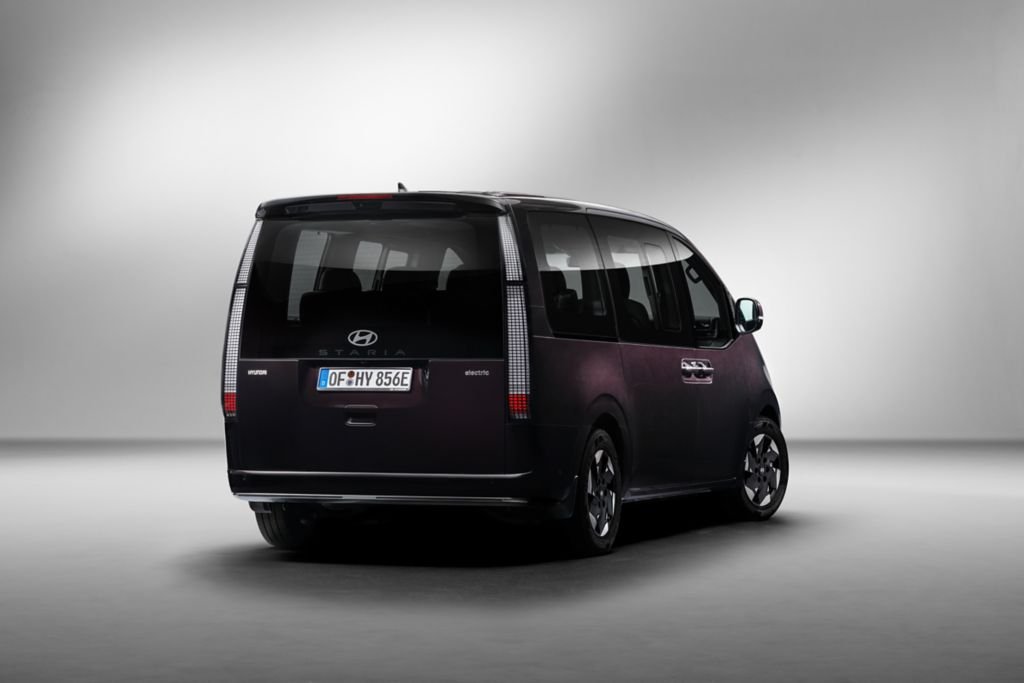
The Hyundai STARIA brings back the MPV
2. Kia Doubles Down on Everyday EVs and Performance
Kia’s presence at Brussels felt confident and ambitious. The global debut of the Kia EV2 was a clear signal that the brand is serious about making electric cars more accessible. Compact, practical and clearly aimed at European buyers, the EV2 looks set to slot in as a key entry-level electric SUV with usable real-world range and modern tech features like vehicle-to-load capability.
What really stood out, though, was Kia’s performance message. Multiple GT-branded electric models were shown, reinforcing the idea that EVs can still be driver-focused and fun. Kia isn’t just building electric cars because it has to – it’s trying to make them desirable in their own right.
When it comes to their EV lineup, it seems that Kia, much like Renault, seem unable to put a foot wrong right now.
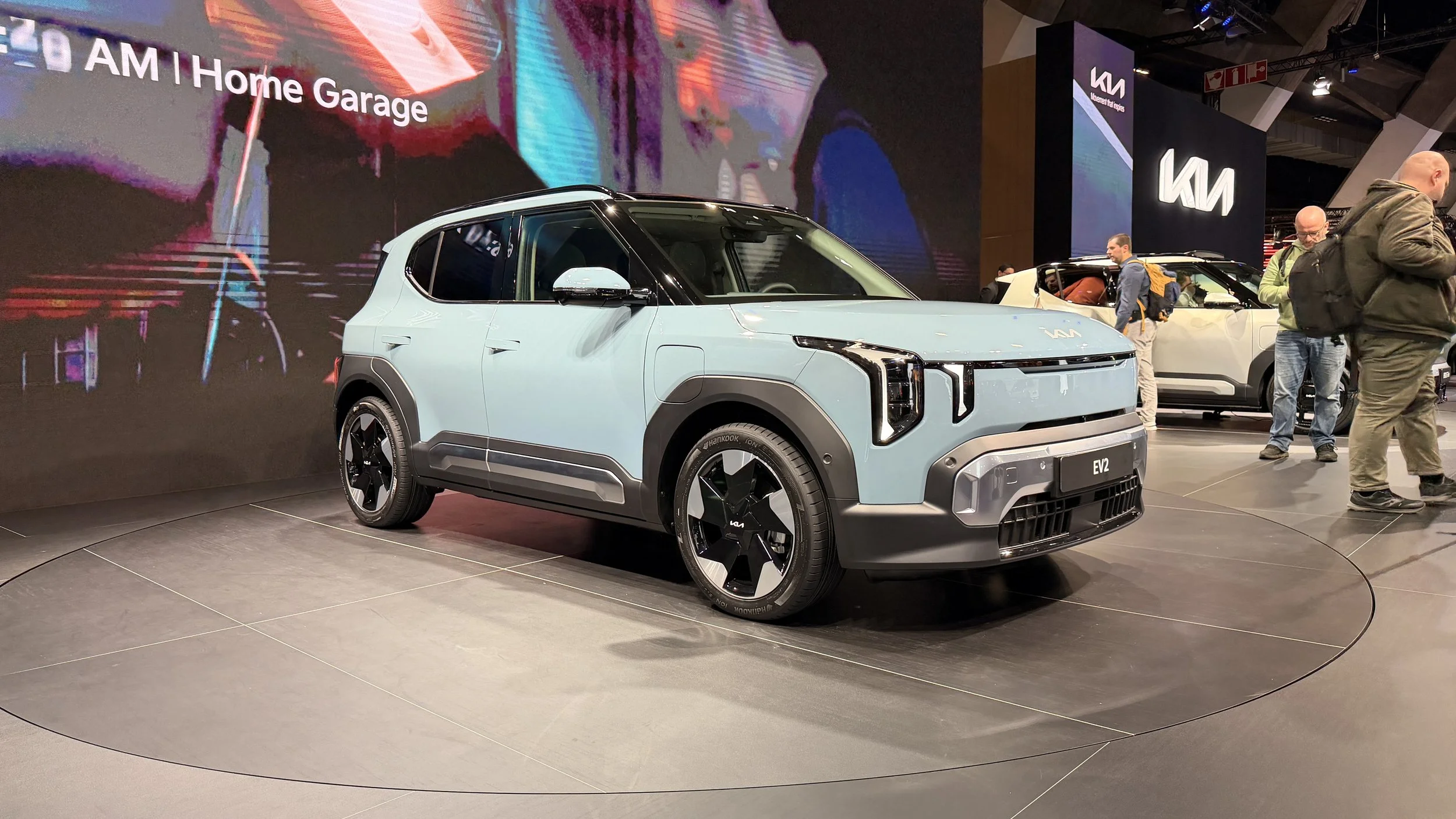
Small, practical EV options are becoming plentiful; the Kia EV2 is the latest addition
3. Renault Brings Electric Motoring Back to the City
Renault’s new Twingo E-Tech Electric was one of the most relevant launches at the show, especially for urban drivers. Compact EVs are becoming increasingly important, and the Twingo feels like a return to basics: small dimensions, sensible battery size and a focus on city usability rather than headline-grabbing power figures.
It’s clearly aimed at buyers who want an electric car that’s easy to live with, easy to park and affordable to run. In a show full of large SUVs and performance EVs, the Twingo stood out by doing the opposite – and that’s exactly why it matters.
4. Alfa Romeo Mixes Heritage with Electrification
Alfa Romeo’s stand was a reminder that emotion still has a place in an increasingly electrified industry. The Giulia Quadrifoglio Luna Rossa was a real visual highlight, blending motorsport-inspired design with Alfa’s traditional performance saloon appeal.
Alongside that, the brand showcased its evolving lineup, including the Tonale and the Junior Sport Speciale, offered in both hybrid and fully electric forms. Alfa’s approach feels less about abandoning its past and more about translating its identity into a new era, which will matter a lot to loyal enthusiasts watching the brand’s transition closely.
5. Stellantis Shows the Scale of Its Strategy
If there was one group that dominated floor space, it was Stellantis. Peugeot’s display, headlined by the latest 408, demonstrated just how broad the group’s strategy is right now. Multi-energy platforms, electric variants, hybrids and combustion models all sat side by side, reinforcing the idea that the transition won’t be one-size-fits-all (Let’s hope they find a way to ditch the wet-belts sooner rather than later...).
Rather than focusing on a single dramatic reveal, Stellantis used Brussels to underline its depth, from private cars to commercial vehicles, and its ability to adapt to different markets and buyer needs across Europe.
6. The Bigger Picture: Practical EVs Take Over
Walking the halls, one trend became impossible to ignore: the industry has moved past the “early adopter” phase of electrification. The focus now is on usable range, sensible pricing, and cars that fit into everyday life.
Performance EVs are becoming norm, compact EVs are becoming better, and manufacturers are spending as much time on software, design and user experience as they are on power outputs. Brussels Motor Show 2026 didn’t feel experimental – it felt realistic.
Walking the halls, one trend became impossible to ignore: the industry has moved past the “early adopter” phase of electrification. The focus now is on usable range, sensible pricing, and cars that fit into everyday life.
7. More Chinese brands make their entrances
Not every Chinese car brand is memorable but Zeekr is coming to the UK, with their first UK model to be launched in 2026. There were several Zeekr models on display at the show which were drawing some very positive comments. We also saw some very attractive offerings from the likes of Chinese brand NIO, but some, including “dr” were rather less impressive to look at.
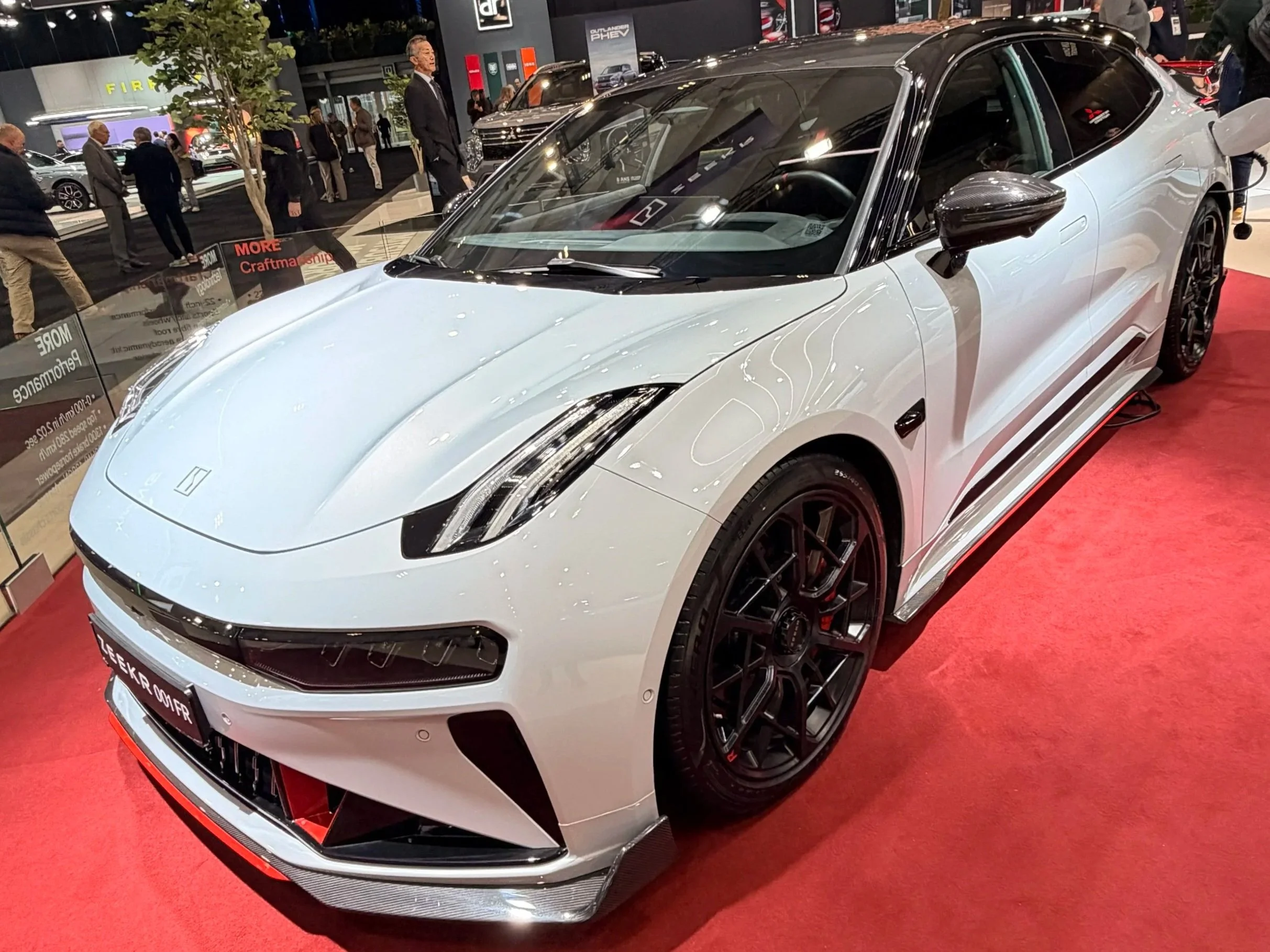
Zeekr comes to the UK in 2026
Final Thoughts
The Brussels Motor Show 2026 may not be the flashiest motor show in the world, but that’s exactly its strength. Unlike the last Munich Show, this was a compact show packed with cars rather than tech; somewhat reminiscent of the Geneva Show of old - this is how car shows should be. What you see here is what European buyers are actually going to be driving over the next few years.
From Hyundai’s electric MPV ambitions and Kia’s growing EV confidence to Renault’s back-to-basics city car and Alfa Romeo’s emotional storytelling, the show delivered a clear message: the future of cars is electric (for now), but it doesn’t have to be boring, expensive or impractical.